
Garden Huckleberry
Solanum retroflexum Dunal
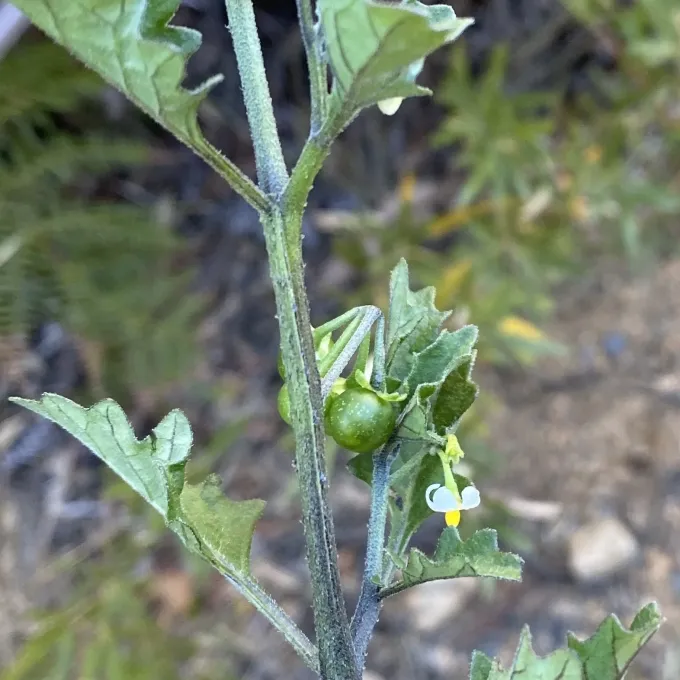
Description
Sowing dates
Garden Huckleberry (Solanum retroflexum) seeds should be planted once the soil has warmed up and all danger of frost has passed in the spring.
Starting seeds indoors 6 to 8 weeks before the last frost date is common practice to ensure a longer growing season and higher yields.
Sow seeds at a shallow depth of about 0.5 centimeters in a seed-starting mix, keeping the soil consistently moist until germination occurs.
Once seedlings have developed two sets of true leaves, they should be hardened off before being transplanted into the prepared outdoor garden beds.
Space the plants approximately 60 centimeters apart to allow for vigorous branching and to maintain optimal air circulation between the mature bushes.
Growing requirements
This crop thrives in full sun, which is essential for the proper development of its fruit and ensuring the berries attain their full flavor profile.
The plant prefers well-drained, fertile soil rich in organic matter, such as compost or well-rotted manure, to support sustained fruit production.
Consistent watering is necessary throughout the growing season, especially during the fruit-set stage, to keep the soil evenly moist but not waterlogged.
A balanced fertilizer applied during the early vegetative growth phase helps in establishing strong plants capable of supporting heavy berry clusters.
Mulching the area around the base of the plants helps retain soil moisture, suppresses weed growth, and keeps the root zone temperature stable.
Yield
Garden Huckleberries are prolific producers and can yield large quantities of fruit per plant when provided with optimal growing conditions.
The berries are typically harvested in clusters once they have turned from a dull dark green to a deep, glossy black, indicating they are fully ripe.
The harvest period extends from late summer through autumn, providing a continuous supply of fruit for culinary use until the first frost hits.
These berries are highly valued for making preserves, jams, and pies, as their flavor intensifies significantly after cooking and sweetening.
Proper harvest management, including removing damaged fruits promptly, helps in maintaining the health of the entire plant throughout the season.
Main diseases and pests
Common garden pests such as flea beetles, aphids, and Colorado potato beetles can feed on the foliage, potentially reducing the plant's photosynthetic capacity.
Fungal diseases like late blight and early blight can occur in humid conditions, causing leaf spots and stunted growth if not managed correctly.
Integrated pest management strategies, including the use of floating row covers, can protect young plants from early-season insect damage.
Maintaining a clean garden by removing crop debris at the end of the season helps in reducing the population of overwintering pathogens and pests.
Rotating the planting site every few years is a critical practice to prevent the buildup of soil-borne diseases that are specific to the Solanaceae family.
Harvesting
Harvesting should be done when the berries are fully mature and feel soft, as underripe berries lack the sugar content required for culinary processing.
Pick the berries carefully, using small shears or simply plucking the clusters, taking care not to disturb the branches, which can be somewhat brittle.
Freshly harvested fruit should be stored in a cool, dry place and processed as soon as possible to maintain freshness and nutritional quality.
For longer-term storage, the berries can be frozen individually on trays before being transferred to freezer-safe bags for future use.
Always ensure the berries are thoroughly washed before use, as they may have picked up dust or soil particles during the ripening process on the bush.