
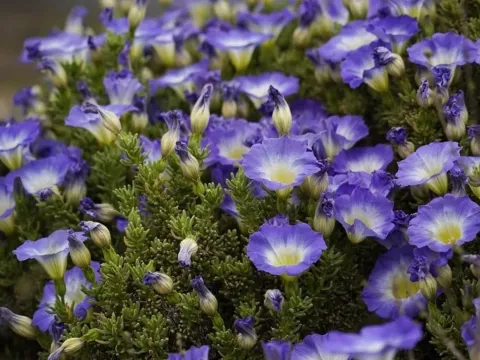
Nolana prostrata
Nolana prostrata
Nolana prostrata is a charming annual plant belonging to the Solanaceae family, native to the coastal regions of Chile and Peru. Due to its origin, it thrives in warm conditions and is typically grown from seeds started indoors in early spring.
What the section contains
Nolana prostrata
Seeds should be sown in a light, well-draining potting mix. Because many Nolana seeds require light to germinate, it is recommended to press them gently into the surface rather than burying them deeply. Keeping the substrate consistently moist but not waterlogged is essential.
A temperature range of 20–22°C (68–72°F) is ideal for successful germination. Once seedlings develop their first true leaves, they should be transplanted into individual pots to allow the root system to establish without competition.
Hardening off the seedlings is a crucial step before moving them to their permanent outdoor location. Gradually exposing the plants to outdoor temperatures and light levels over two weeks significantly improves their survival rate and overall vigor.
Direct sowing in the garden is only advisable in regions with a long, frost-free growing season. Seeds should be spaced 25–30 cm apart to provide enough room for the trailing stems to spread effectively across the ground or over the edges of containers.
Nolana prostrata is an intensely sun-loving plant. It requires a location that receives full, direct sunlight for the majority of the day. Inadequate light results in leggy stems and a noticeable decrease in the number of blooms produced.
The plant performs best in sandy, poor, or gritty soils that mimic its native habitat. Excellent drainage is non-negotiable; heavy, water-retentive soils often lead to crown and root rot, which are the most common killers of this species.
Watering should be managed carefully. While the plant is quite drought-tolerant once established, it requires regular, light moisture during the peak of summer to maintain its decorative appeal and prevent wilting during extreme heat.
Container gardening is highly effective for this species. Using pots allows for precise control over soil composition and drainage, making it an excellent choice for hanging baskets, window boxes, and elevated terrace planters.
Fertilization should be kept to a minimum. Over-fertilizing, particularly with nitrogen, encourages excessive leaf growth at the expense of flower production. A balanced, low-concentration fertilizer once a month is more than sufficient for healthy development.
The primary threats to Nolana prostrata involve fungal pathogens resulting from high humidity or poor airflow. Ensuring that the foliage remains dry and that there is enough space between plants can drastically reduce the incidence of disease.
Spider mites and aphids can become a problem, particularly in dry or greenhouse conditions. Regular monitoring of the foliage, especially the undersides of leaves, helps detect early infestations, which can then be treated with appropriate insecticidal soaps.
Powdery mildew is a common seasonal issue, especially when daytime temperatures are high and nights are cool. Preventive measures include choosing well-ventilated planting sites and avoiding overhead watering during the late afternoon.
Root-knot nematodes can impact plant health if the soil is not properly prepared or if the site was previously used for other Solanaceae crops. Avoiding monocultures of the same family in the same plot is a recommended practice.
Overall plant vitality is best maintained through consistent hygiene, such as removing spent flowers and clearing fallen debris, which helps prevent the accumulation of moisture and potential pathogen development.