
Hybrids of tomato and Solanum habrochaites
hybrids between Solanum lycopersicum L. and S. habrochaites S. Knapp & D.M. Spooner
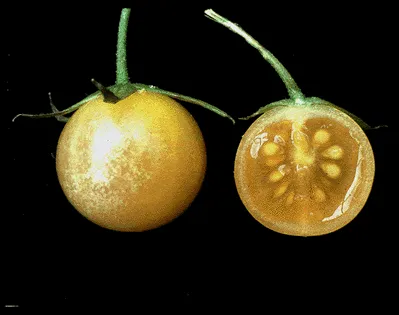
Description
Growing requirements
Interspecific hybrids between Solanum lycopersicum and Solanum habrochaites belong to the Solanaceae family. This wild species, native to the Andes of Peru and Ecuador, is widely utilized as a donor of valuable agronomic traits in modern tomato breeding.
These hybrids require well-drained soils and high-intensity lighting to express their full genetic potential. Their wild ancestor is adapted to high-altitude environments, which confers superior tolerance to cold snaps and variable thermal conditions compared to standard cultivars.
Agrotechnical management must account for the vigorous vegetative growth typical of S. habrochaites-derived lines. Frequent pruning and staking are essential to prevent excessive foliage density and ensure adequate air circulation.
Soil management for these hybrids should emphasize balanced nutrition with particular focus on phosphorus, which supports the complex root system inherited from the wild relative, allowing for better nutrient uptake in poor soils.
While these plants are robust, they thrive best under controlled environmental conditions that allow for precise water management, ensuring that the roots remain healthy and free from oxygen deprivation.
Main diseases and pests
The primary agronomic value of these hybrids is their innate resistance to a wide array of pests. The specialized glandular hairs on the foliage produce specific metabolites, such as 2-tridecanone, which act as natural insecticides.
These hybrids show exceptional resistance to late blight (Phytophthora infestans) and early blight (Alternaria solani), significantly reducing the necessity for chemical fungicide interventions in commercial production.
Resistance to mites, aphids, and whiteflies is a major highlight, as the chemical defense mechanism provided by the wild parent effectively deters these insects from colonizing the plant leaves.
Despite their broad-spectrum resistance, these plants may still be susceptible to specific soil-borne pathogens if grown in highly infested environments without proper crop rotation or substrate sterilization.
Integrated Pest Management (IPM) should still be practiced, as some specialized viruses may occasionally break through the resistance, requiring diligent monitoring and prophylactic control of vectors such as thrips or aphids.