
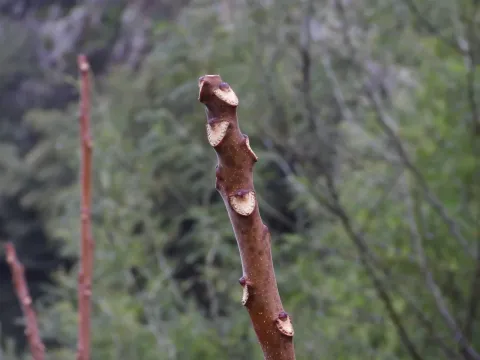
Ailanthus vilmoriniana
Ailanthus vilmoriniana
Ailanthus vilmoriniana, a member of the Simaroubaceae family, is a deciduous tree native to China. It is highly valued for its large, pinnate leaves and rapid growth rate, making it a distinctive species in forestry and landscape architecture.
What the section contains
Ailanthus vilmoriniana
This tree requires full sun exposure to thrive and develop its characteristic form. While it can adapt to various soil types, it performs best in deep, fertile, and well-drained loamy soils, avoiding areas where stagnant water occurs.
The climate requirements for Ailanthus vilmoriniana include a temperate, relatively mild environment. Although it exhibits moderate tolerance to cold once established, young specimens require protection against harsh winter frost and drying winds.
Cultural practices should focus on maintaining adequate moisture levels, especially during the first few growing seasons. Irrigation is critical during prolonged dry spells to ensure steady growth and prevent premature leaf drop.
Pruning is usually minimal, focused primarily on removing dead or crossing branches to encourage a strong central leader and an aesthetically pleasing canopy structure as the tree matures.
The primary concern for this species is root rot caused by poor soil drainage. Maintaining good soil structure and implementing proper irrigation protocols are the best defenses against these issues.
Leaf-feeding insects, such as aphids and spider mites, can cause cosmetic damage to the foliage during periods of environmental stress, leading to a reduction in the tree's overall vigor.
Vascular wilts, particularly Verticillium, can impact the health of the tree. Ensuring that seedlings are planted in clean soil is an important proactive measure for site preparation.
In humid conditions, fungal spots may appear on the foliage. While usually not fatal, these infections should be monitored, and affected leaves should be collected and disposed of to prevent spreading.
Regular monitoring of the bark and root collar is essential to identify potential borer activity or mechanical damage, which could act as an entry point for further pathogens.