
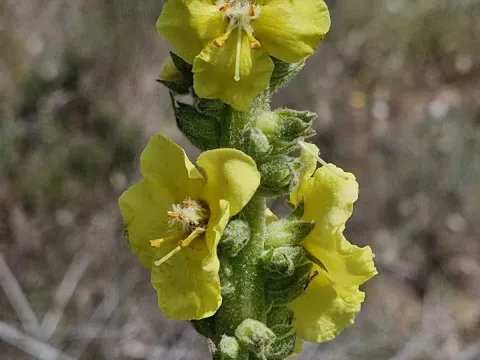
Simple mullein
Verbascum simplex
Simple mullein (Verbascum simplex) is a member of the Scrophulariaceae family. It is a biennial herb that produces a basal rosette of leaves during its first year, followed by a tall flowering stem in the second year.
What the section contains
Simple mullein
Seeds should be sown in early spring or autumn. Since the seeds are minute, they should be surface-sown onto fine soil and pressed gently, without covering them deeply, to ensure proper germination.
Consistent moisture is required for germination, which usually occurs within two to three weeks under optimal conditions of 18-22 degrees Celsius.
Once the seedlings reach the stage of having several true leaves, they should be thinned to allow for adequate spacing, typically 30 to 40 centimeters apart.
This plant is highly adaptable to various growing conditions, but early-stage protection from weeds is essential for successful establishment.
Verbascum simplex thrives in full sun and requires well-drained, sandy, or loamy soil. It is notably drought-tolerant due to the dense hair-like covering on its leaves, which minimizes transpiration.
The plant dislikes waterlogged conditions, making well-drained sites mandatory to prevent root rot and other moisture-related physiological issues.
It is not highly demanding regarding soil fertility, though balanced fertilizers applied during the first year of growth can enhance leaf development.
The plant is hardy in temperate climates, surviving winter successfully as long as the drainage remains adequate during wet seasons.
Maintenance includes light hoeing to control weeds and improve soil aeration, ensuring the roots have access to oxygen throughout the growing season.
The primary threats include fungal diseases such as powdery mildew, which often appear in crowded plantings or in areas with poor airflow and high humidity.
Pests like caterpillars and weevils can damage the foliage, negatively impacting the plant's health and the quality of the harvested medicinal material.
Prevention relies on spacing plants correctly to allow for air circulation and following crop rotation protocols to prevent the buildup of soil-borne pathogens.
Biological control agents should be prioritized over synthetic chemicals to ensure the safety and quality of the raw material intended for use.
Early identification of signs of pest damage or fungal spots is key, allowing for timely removal of infected plants to protect the rest of the crop.
The flowers are the primary medicinal part and must be harvested during dry, sunny weather once they have fully opened but before they start to wither.
Flowers should be picked with care to avoid bruising, as they are extremely delicate and lose their color and quality if mishandled.
Immediate drying is required to preserve the quality of the active compounds. Flowers should be spread in thin layers in a shaded, ventilated place or a dryer.
Temperature during the drying process should not exceed 45 degrees Celsius to prevent the degradation of essential plant constituents.
The dried material must be stored in airtight containers away from direct sunlight and moisture to maintain its shelf life and therapeutic potency.