
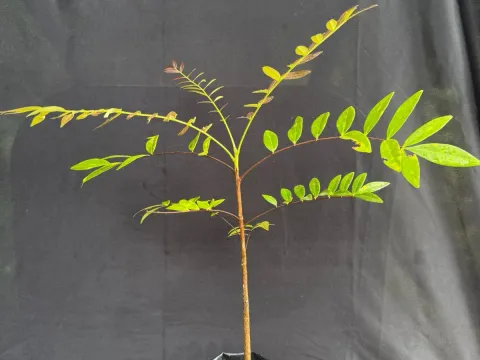
Eurycoma longifolia
Eurycoma Jack
Eurycoma longifolia, commonly known as Tongkat Ali, is a slow-growing evergreen shrub belonging to the Simaroubaceae family, native to the tropical rainforests of Southeast Asia.
What the section contains

Eurycoma longifolia
Seed propagation is challenging due to low germination rates and specific requirements for moisture and temperature, making traditional planting difficult.
In modern commercial settings, vegetative propagation, such as cuttings or tissue culture, is preferred to ensure genetic uniformity and faster establishment.
Young plants require protected nursery conditions during the first few months, focusing on providing diffused light and stable humidity levels for root development.
Seedlings are typically transplanted into the field at the start of the rainy season to capitalize on natural rainfall, ensuring strong root establishment.
The crop demands a tropical climate with constant temperatures ranging between 25°C and 32°C, as it does not tolerate cold stress or temperature fluctuations.
Well-drained, sandy loam soils with high organic matter content are ideal, requiring an acidic pH environment between 4.5 and 5.5.
Effective drainage is critical, as the plant is highly susceptible to root rot in waterlogged conditions, common in heavy clay or poorly prepared soils.
Shade management is an essential agricultural practice, as young Eurycoma plants naturally grow in the understory and require protection from intense direct sunlight.
Proper spacing is required to ensure adequate airflow, which prevents the development of fungal pathogens and allows for maximum biomass accumulation in the roots.
Eurycoma longifolia is primarily cultivated for its roots, which contain bioactive compounds that accumulate very slowly over the plant's lifecycle.
A typical cultivation period lasts between 5 and 8 years, representing a significant long-term investment for the agricultural producer.
Yield efficiency is defined by the quality and concentration of secondary metabolites rather than just the raw physical weight of the harvested biomass.
Optimal planting density is crucial, with standard commercial practices aiming for approximately 2,500 plants per hectare to balance resource competition.
Consistency in cultivation techniques significantly impacts the market value, as pharmaceutical buyers require high levels of active ingredients like eurycomanones.
The primary threats to Eurycoma plantations include soil-borne pathogens and fungal infections that target the roots, especially in high-humidity conditions.
Pest management is focused on preventing damage from subterranean insects that can stunt plant growth and compromise the integrity of the root system.
Foliar diseases such as leaf spot can occur if plant density is too high, leading to stagnant air and increased moisture around the leaves.
Since the final product is used for human consumption, chemical pest control is strictly limited in favor of integrated pest management (IPM) strategies.
- Maintenance of drainage systems to prevent root rot.
- Strategic mulching to manage soil temperature and moisture.
- Regular pruning of diseased leaves to prevent the spread of infection.
The harvesting process involves manual excavation of the root system, which can extend deep into the soil profile, requiring careful handling.
Post-harvest, the roots are thoroughly cleaned to remove all soil debris, which is vital to ensure purity and avoid microbial contamination.
Controlled drying is essential, keeping temperatures low to preserve the delicate bioactive compounds that define the plant's medicinal value.
Once dried, the raw material is processed into chips, powder, or standardized extracts to be used in the supplement and pharmaceutical industries.
Efficiency in harvesting is critical, as any physical damage to the roots during extraction can lead to nutrient loss and reduced extract yield.