
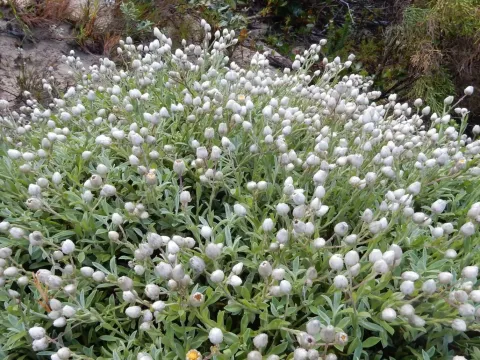
Silver syn-carpha
Syncarpha argentea
The propagation of Syncarpha argentea typically begins in late winter or early spring in a controlled indoor environment. Seeds should be sown in a high-quality, fine-textured growing medium with excellent drainage properties.
What the section contains
Silver syn-carpha
Surface sowing is the recommended method as the seeds require light to germinate. A light dusting of vermiculite can be used to hold the seeds in place without burying them, ensuring they stay moist but not saturated.
Temperature control is crucial during the germination phase, with an ideal range between 18 and 22 degrees Celsius. Consistently high humidity, provided by a propagation tray cover, will significantly improve success rates.
Once true leaves appear, seedlings should be carefully pricked out into individual small pots. This stage requires careful handling of the root system, which can be sensitive to damage during transplanting.
Acclimatization of the seedlings to outdoor conditions should be performed gradually over a period of two weeks. Final planting in the garden must only occur once all risks of frost have passed.
Syncarpha argentea is a resilient shrub belonging to the Asteraceae family. Native to the harsh, wind-swept regions of South Africa, it has evolved to thrive in nutrient-poor and gritty environments.
The plant demands full sun exposure to maintain its characteristic silvery foliage and dense growth habit. Lack of light will cause the plant to become leggy and lose its vibrant aesthetic appeal.
Soil requirements are strict: the substrate must be sandy, stony, or gravelly to ensure that water never stagnates around the root zone. Heavy clay soils are unsuitable and will quickly lead to root rot.
Watering should be managed with caution, allowing the substrate to dry out significantly between irrigation cycles. This mimics the plant's natural habitat and prevents the development of opportunistic fungal pathogens.
In regions where temperatures drop below 5 degrees Celsius, this plant should be treated as a container specimen or an annual, as it lacks the necessary cold hardiness to survive a harsh winter outdoors.
Root rot is the most common threat to Syncarpha argentea, almost always resulting from poor drainage or overwatering. Maintaining a sharp drainage profile is the primary defense strategy against this issue.
Indoor cultivation or greenhouse settings can occasionally attract spider mites. These pests thrive in dry conditions and can be effectively managed through regular monitoring and increasing airflow.
High humidity combined with stagnant air is a recipe for powdery mildew. Ensuring adequate spacing between individual plants allows for necessary air circulation, which prevents many common foliar diseases.
Fertilization should be handled with care, as excessive nitrogen promotes rapid, weak growth that is susceptible to infestations. Using a balanced, low-concentration fertilizer is generally safer for this species.
Regular sanitation, including the prompt removal of any decaying plant matter, is essential for maintaining a healthy display and preventing the spread of diseases within the planting bed.
For optimal use as a dried flower, harvest should take place when the flower heads are mature but have not yet fully opened their central florets. This ensures the best structural integrity.
The cutting process should be done on a dry morning once the dew has evaporated. Using sharp, clean shears helps to make clean cuts, reducing the stress on the mother plant and improving the quality of the harvest.
Bundles of stems should be hung upside down in a dark, dry, and well-ventilated room to dry naturally. Darkness is vital as it prevents the silver and white tones from bleaching under UV light.
Once fully dried, the stems become quite stiff and retain their shape indefinitely. This durability makes them a favorite for professional florists and home decor enthusiasts worldwide.
Properly dried Syncarpha argentea pieces will last for several seasons if kept in a cool, dry place away from direct sunlight and areas prone to high humidity.