
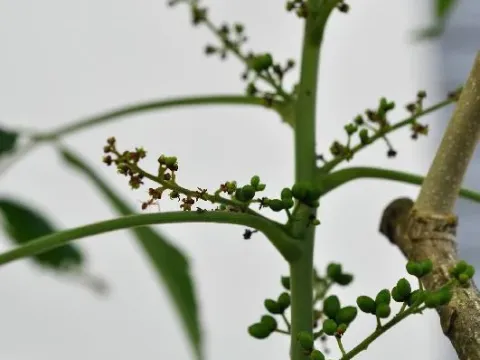
Brucea
Brucea
Brucea, primarily represented by Brucea javanica, belongs to the Simaroubaceae family and is a shrubby evergreen plant. Cultivation is primarily focused on medicinal production, requiring specific soil and temperature conditions for successful establishment from seeds or cuttings.
What the section contains


Brucea
Seeds should be sown in a well-draining, nutrient-rich potting mix with high organic content. The ideal temperature range for germination is between 25 and 30 degrees Celsius, which mimics the tropical environment native to the plant.
Young plants require careful attention during the first few months. They should be protected from direct sunlight and maintained in a humid environment to promote vigorous root development before transplantation to the main field.
Planting density is crucial for long-term health and maintenance. Spacing of at least 2 to 3 meters between individual plants allows for necessary airflow, reducing the humidity around the leaves and preventing common fungal issues.
Growth to full maturity typically spans several years. During the initial growth phase, the focus is on canopy development and ensuring the root system is well-established to support future heavy fruit production.
Brucea is strictly a tropical crop, demanding high ambient temperatures and avoiding frost at all costs. In regions where temperatures drop, cultivation must be conducted within greenhouses or climate-controlled glasshouses.
Soil quality is paramount; the plant prefers well-aerated, loamy soils with a near-neutral pH level. If the native soil is too clay-heavy, soil amendments are necessary to improve drainage and prevent root rot, which is a major threat.
Sunlight requirements change as the plant matures. While seedlings prefer partial shade to prevent desiccation, adult Brucea shrubs require full sun to optimize the synthesis of active medicinal compounds within their fruit.
Watering management is essential, particularly during the flowering and fruit-set periods. Consistent soil moisture is necessary, but the soil should never become waterlogged, as this is the primary cause of plant death in many plantation settings.
Fertilization regimes should prioritize balanced NPK fertilizers, with a slight emphasis on potassium to aid in fruit ripening. Annual soil tests are recommended to determine the exact micronutrient needs of the plantation.
The yield of Brucea is characterized by the production of dark, oily drupes that contain quassinoids. An established shrub can yield several kilograms of fruit annually, provided the environmental conditions remain optimal.
Harvesting is a manual, labor-intensive process, as fruit maturation is often non-uniform across the bush. Pickers must monitor for the characteristic dark color of the berries, which indicates peak ripeness and maximal medicinal potency.
Post-harvest handling is critical to preserve the chemical integrity of the fruit. Drying must occur immediately in controlled settings to prevent fermentation or mold development, which could render the crop useless for medicinal extraction.
Economic value is derived primarily from the pharmaceutical industry, where Brucea extracts are processed into potent anti-malarial and anti-tumor therapeutic agents. The global demand for these natural compounds drives the commercial viability of the crop.
Storage of the processed fruits requires hermetic sealing in dark, cool locations. Protecting the dried drupes from moisture and light ensures that the secondary metabolites remain stable until they can be processed into medicines.
Pest pressures are common in tropical agricultural systems. Aphids and scale insects are the most frequent threats to Brucea, as they suck sap from the soft stems and young leaves, leading to stunted plant growth.
Fungal diseases, specifically those caused by excess humidity like powdery mildew and various leaf spots, are significant threats to productivity. Maintaining adequate plant spacing is the most effective preventative measure against these infections.
Integrated pest management is recommended to keep the plantation healthy. Using neem oil or beneficial predatory insects can significantly reduce the need for synthetic chemical pesticides, which is crucial for high-quality medicinal produce.
Sanitation practices, such as the removal of fallen leaves and debris, play a vital role in disease control. By keeping the base of the plant clear, growers prevent the accumulation of pathogens that flourish in decaying organic matter.
Constant monitoring by agronomists allows for the early detection of stress factors. By identifying issues before they reach epidemic levels, growers can treat localized areas, thus maintaining the overall viability of the plantation throughout the harvest cycle.