
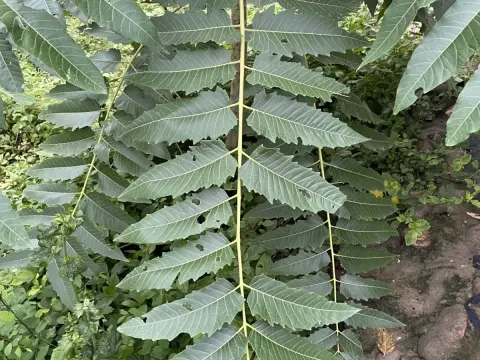
Indian Tree of Heaven
Ailanthus excelsa
Ailanthus excelsa, commonly known as the Indian Tree of Heaven, belongs to the Simaroubaceae family. This species is highly regarded for its rapid growth rate and resilience in various environmental conditions.
What the section contains
Indian Tree of Heaven
Originating from India and Southeast Asia, this tree thrives in tropical and subtropical climates where it is well-adapted to high temperature and humidity regimes.
The plant has a strong light requirement, which means that successful cultivation depends on planting in open spaces where the trees can receive full direct sunlight for most of the day.
Regarding soil preferences, it grows best on deep, well-drained loamy soils. However, it is also known to tolerate a wide range of soil pH levels, making it a versatile candidate for reforestation.
Adequate spacing during plantation establishment is crucial, as trees need sufficient room to develop their root systems and crown without competing excessively for soil nutrients and light.
The timber of Ailanthus excelsa is light, soft, and easy to machine, which makes it an excellent raw material for the manufacture of matchsticks, light packaging crates, and plywood.
Beyond timber, the species has significant potential in the pulp and paper industry due to its high cellulose content and the ability to produce large quantities of woody biomass in a short period.
The leaves and bark are traditionally used in medicinal applications, containing specific alkaloids and bitters that are investigated for their therapeutic properties in diverse clinical studies.
In agroforestry systems, Ailanthus excelsa acts as an effective windbreak, protecting sensitive agricultural crops from mechanical damage caused by strong winds while preventing soil erosion.
Commercial yields are often optimized through high-density planting schemes, with harvesting typically conducted on a rotation cycle that maximizes the economic value of the wood produced per hectare.
Common phytosanitary issues involve fungal pathogens that affect the bark and stem, particularly in environments with poor soil drainage and stagnant airflow around the trunks.
Insect pests represent a significant challenge for plantation managers, with various defoliators able to consume large amounts of leaf mass and thereby reduce the plant's overall energy stores.
Integrated Pest Management (IPM) is recommended to mitigate these risks, focusing on early detection and the use of natural predators to control populations of harmful insects without overusing chemicals.
Care must be taken to avoid physical damage to the trunk during maintenance activities, as wounds provide entrance points for wood-rotting fungi and other secondary opportunistic infections.
Soil nutrient depletion can also act as a threat over multiple growth cycles, necessitating the application of organic amendments to ensure the long-term productivity and health of the trees.