
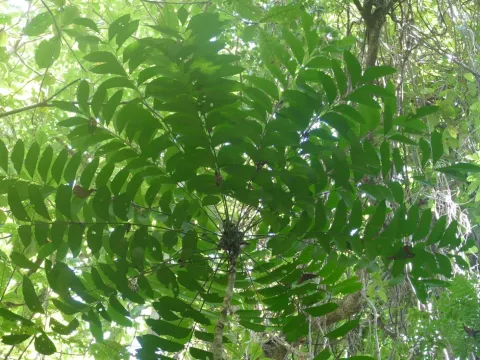
Ailanthus integrifolia
Ailanthus integrifolia
Propagation of Ailanthus integrifolia is primarily achieved through seeds or root cuttings. Seeds should be sown in autumn or early spring, ideally after a period of cold stratification to ensure uniform germination.
What the section contains
Ailanthus integrifolia
When sowing in nurseries, use well-draining soil mixed with organic matter. Seeds are typically planted at a depth of 2–3 cm, ensuring they remain moist during the initial stages of seedling development.
Seedlings are transplanted to their permanent location when they are one or two years old. This period of development in a controlled environment significantly improves the survival rate of the trees in field conditions.
The planting pattern should account for the tree's aggressive growth habit. Standard forestry spacing varies, but a distance of 3–5 meters between plants is usually recommended to ensure sufficient light and air circulation.
Spring is the optimal season for outplanting, as it allows the root system to establish itself before the onset of summer drought or winter temperatures, leading to stronger tree growth.
Ailanthus integrifolia, belonging to the Simaroubaceae family, is a highly adaptable species known for its rapid growth. It thrives in full sunlight and is considered a pioneer species in various ecosystems.
While the tree is not highly demanding regarding soil quality, it performs best in deep, well-drained, and slightly alkaline soils. It can tolerate poor, rocky, and compacted substrates, making it useful for land restoration.
The species exhibits remarkable drought resistance once established, although consistent moisture levels during the juvenile phase significantly increase the biomass production rate.
Environmental conditions that favor the species include temperate to subtropical climates. While it can withstand some cold, it is most productive in regions with longer growing seasons and adequate warmth.
The tree shows good tolerance to saline conditions, which allows it to be grown in areas where other agricultural crops might fail, provided the soil is not permanently waterlogged.
The primary utility of Ailanthus integrifolia lies in its high wood biomass production. Its timber is lightweight and soft, making it suitable for the pulp and paper industry as well as simple construction materials.
In agroforestry, the tree is frequently utilized as a windbreak and a tool for erosion control. Its expansive root system is excellent at stabilizing soil on slopes and preventing nutrient runoff in agricultural areas.
Due to its rapid growth, Ailanthus integrifolia is a candidate for short-rotation coppice forestry to produce wood chips, which can serve as a sustainable source of biomass energy for rural communities.
The species is also noted for its potential in land reclamation projects, where it helps improve soil structure and provides quick cover for degraded or abandoned agricultural lands.
Secondary uses include various phytoremediation applications, as the tree’s biological activity contributes to the extraction or sequestration of certain compounds from contaminated industrial soil.
The most common biological threats to this species are fungal root rots, which often occur in poorly drained, heavy clay soils. Ensuring proper drainage is the most effective preventative measure.
Insect pests, including various defoliators and wood-boring beetles, can cause localized damage. While the tree is generally hardy, severe infestations can stunt growth and weaken the structural integrity of the wood.
Leaf spots caused by fungal pathogens can appear during particularly humid summers. Keeping the plantation area clean of excessive debris and ensuring airflow between trees helps mitigate this risk.
Young trees are vulnerable to rodent damage in the winter, particularly when food is scarce. Protective fencing or trunk sleeves are recommended for seedlings during their first few years in the field.
- Regular monitoring for signs of wilt or discoloration.
- Removal of dead or heavily diseased tree branches.
- Balanced soil fertilization to prevent nutrient deficiencies.