
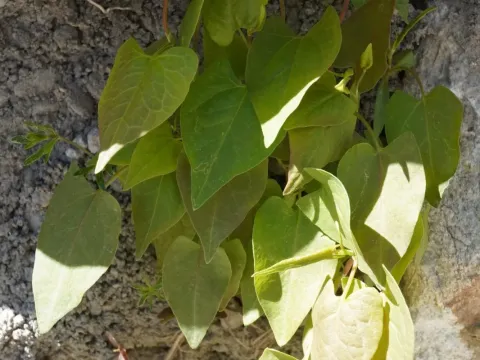
Silver Lace Vine
Bilderdykia
The Silver Lace Vine (Bilderdykia aubertii), often taxonomically referred to as Fallopia aubertii, is a vigorous, woody climbing vine belonging to the Polygonaceae family. Originating from Western China, it is renowned for its remarkable growth rate, which can reach several meters in a single growing season.
What the section contains
Silver Lace Vine
This species is highly adaptable regarding soil conditions, thriving in almost any type of earth, from clay to sandy soils, provided they are well-drained. While it prefers full sun for optimal flowering, it demonstrates significant shade tolerance, making it a versatile choice for various garden exposures.
Climatic requirements are moderate, as the vine is quite hardy. It tolerates cold winters well, though in colder regions, it may die back to the ground or experience tip dieback during severe frost. However, it displays a strong capacity for rapid regeneration during the following spring.
Agricultural management primarily involves rigorous pruning. Because the vine is incredibly aggressive, yearly trimming is essential to prevent it from overwhelming neighboring plants, encroaching on structures, or becoming unmanageable. Pruning stimulates denser foliage and encourages more prolific blooming.
The main commercial and domestic use of this plant is in landscaping as a rapid-growth screen. It is an excellent selection for covering unsightly walls, fences, pergolas, and arbors. Its dense growth provides a significant privacy barrier and natural insulation, creating cool, shaded areas during summer months.
Bilderdykia aubertii possesses a high level of natural resistance to most plant pathogens. Generally, it is not prone to serious diseases, but in conditions of poor air circulation and high humidity, powdery mildew may appear on the foliage as a superficial fungal growth.
Pests are generally limited to occasional aphid infestations, particularly during the early spring flush of new growth. These insects feed on the sap of young shoots, which can slightly deform the tips, but the plant's massive growth rate usually compensates for any minor damage.
Root rot is rarely an issue unless the vine is planted in poorly drained soil or constantly waterlogged conditions. Ensuring a well-drained site during the initial establishment period is sufficient to prevent soil-borne fungal problems throughout its lifespan.
The plant is highly competitive and easily outcompetes surrounding weeds, so there is no need for chemical herbicides around the base. Hand-weeding is only necessary during the first season of growth until the vine establishes its dominant position.
To ensure long-term health, monitor the plant for any unusual yellowing or leaf curling. Proper thinning of the canopy annually helps keep the plant robust and reduces the micro-climate favorable to common garden pests, ensuring a healthy, fast-growing specimen.