
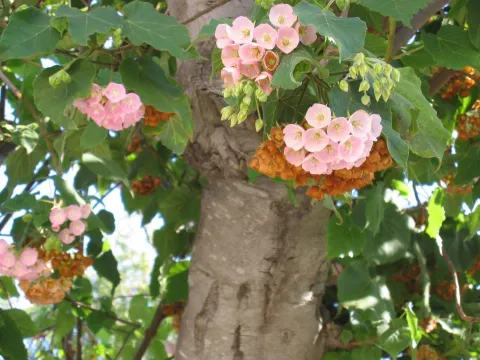
Dombeya
Dombeya
Dombeya is a genus of shrubs and trees belonging to the Malvaceae family. These plants are native to tropical Africa and Madagascar, where they are celebrated for their attractive, often fragrant clusters of flowers.
What the section contains
 Dombeya acutangula
Dombeya alascha
Dombeya alascha
Dombeya buettneri
Dombeya buettneri
Dombeya acutangula
Dombeya acutangula
Dombeya alascha
Dombeya alascha
Dombeya buettneri
Dombeya buettneri
 Dombeya burgessiae
Dombeya burgessiae
Dombeya burgessiae
 Dombeya cacuminum
Dombeya calantha
Dombeya calantha
Dombeya cacuminum
Dombeya cacuminum
Dombeya calantha
Dombeya calantha
 Dombeya cayeuxii
Dombeya cayeuxii
Dombeya cayeuxii
 Dombeya ciliata
Dombeya ciliata
Dombeya ciliata
 Dombeya cymosa
Dombeya cymosa
Dombeya cymosa
 Dombeya delislei
Dombeya delislei
Dombeya delislei
 Dombeya elegans
Dombeya elegans
Dombeya elegans
 Dombeya ferruginea
Dombeya ferruginea
Dombeya ferruginea
 Dombeya ficulnea
Dombeya ficulnea
Dombeya ficulnea
 Dombeya kirkii
Dombeya mollis
Dombeya mollis
Dombeya kirkii
Dombeya kirkii
Dombeya mollis
Dombeya mollis
 Dombeya populnea
Dombeya populnea
Dombeya populnea
 Dombeya pulchra
Dombeya pulchra
Dombeya pulchra
 Dombeya punctata
Dombeya punctata
Dombeya punctata
 Dombeya quinqueseta
Dombeya quinqueseta
Dombeya quinqueseta
 Dombeya reclinata
Dombeya reclinata
Dombeya reclinata
 Dombeya rotundifolia
Dombeya rotundifolia
Dombeya rotundifolia
 Dombeya spectabilis
Dombeya spectabilis
Dombeya spectabilis
 Dombeya tiliacea
Dombeya tiliacea
Dombeya tiliacea
 Dombeya torrida
Dombeya torrida
Dombeya torrida
 Dombeya wallichii
Dombeya wallichii
Dombeya wallichii
Dombeya
The plant requires a warm, frost-free climate to thrive. It prefers a position in full sun to partial shade, providing the plant with enough light to produce blooms while protecting the foliage from intense midday heat.
Optimal growth is achieved in well-drained, fertile soil rich in organic matter. A slightly acidic to neutral pH level is ideal for ensuring that essential nutrients remain bioavailable for the plant's root system.
Agricultural management involves consistent watering during the growing season. The soil should remain moist but never waterlogged, as poor drainage is a primary cause of physiological stress in this species.
For container-grown Dombeya, periodic pruning is essential. Removing spent flowering stems and thinning out crowded branches encourages healthy growth and maintains a desirable shrub shape for landscape or greenhouse use.
Dombeya is susceptible to several pests, most notably spider mites and mealybugs, which thrive in hot and dry indoor or outdoor conditions. These pests typically congregate on the undersides of leaves.
Root rot represents the most significant pathological threat to the crop. This condition is usually the result of overwatering or poorly draining soil media, which prevents adequate oxygen exchange for the roots.
To manage pest populations, growers should prioritize integrated pest management (IPM) practices, such as using horticultural oils or soaps before resorting to systemic insecticides.
Maintaining proper air circulation around the plants is critical to preventing fungal infections like powdery mildew. Spacing plants appropriately in nursery settings is a standard preventative technique.
Monitoring the plant for signs of chlorosis or wilting is recommended, as these are often indicators of underlying nutrient deficiencies or root system issues that require immediate corrective action.