
Dombeya delislei
Dombeya delislei
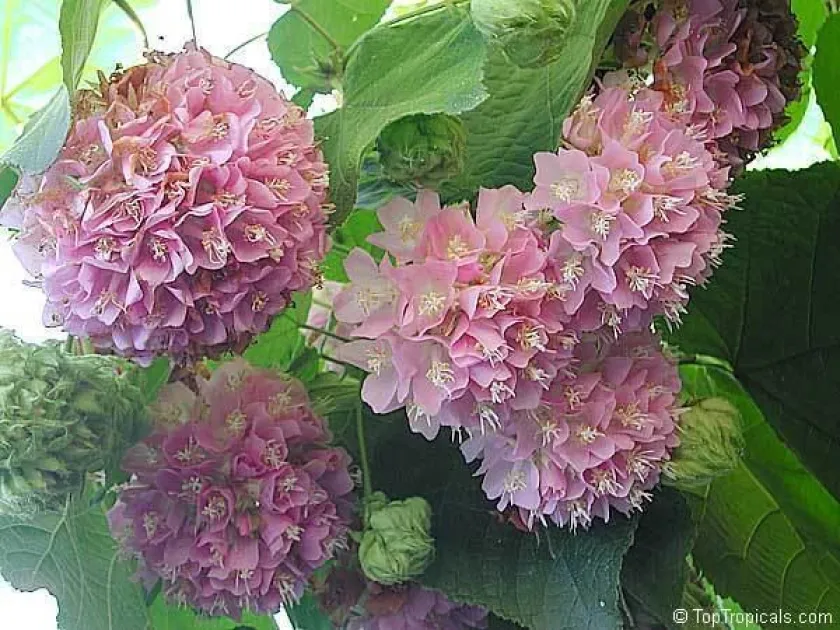
Description
Growing requirements
Dombeya delislei is a perennial shrub or small tree belonging to the Malvaceae family, recognized for its ornamental potential and dense, attractive foliage.
Originating from tropical regions, this species thrives in environments with high humidity and consistent temperatures throughout the year.
Cultivation requirements involve well-drained, nutrient-rich soil that supports root development while preventing moisture stress during the growth season.
Optimal growth is achieved in sunny locations, though some protection from intense afternoon sun is recommended to prevent leaf scorching in young specimens.
The plant is mainly used in landscape architecture as a feature ornamental tree, particularly suited for botanical gardens and climate-controlled conservatories.
Main diseases and pests
Common pests affecting Dombeya delislei include spider mites and mealybugs, which are particularly troublesome in glasshouse or indoor environments.
Root rot pathogens, such as Phytophthora species, represent the primary threat to plant health when soil drainage is insufficient or irrigation is excessive.
Leaf spots may develop in stagnant, humid air, necessitating adequate air circulation to prevent the spread of fungal spores among the foliage.
Regular monitoring of the foliage and stems allows for early detection of infestations before they spread across the entire plant structure.
Integrated pest management strategies, including the use of neem oil or systemic insecticides, are advised to maintain the aesthetic quality of the crop.