
Dombeya burgessiae
Dombeya burgessiae
Description
Sowing dates
Propagation of Dombeya burgessiae is primarily achieved through seeds or stem cuttings. Seeds should be sown in a well-draining, nutrient-rich substrate in early spring, maintaining a temperature range of 22–25 degrees Celsius.
Pre-soaking the seeds in warm water for several hours can significantly improve germination rates. The seeds require light for optimal development, so they should be covered only lightly with soil or vermiculite.
Cuttings are often preferred for maintaining the plant's specific growth characteristics. Semi-hardwood cuttings are taken during the growing season and placed in a medium of peat and perlite under high humidity.
To ensure successful rooting, cuttings should be protected with plastic covers or placed in a propagator. Root development typically takes four to six weeks, after which the plants can be transplanted.
Young seedlings should be pricked out when they develop their first set of true leaves. Proper spacing in the nursery tray is essential to prevent overcrowding and nutrient competition.
Growing requirements
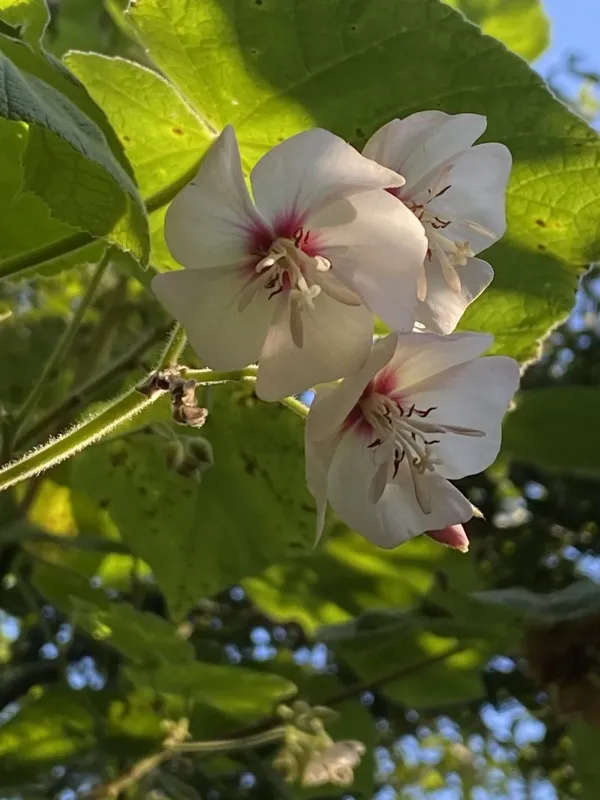
Dombeya burgessiae is a shrub belonging to the Malvaceae family, native to the tropical regions of East and South Africa. It is known for its fragrant, pinkish-white flower clusters.
The plant thrives in full sun exposure, although it can tolerate partial shade in hotter climates. It requires fertile, well-draining soil to support its rapid vertical growth.
Consistent moisture is necessary during the active growing season, but the soil must be allowed to dry slightly between waterings to prevent root rot. In winter, the plant should be kept drier.
This species is highly sensitive to frost and must be protected from temperatures below freezing. In temperate regions, it is cultivated in greenhouses or as a seasonal container plant.
Regular application of balanced fertilizers during the flowering period encourages robust growth. Pruning after the blooming season helps maintain the shrub's desired shape and size.
Main diseases and pests
Common pests include spider mites and mealybugs, which thrive in low-humidity environments. These can be managed using appropriate horticultural oils or systemic insecticides if infestations occur.
Fungal diseases such as grey mold can become an issue if the plant is kept in conditions with poor air circulation or excessive moisture. Regular cleaning of the foliage helps mitigate risks.
Integrated pest management strategies are recommended, including routine monitoring of the plant's leaves. If pests are detected, prompt isolation and treatment are essential.
Proper airflow is critical to prevent moisture buildup within the dense canopy of the shrub. Pruning should be performed to thin out the branches and increase inner circulation.
Sanitation practices, such as the removal of fallen debris from the base of the plant, are vital to preventing the onset of soil-borne pathogens and insect nesting.