
Dombeya cacuminum
Dombeya cacuminum
Description
Growing requirements
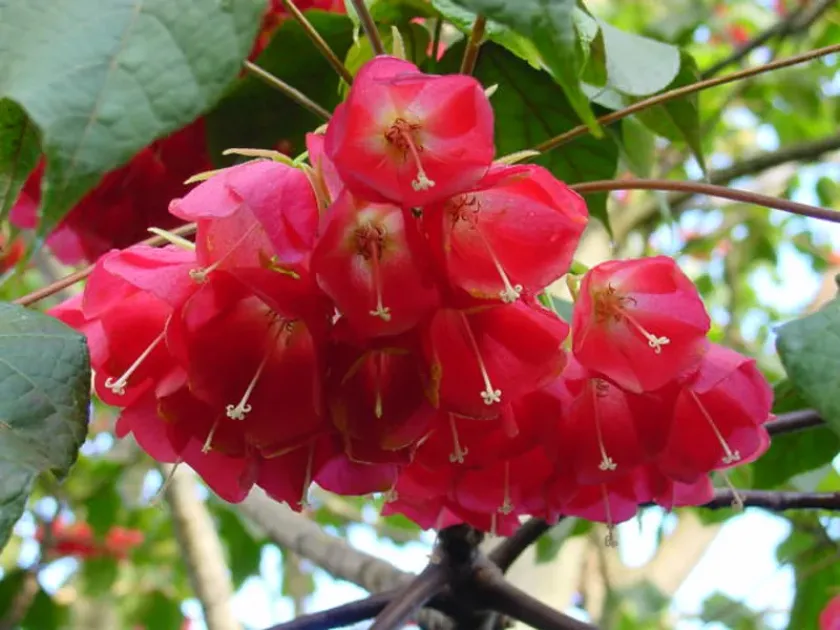
Dombeya cacuminum is a striking evergreen shrub or small tree belonging to the Malvaceae family. Native to the island of Madagascar, it is highly valued for its intense floral display, featuring large, pendant clusters of bell-shaped flowers that range from deep rose to vibrant red, creating a stunning visual impact.
In terms of habitat, this species thrives in tropical environments characterized by high humidity and consistent warmth. It is not cold-hardy, meaning it requires a climate that remains frost-free year-round to ensure healthy development of its heart-shaped leaves and dense canopy growth.
Cultural requirements for Dombeya include a bright, indirect light exposure to maintain healthy foliage. Direct sunlight, especially in intense afternoon hours, should be filtered to prevent leaf scorch. The soil must be well-draining, nutrient-rich, and slightly acidic to mimic the organic-rich forest soils of its native habitat.
Watering management is essential, as the plant needs a consistent supply of moisture without the substrate becoming waterlogged. Regular hydration, coupled with high atmospheric humidity, ensures the plant remains vigorous and minimizes the risk of leaf drop, which often occurs during periods of environmental stress.
The primary use of this species is ornamental horticulture. It is frequently planted in botanical gardens, large tropical conservatories, and private landscapes in frost-free regions. Its architectural form and spectacular flowers make it a perfect choice for focal point planting in diverse tropical landscape projects.
Main diseases and pests
Dombeya cacuminum is susceptible to common greenhouse pests such as spider mites, mealybugs, and scale insects. These pests thrive in stagnant air and low humidity, making regular monitoring of the underside of the leaves and maintaining good air circulation critical components of effective pest prevention.
Fungal diseases, specifically root rot, pose a significant threat when soil drainage is inadequate. Overwatering, especially during cooler or less active growth periods, creates an environment where pathogens can compromise the root system. Proper cultural hygiene, including cleaning fallen leaves and ensuring optimal container drainage, is vital for long-term health.