
Dombeya cayeuxii
Dombeya cayeuxii
Description
Growing requirements
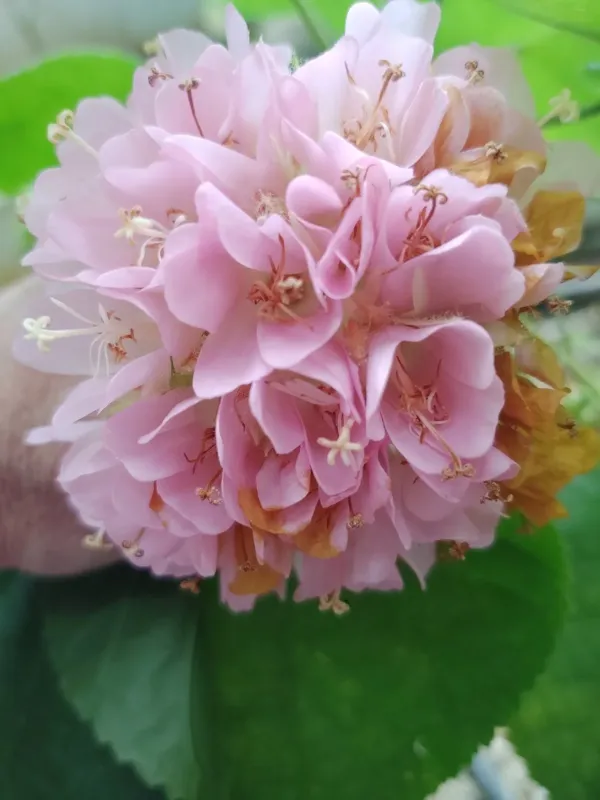
Dombeya cayeuxii is a stunning evergreen shrub or small tree belonging to the Malvaceae family. This specific cultivar is a well-known hybrid resulting from the cross-breeding of Dombeya wallichii and Dombeya mastersii, prized for its large, pendulous clusters of pink, fragrant flowers.
Originating from tropical regions, this plant thrives in humid environments with consistent warmth. In agricultural or horticultural settings, it is best suited for greenhouses or conservatories in non-tropical climates, as it cannot withstand frost or cold wind exposure.
The cultural requirements demand a fertile, well-draining soil mix that remains consistently moist but not waterlogged. The plant performs exceptionally well in rich, organic-based substrates that allow for proper root aeration and nutrient uptake throughout the growing season.
Light intensity is a critical parameter for Dombeya cayeuxii. While it prefers bright, filtered sunlight, direct exposure during peak summer hours can lead to leaf scorching. In indoor environments, placing the plant near south-facing windows with light curtains provides the ideal light balance.
Pruning is an essential part of the agrotechnical management for this plant. To maintain a compact shape and encourage profuse blooming, growers should prune back the long branches after the flowering season, which helps in stimulating new growth for the next cycle.
Main diseases and pests
The primary pests affecting Dombeya cayeuxii include spider mites, which thrive in the dry conditions often found in greenhouses. These small arachnids cause yellowing and spotting of leaves, which can lead to significant defoliation if left unchecked.
Mealybugs are another common threat to this culture. They typically gather in the leaf axils and on the undersides of leaves, protected by a white, waxy substance, which makes direct contact treatment with pesticides more challenging.
Scale insects can also pose a serious risk by sapping nutrients from the stems and branches. Regular inspection of the plant architecture is necessary to catch infestations early, as scale insects can quickly colonize the entire plant surface.
Fungal issues such as Botrytis, or gray mold, can occur if the humidity levels are too high combined with poor air circulation. This disease manifests as fuzzy gray growth on damaged or decaying tissues, which should be removed promptly.
Effective management strategies rely on a combination of cultural practices and chemical control. Maintaining adequate spacing between plants ensures good air movement, which naturally reduces the incidence of both fungal infections and pest outbreaks.