
Dombeya cymosa
Dombeya cymosa
Description
Growing requirements
Dombeya cymosa is a notable member of the Malvaceae family, native to the diverse landscapes of Southern Africa. This evergreen shrub or small tree is highly regarded for its aesthetic qualities and its ability to thrive in tropical and subtropical climates, making it a valued species for botanical collections.
The plant requires full sun to partial shade for optimal growth and development. It thrives in well-draining, fertile soil that maintains a consistent moisture level without becoming waterlogged. Providing a sheltered location away from harsh, drying winds is crucial for maintaining the plant's health and visual appeal.
Agronomic management involves regular watering schedules during dry spells and the application of balanced organic fertilizers to support its vegetative vigor. Pruning is essential, as it helps in maintaining the desired shape and promotes better airflow through the dense canopy, which is vital for overall plant vitality.
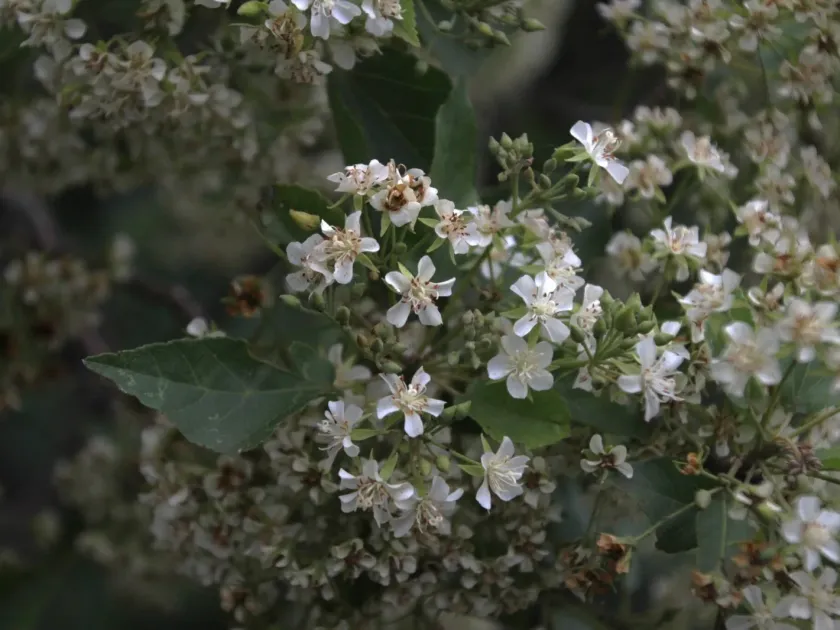
Botanically, the species is identified by its heart-shaped leaves and dense, cyme-like clusters of white or pale pink flowers. The blooming period typically occurs in the latter half of the year, transforming the shrub into a striking focal point within any landscape setting.
In terms of agricultural and horticultural use, Dombeya cymosa is primarily utilized for ornamental purposes. It is often integrated into mixed borders, used as a focal shrub in landscaping, or planted as a privacy screen in regions where the climate allows for year-round outdoor growth.
Main diseases and pests
Common pests that may affect Dombeya cymosa include aphids and spider mites, particularly when environmental conditions are dry or stressful. Regular monitoring of the foliage is recommended to detect any early signs of infestation and to apply necessary control measures before they impact the plant's health.
Fungal diseases like powdery mildew or various leaf spots can occur if the plant is subjected to poor air circulation or excessive humidity levels. Ensuring proper spacing and periodic trimming of dead branches will significantly reduce the risk of these pathogens and ensure a healthy growth cycle.