
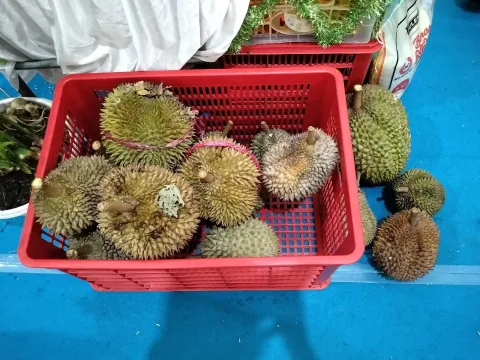
Durian
Durio Adans.
The durian (Durio Adans.) is a tropical tree belonging to the Malvaceae family (subfamily Bombacoideae). It is a large evergreen plant native to the rainforests of Southeast Asia.
What the section contains

Durian
The species requires a strictly tropical climate with consistent temperatures ranging from 24°C to 30°C. It is extremely sensitive to chilling temperatures and cannot survive frost.
High humidity and consistent annual rainfall are essential for the healthy growth of durian trees. Significant dry spells can severely impact fruit set and overall plant vigor.
Soils must be deep, fertile, and well-drained. The species is intolerant of waterlogged conditions, which lead to rapid root rot, a common fatal issue in durian plantations.
Planting sites should be chosen with ample sunlight and good air circulation, as high-intensity light is necessary to support the metabolic demands of fruit production.
Durian is cultivated primarily for its highly nutritious and culturally significant fruit. It is often referred to as the king of fruits in many Asian countries.
Trees typically reach reproductive maturity between 6 and 10 years of age. Once established, they can continue to bear fruit for several decades.
A single healthy adult tree can produce between 50 and 150 fruits per season, depending on the cultivar, pollination efficiency, and local climatic stability.
The pulp is rich in fats, complex carbohydrates, proteins, and essential vitamins. It is a staple food and a luxury commodity in various international culinary markets.
The fruit's commercial value drives intensive agricultural research into developing high-yielding, disease-resistant, and early-maturing cultivars.
The most destructive disease affecting durian cultivation is Phytophthora palmivora, which causes severe root and bark rot, often killing entire trees if untreated.
Pests such as the durian fruit borer are a major concern. These larvae tunnel into the ripening fruit, causing premature fruit drop and complete loss of crop quality.
Spider mites and scale insects can significantly weaken the trees by feeding on leaves, leading to reduced photosynthetic capacity and increased susceptibility to other diseases.
Integrated Pest Management (IPM) is crucial, involving the use of systemic fungicides, orchard sanitation, and pruning to ensure airflow through the canopy.
Proper field management, including the maintenance of adequate spacing and healthy soil microbiology, remains the first line of defense against biological threats.
Harvesting durian is a high-risk task due to the size, weight, and sharp spines of the fruits. Fruits are heavy and can cause serious injury if they fall from great heights.
In traditional farming, fruits are collected after they fall naturally. However, commercial operations often use specialized poles to harvest the fruit just before abscission.
Maturity is indicated by the aroma and the appearance of small cracks along the fruit's suture lines. Once these signs are present, the fruit is considered ready for market.
Post-harvest handling is delicate; fruits must be handled with care to prevent bruising, which accelerates fermentation and spoilage in the humid tropical environment.
Optimal storage conditions involve keeping the fruit in well-ventilated, cool areas to extend shelf life before it reaches consumers in domestic or export markets.