

Reference · Crops
Wormwood
Artemisia L.
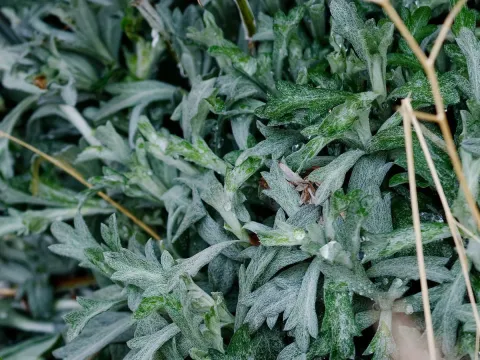
Wormwood belongs to the Asteraceae family. Sowing is typically performed in early spring or late autumn in well-prepared, warm soil, as stable temperatures are essential for seed germination.
21
items
What the section contains
 Tarragon
Artemisia dracunculus L.
12 products
Tarragon
Artemisia dracunculus L.
12 products
 Artemisia argyi
 H. Lév. & Vaniot
Artemisia argyi
Artemisia argyi H. Lév. & Vaniot
 Artemisia ludoviciana
 Nutt.
Artemisia ludoviciana
Artemisia ludoviciana Nutt.
 Balchan wormwood
Artemisia balchanorum Kkasch
Balchan wormwood
Artemisia balchanorum Kkasch
 Capillary wormwood
Artemisia scoparia Waldst. & Kit.
Capillary wormwood
Artemisia scoparia Waldst. & Kit.
 Genepi
Artemisia umbelliformis Lam.
Genepi
Artemisia umbelliformis Lam.
 Gmelin's wormwood
Artemisia gmelinii Weber ex Stechm.
Gmelin's wormwood
Artemisia gmelinii Weber ex Stechm.
 Japanese mugwort
Artemisia princeps Pamp.
Japanese mugwort
Artemisia princeps Pamp.
 Louisiana Sage
Artemisia ludoviciana Nutt. x Artemisia stelleriana Besser
Louisiana Sage
Artemisia ludoviciana Nutt. x Artemisia stelleriana Besser
 Maui wormwood
Artemisia mauiensis (A. Gray) Skottsb.
Maui wormwood
Artemisia mauiensis (A. Gray) Skottsb.
 Mugwort
Artemisia vulgaris L.
Mugwort
Artemisia vulgaris L.
 Santonic wormwood
Artemisia santonicum L.
Santonic wormwood
Artemisia santonicum L.
 Sea wormwood
Artemisia maritima L.
Sea wormwood
Artemisia maritima L.
 Southernwood
Artemisia abrotanum L.
Southernwood
Artemisia abrotanum L.
 Spiked wormwood
Artemisia umbelliformis Lam. subsp. eriantha (Ten.) Vallès-Xirau & Oliva Brañas
Spiked wormwood
Artemisia umbelliformis Lam. subsp. eriantha (Ten.) Vallès-Xirau & Oliva Brañas
 Steller's wormwood
Artemisia stelleriana Besser
Steller's wormwood
Artemisia stelleriana Besser
 Sweet wormwood
Artemisia annua L.
Sweet wormwood
Artemisia annua L.
 Taurian wormwood
Artemisia taurica Willd.
Taurian wormwood
Artemisia taurica Willd.
 Tree wormwood
Artemisia arborescens (Vaill.) L.
Tree wormwood
Artemisia arborescens (Vaill.) L.
 White plume wormwood
Artemisia lactiflora Wall. ex DC.
White plume wormwood
Artemisia lactiflora Wall. ex DC.
 Wormwood
Artemisia absinthium L.
Wormwood
Artemisia absinthium L.
Marketplace
Products in this section · 12


Wormwood
The seeds of wormwood are very small, so they should be sown at a depth of no more than 0.5–1 cm. Using the seedling method often yields better results and allows for more efficient space utilization.
For industrial production, vegetative propagation—such as root division or cuttings—is frequently employed to preserve the specific varietal traits of species like tarragon wormwood.
The planting pattern depends on the specific variety: for perennial stands, row planting with spacing of 60–70 cm is considered optimal to allow for proper maintenance and weeding.
Effective weed management during the first year is critical, as wormwood seedlings grow slowly and can be easily outcompeted by more aggressive plant species.
Wormwood is a light-demanding crop. To ensure high yields of essential oils and active compounds, plants require maximum exposure to direct sunlight throughout the growing season.
While relatively adaptable, wormwood performs best in light, well-drained sandy or loamy soils with a neutral or slightly alkaline pH balance.
The plant is highly drought-tolerant and cannot withstand waterlogging. Excessive soil moisture often leads to root rot and the development of fungal infections.
Wormwood is naturally adapted to open fields and rocky terrain, meaning that excessive application of organic fertilizers can be counterproductive and may reduce raw material quality.
The ideal temperature range for active growth is 20–25 degrees Celsius, and most species are hardy enough to survive winter in temperate climates without additional cover.
The yield of green biomass depends on the species and the intensity of agricultural practices, typically ranging from 5 to 15 tons of raw material per hectare.
Peak productivity is usually reached in the second or third year after planting, once the root system has fully matured and can support vigorous growth of the aerial parts.
Plant density significantly affects total yield; while denser planting produces more biomass, it may decrease the concentration of essential oil components per unit of plant tissue.
Regular pruning stimulates branching, which promotes the development of new reproductive shoots and increases the total harvestable product throughout the season.
In industrial farming, economic efficiency is assessed not only by the weight of the harvested crop but also by the total yield of essential oils or extractable compounds.
The primary threat to the crop is powdery mildew, which affects foliage under conditions of high humidity and poor air circulation within the plant canopy.
Common pests include aphids and spider mites, which feed on young shoots, causing leaf deformation and reducing the plant's overall photosynthetic capacity.
During prolonged rainy periods, root rot caused by soil-borne fungal pathogens is a significant risk, which can lead to rapid decline in plant populations.
Preventive measures include strict crop rotation, regular thinning to ensure airflow, and the application of biological fungicides during periods of high pathogen activity.
It is important to avoid planting near host species that act as reservoirs for viruses or insects known to migrate onto wormwood stands.
The harvest of medicinal or essential oil-bearing wormwood is conducted during the peak flowering stage, when the concentration of beneficial compounds in the inflorescences is at its maximum.
Mechanical harvesting is common for large-scale operations, where plants are cut at a height of 10–15 cm above ground level to avoid damaging the crown.
The harvested material must be transported quickly to drying or processing facilities, as moisture and heat buildup can rapidly degrade volatile aromatic components.
Drying is performed in shaded, well-ventilated areas or in specialized drying chambers at temperatures not exceeding 40 degrees Celsius to preserve the chemical profile.
Once dried, the raw material is processed to remove woody stems and impurities, then packaged in airtight containers and stored in a cool, dark environment.