
Artemisia argyi
Artemisia argyi H. Lév. & Vaniot
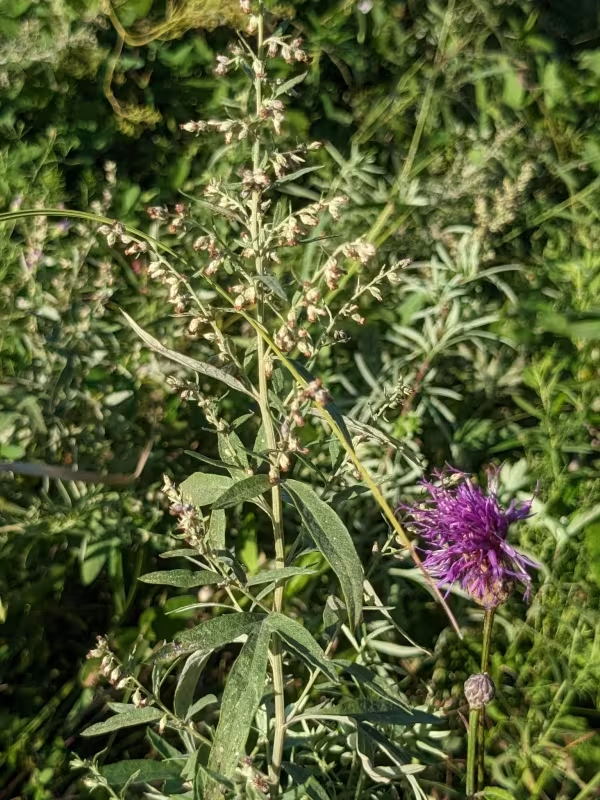
Description
Sowing dates
Artemisia argyi is a perennial herbaceous plant belonging to the Asteraceae family. In agricultural practice, it is primarily propagated vegetatively through rhizome division or stem cuttings, which ensures the consistency of its medicinal properties and rapid field establishment.
Planting is typically performed in early spring as soon as soil temperatures reach 8–10 degrees Celsius. In regions with temperate climates, autumn planting is also viable, allowing the root system to settle before the next season's growth cycle begins.
For seed-based propagation, sowing occurs in nurseries during early spring. Seedlings are transplanted into the open field once they reach the 4–6 true leaf stage, ensuring sufficient development for outdoor adaptation.
The selection of the planting site is crucial; Artemisia argyi requires full sun exposure for optimal synthesis of active compounds. Choosing fields protected from strong winds is recommended to prevent lodging of the stems.
Proper soil preparation involves plowing and incorporating organic fertilizers to provide a nutrient-rich foundation for the plants, which supports vigorous vegetative growth during the first year of cultivation.
Growing requirements
This crop is highly adaptable to various soil types, preferring well-drained loams or sandy loams with a neutral to slightly alkaline pH. Good drainage is vital, as waterlogging is the primary cause of root decay and overall plant failure.
While drought-tolerant, Artemisia argyi requires consistent moisture during peak growth stages to maximize foliage yield. Controlled irrigation is beneficial, particularly during the early stages of vegetation, to ensure uniform stand development.
The optimal temperature for growth ranges between 18 and 25 degrees Celsius. The plant is hardy and capable of surviving significant temperature fluctuations, making it suitable for a wide range of geographical environments.
Agricultural management requires regular inter-row cultivation to suppress weed growth and improve soil aeration. Maintaining a weed-free field is essential for the healthy development of this perennial crop.
Fertilization should be managed carefully; excessive nitrogen can lead to excessive stem growth at the expense of oil quality. Balanced phosphorus and potassium inputs are preferred to improve the overall resilience and chemical potency of the harvested material.
Yield
Yield performance in Artemisia argyi is directly linked to the age of the plantation. The highest productivity is usually observed during the second and third years, when the root system is fully mature and capable of supporting multiple harvests per season.
Depending on local climate conditions, producers can perform two or even three cuts per season. Each harvest should be managed to prevent plant exhaustion, ensuring the longevity of the perennial stand.
Maintaining yield requires annual fertilization after harvest to replenish soil nutrients. This helps the plants recover quickly and produce robust regrowth for subsequent cycles within the same season.
Commercial viability is measured by the concentration of essential oils and active flavonoids in the dry leaves. Proper agricultural practices throughout the growing season significantly influence the marketability and value of the final product.
A well-maintained field of Artemisia argyi can remain productive for 5–7 years before needing replanting, which makes it a highly sustainable option for medicinal herb producers.
Main diseases and pests
Powdery mildew and various leaf spot diseases are common threats, especially in humid conditions with poor air circulation. Timely thinning and the use of approved fungicides can mitigate these risks effectively.
Pests such as aphids and spider mites can attack young shoots, impacting leaf health. Integrated pest management strategies, including the use of biological controls, are preferred to maintain the organic integrity of the medicinal crop.
Root rot is a major threat in heavy, waterlogged soils. Prevention focuses on selecting sites with good slope or tile drainage and avoiding compaction during the rainy season to ensure root health.
Rust infections can occur during prolonged wet weather. Affected plants should be removed immediately to prevent the spread of spores across the plantation, and humidity control through proper spacing is essential.
Weed control is critical, especially during the establishment year. If left uncontrolled, weeds can outcompete the young Artemisia plants, leading to uneven stands and reduced overall production quality.
Harvesting
The harvest occurs during the peak flowering stage, as this is when the concentration of medicinal compounds, such as eucalyptol and other essential oils, is at its highest level for pharmaceutical use.
Stems are mown at a height of approximately 10–15 centimeters above ground level. Utilizing specialized mechanical equipment allows for efficient harvesting across larger areas while keeping the harvested biomass clean.
Immediately after cutting, the foliage must be sorted and cleared of any impurities. The speed of processing is vital to prevent fermentation or discoloration of the leaves, which could degrade quality.
Drying is conducted in shaded, well-ventilated areas or in low-temperature drying chambers. The temperature must not exceed 40 degrees Celsius to avoid the loss of volatile oils and to preserve the green color of the leaves.
Once dried, the leaves are processed by separating them from the woody stems, followed by milling or pressing depending on whether the product is intended for moxa sticks, herbal medicine, or extract manufacturing.