
Tree wormwood
Artemisia arborescens (Vaill.) L.
Description
Sowing dates
Artemisia arborescens, known as tree wormwood, is primarily propagated through vegetative cuttings to ensure the preservation of maternal genetic traits and superior oil content. The optimal window for taking softwood cuttings is during the late spring to early summer when the plant exhibits peak vegetative activity.
While seed propagation is possible, it is more commonly used in breeding programs or when specific clones are not readily available. Seeds require cold stratification to break dormancy and ensure uniform germination when sown in protected environments.
The seeding substrate must be well-drained and lightweight to prevent moisture accumulation around the developing roots. Careful attention to light exposure is crucial, as seeds require light to trigger germination processes.
Transplanting seedlings or rooted cuttings to the permanent field site should only occur once the risk of spring frost has completely passed. Proper spacing is essential to ensure adequate airflow around each plant as it matures.
Field preparation involves deep tilling and organic amendment to improve soil structure, ensuring that the roots have sufficient oxygenation to thrive throughout the growing season.
Growing requirements
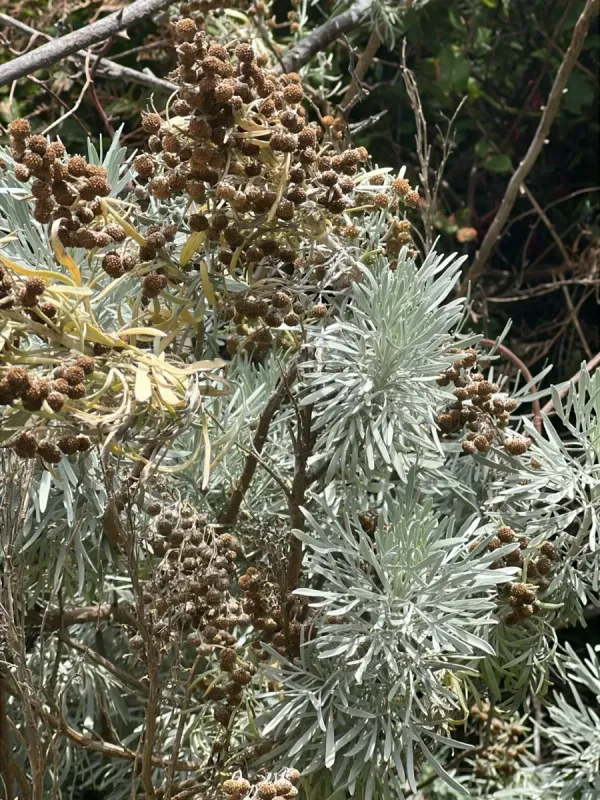
As a member of the Asteraceae family, tree wormwood thrives in Mediterranean-like climates and requires full sunlight to develop its characteristic silvery-gray foliage and high concentration of volatile compounds.
The plant demands well-drained soil with a neutral to slightly alkaline pH. It is highly intolerant of waterlogged conditions, which lead to root rot; therefore, planting on slopes or in raised beds is recommended for heavier soil types.
Regarding climate, tree wormwood is a semi-hardy shrub. In temperate zones, it necessitates overwintering in protected areas or greenhouses to prevent freeze damage. It exhibits remarkable drought tolerance once established.
Regular maintenance, particularly pruning, is vital to manage its growth habit. Without consistent trimming, the plant tends to become woody and sparse, significantly reducing the surface area available for new leaf growth.
Watering should be managed strategically, allowing the soil to dry out between irrigation cycles. This practice helps maintain the potency of the essential oils, which can be diluted by excessive hydration.
Yield
The yield potential of Artemisia arborescens is primarily measured by the biomass of leaves and the subsequent output of essential oils. With proper management and frequent harvesting cycles, high yields of raw material are achievable throughout the season.
Multiple harvests are possible in climates where the growing season is long. The highest concentration of aromatic oils is found in the foliage just as the plant enters its early flowering stage.
Mechanized harvesting tools are often utilized for large-scale operations. It is critical to adjust cutting heights to preserve the lower scaffold branches, allowing the plant to regenerate quickly for subsequent cuts.
Post-harvest management is the most important factor in quality control. The raw material must be processed or dried immediately in shaded, well-ventilated conditions to avoid the loss of volatile terpenoids.
Profitability is enhanced by on-site processing facilities where essential oil extraction can occur shortly after harvest, ensuring that the highest quality market-ready product is achieved.
Main diseases and pests
Fungal diseases, specifically powdery mildew, pose a significant threat during periods of high humidity or poor air circulation. Furthermore, root rot remains a constant risk if soil drainage standards are not strictly maintained.
Pests that frequently target tree wormwood include aphids, which colonize the new growth at the tips, and spider mites, which can proliferate rapidly under dry, hot conditions, causing significant leaf chlorosis.
Integrated pest management (IPM) strategies, including the use of biological control agents and narrow-range insecticidal soaps, are preferred to maintain the chemical purity required for the medicinal and perfume industries.
Cultural practices like maintaining proper plant density and removing leaf debris from the soil surface are effective preventative measures against the spread of both fungal spores and overwintering insect eggs.
A rigorous monitoring program allows for early detection of pest infestations or disease outbreaks, enabling localized treatment rather than broad-spectrum chemical interventions that could harm beneficial insects.
Harvesting
The harvesting of tree wormwood must be conducted in dry conditions, ideally in the morning after dew has evaporated, to ensure the essential oil content is at its peak and to prevent spoilage during drying.
Sharp, sterilized pruning equipment is essential to create clean cuts. A clean cut ensures rapid healing and prevents the entry of pathogens into the vascular system of the plant, which is common with dull tools.
Sorted raw material should be moved rapidly to the drying facility. Thin layering on drying racks is recommended to allow for even airflow and to prevent the fermentation that can occur in large, dense piles of plant material.
Temperature control during the drying process is critical; excess heat can destroy the complex chemical structure of the essential oils, significantly lowering the commercial value of the final harvest.
After the harvest season, the plants should be inspected for general health and potentially lightly fertilized to support their recovery, preparing them for winter dormancy or the next growth cycle.