
Capillary wormwood
Artemisia scoparia Waldst. & Kit.
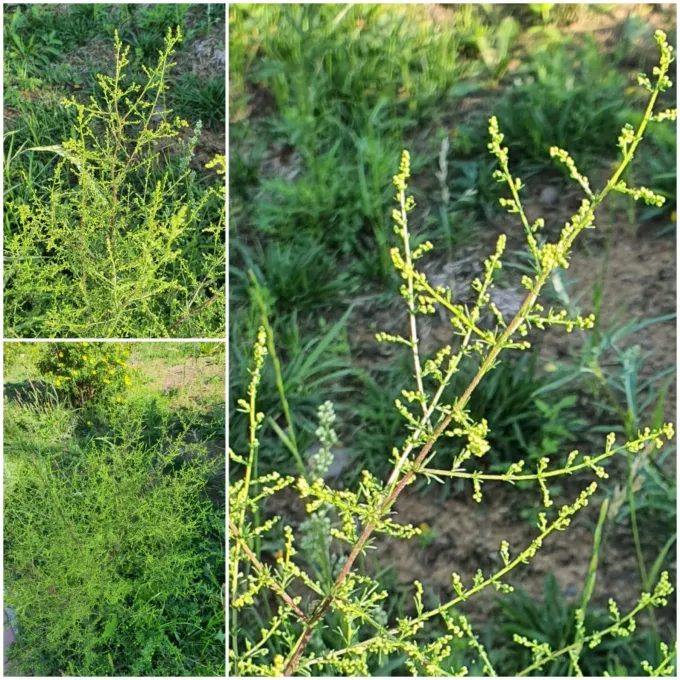
Description
Sowing dates
Capillary wormwood, scientifically known as Artemisia scoparia, belongs to the Asteraceae family. It is typically propagated via seeds, which require specific conditions for successful germination in agricultural settings.
The optimal sowing time is early spring, ensuring that soil temperatures are sufficient for consistent sprout emergence. Seeds should be sown shallowly, ideally at a depth of less than one centimeter, as they require light to stimulate growth.
Proper field preparation is essential; the seedbed should be finely cultivated and free of weeds to ensure the young seedlings are not outcompeted for nutrients and sunlight during their initial developmental stage.
Row planting with spacing of 45 to 60 centimeters is recommended to facilitate airflow and simplify mechanical weeding operations during the growth cycle.
To achieve an ideal plant density, practitioners often perform thinning once the seedlings have reached a sufficient height, ensuring that individual plants have space to develop fully.
Growing requirements
This species is highly adaptable, exhibiting excellent drought resistance and an ability to thrive in harsh, open environments with intense solar exposure.
Regarding soil preferences, Artemisia scoparia is versatile, performing exceptionally well in light sandy, loamy, or even slightly saline soils where other crops might fail to yield.
Drainage is a critical factor for successful cultivation. The root system is sensitive to waterlogging, which can lead to rapid decay and poor performance in poorly drained agricultural plots.
In terms of fertilization, the plant is relatively undemanding. Over-fertilization with nitrogenous compounds is discouraged, as it tends to favor excessive biomass over the production of desirable secondary metabolites and essential oils.
Regular maintenance, such as loosening the soil in the inter-rows, is beneficial for oxygenating the roots and maintaining a healthy plant structure throughout the growing season.
Yield
The yield of Artemisia scoparia is predominantly assessed based on the dry biomass and the concentration of essential oil accumulated during the flowering period.
Harvesting is typically timed for the mass flowering phase, as this is when the biochemical content of the herb reaches its peak, ensuring maximum market value for the raw product.
Technological improvements in harvesting, such as using calibrated cutting equipment, help ensure uniformity in the raw material and reduce losses during the collection process.
Post-harvest management involves drying the material at controlled temperatures below 40 degrees Celsius to prevent the oxidation of volatile components essential for its pharmaceutical and industrial use.
Efficient supply chain practices, including immediate storage in moisture-controlled environments, are necessary to maintain the quality of the harvested crop.
Main diseases and pests
The main threats to the cultivation of capillary wormwood include soil-borne fungal pathogens, particularly if the fields are located in low-lying, damp areas prone to humidity.
Insects like aphids and leaf beetles can cause significant damage to the foliage, necessitating regular scouting to manage populations before they impact the total yield.
Strategic crop rotation is the most effective method for controlling pests and diseases, ensuring that the field is not exhausted and that pathogen life cycles are disrupted.
Limiting the use of broad-spectrum chemical pesticides is advisable, as the crop is often utilized for medicinal or culinary purposes where purity is of paramount importance.
Utilizing biological control methods, such as encouraging natural predators, can help maintain a healthy balance in the field without compromising the biological integrity of the plant.