
Steller's wormwood
Artemisia stelleriana Besser
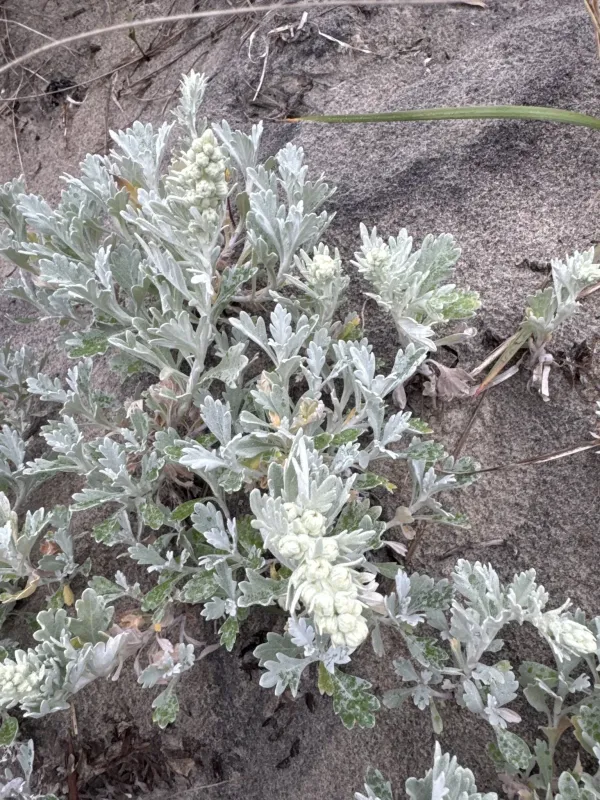
Description
Sowing dates
Steller's wormwood (Artemisia stelleriana), belonging to the Asteraceae family, is a resilient perennial herb. The primary method of propagation is vegetative, involving root division or stem cuttings taken during late spring.
Seed propagation is also viable but requires cold stratification to break dormancy. Seeds should be sown indoors in early spring using a gritty, well-draining potting mix to ensure optimal germination rates.
Direct sowing into outdoor beds should occur once the soil has warmed, typically in late April or May. The seeds require light to germinate, so they should be only lightly covered with substrate.
Space the plants approximately 30 to 50 centimeters apart. This allows for healthy air circulation, which is crucial for preventing fungal issues in the dense, silver-leafed foliage during humid spells.
As the plant establishes, it produces spreading rhizomes. It is advisable to monitor the perimeter of the planting area to ensure the wormwood does not crowd out less vigorous neighbors in the garden.
Growing requirements
This species is native to coastal dunes and cliffs, which dictates its preference for full sun and sandy, well-draining soil. It thrives in saline environments and is highly tolerant of strong winds.
Watering requirements are low; once established, the plant is remarkably drought-tolerant. Overwatering is the most common cause of failure, leading to root rot and loss of the characteristic silvery-white color.
The soil should be nutrient-poor to average. Rich, fertile soils often result in leggy, loose growth that lacks the compact, mounded shape desired in ornamental landscaping.
Steller's wormwood is exceptionally hardy and can withstand cold winters. It remains evergreen or semi-evergreen in milder climates, providing visual interest throughout the winter season.
Maintenance is minimal. Avoid heavy mulching around the crown, as excessive moisture retention against the base of the plant can encourage rot and decline of the entire specimen.
Harvesting
Regular pruning is essential to maintain the mounded form. A major cut-back in early spring removes winter-damaged stems and encourages a flush of new, intensely silver growth for the upcoming season.
A secondary light trim in mid-summer helps prevent the plant from becoming woody at the base. It also serves to remove flower stalks, which many gardeners prefer to suppress to focus energy on foliage.
For medicinal or floral use, the foliage should be harvested on a dry, sunny morning after the dew has evaporated. This ensures that the essential oils are at their peak and reduces the risk of spoilage.
Drying should be done in a shaded, well-ventilated area. Rapid drying helps preserve the delicate silvery hairs on the leaves, which are the main aesthetic feature of this plant.
Properly dried material should be stored in an opaque container away from sunlight to prevent the breakdown of compounds and loss of color, ensuring the plant retains its quality for future use.