
Santonic wormwood
Artemisia santonicum L.
Description
Sowing dates
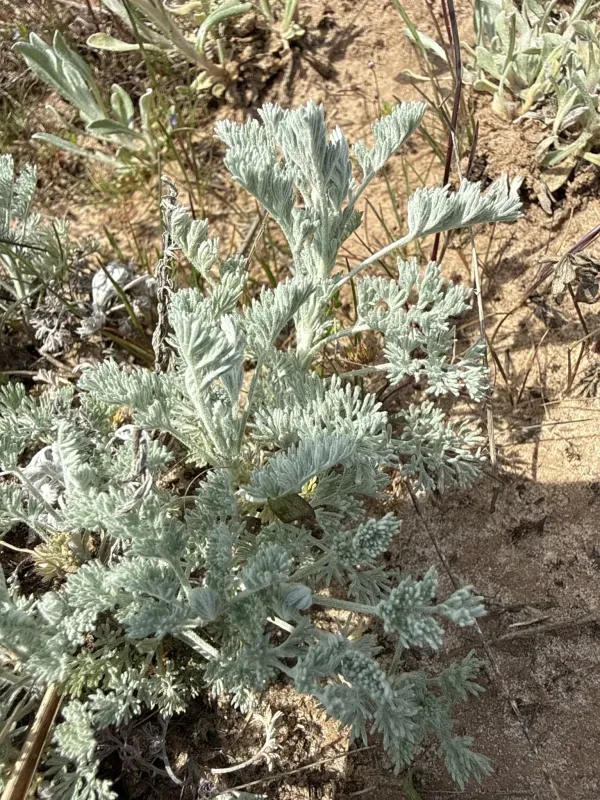
Santonic wormwood (Artemisia santonicum L.) belongs to the Asteraceae family. It is a perennial herbaceous plant that reproduces via seeds and vegetative rhizome spreading in its natural environment.
In industrial agriculture, seeding is best performed in late autumn or early spring when soil temperatures reach 5–8 degrees Celsius. Seed stratification is recommended to ensure uniform germination.
Given the tiny size of the seeds, shallow planting at a depth of 0.5–1 cm is essential for successful emergence. An optimal spacing of 45–60 cm between rows allows for efficient crop management.
Seedlings develop slowly, necessitating strict weed control strategies during the early stages of plant growth. Once established, the plants show high resilience to variable environmental conditions.
As the plant matures, it develops a robust rosette, and its lower stems become woody by autumn, which helps the crop survive harsh winter temperatures.
Growing requirements
This species is a xerophyte, well-adapted to drought-prone environments and saline soils where many other crops fail to thrive. It requires full sunlight to maximize the accumulation of active compounds.
While tolerant of various soil types, Santonic wormwood performs best in light, sandy, or chestnut soils with neutral to slightly alkaline pH levels.
Good drainage is critical; the plant cannot tolerate waterlogging, which often leads to root decay and decreased yields. High summer temperatures are generally well-tolerated by this species.
Excessive fertilizer application, especially nitrogen, should be avoided as it promotes rapid vegetative growth at the expense of floral development and medicinal value.
The plant demonstrates significant cold hardiness, capable of enduring temperatures below -20 degrees Celsius if the soil remains relatively dry during winter dormancy.
Yield
The primary economic output is the harvesting of immature flower heads (often referred to as wormseed), which are valued for their high concentration of santonin, a powerful anthelmintic agent.
Yields vary depending on age and site conditions, typically producing several tons of raw biomass per hectare, with the valuable dry floral fraction being a smaller but high-value component.
Once established, a single plantation can remain productive for 5 to 6 years, making it a sustainable choice for long-term agricultural planning in arid regions.
Effective yield management requires strict harvesting timing to ensure the flower heads contain the highest possible levels of active medicinal ingredients.
Technological improvements in harvesting and post-harvest drying have significantly increased the efficiency of extracting santonin from this specific crop.
Main diseases and pests
The most significant pest for this crop is the wormwood moth, which targets the developing floral heads, potentially causing substantial losses in crop value if left uncontrolled.
Fungal pathogens such as powdery mildew and rust may occur in high-density plantings or during periods of excessive humidity, requiring careful site monitoring.
Prevention through proper crop rotation and the elimination of wild Artemisia species in the vicinity is the best strategy for maintaining a healthy plantation.
Root rot, often caused by Fusarium species, may develop in poorly drained soils, emphasizing the importance of site selection before planting begins.
Integrated pest management, including biological controls, is highly recommended to protect the crop while maintaining the purity required for medicinal applications.
Harvesting
Harvesting is performed during the budding stage, just before the flowers begin to open. This precise timing is crucial because santonin content peaks before anthesis.
In large-scale operations, mechanical harvesters are used to collect the floral tops. Once harvested, the material must be processed immediately to prevent heating and spoilage.
Drying is a critical phase, ideally conducted in shaded, well-ventilated areas or in climate-controlled dryers at temperatures not exceeding 45 degrees Celsius to preserve volatile oils.
The dried product is then stored in cool, dark, and dry conditions to prevent the degradation of its active compounds over time.
Quality control during harvesting and drying ensures that the final product meets pharmaceutical standards, maximizing its marketability.