
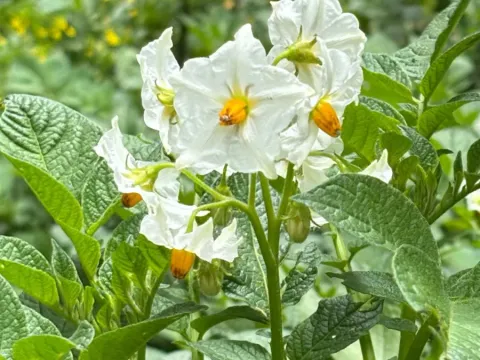
Potato
Solanum tuberosum L. subsp. tuberosum
Potato planting is initiated when the soil temperature at a 10 cm depth reaches approximately +7...+8 °C, which typically occurs in mid-spring depending on the latitude.
What the section contains
Potato
Pre-sprouting (chitting) of seed tubers in a bright, cool environment at +12...+15 °C for several weeks prior to planting significantly accelerates emergence and early growth.
Using certified, virus-free seed tubers is crucial to establish a healthy crop and prevent the early spread of diseases within the field.
Planting depth is generally between 6 and 10 cm, adjusted according to soil moisture and texture to ensure optimal germination conditions for the seed pieces.
Spacing typically ranges from 70 to 75 cm between rows, with 25-30 cm intervals between tubers, allowing sufficient space for root development and hilling operations.
Potato (Solanum tuberosum L. subsp. tuberosum) is a tuberous perennial plant in the Solanaceae family that is grown globally as an annual vegetable crop.
The crop thrives in well-drained, fertile, loamy, or sandy-loam soils with a slightly acidic pH range of 5.0 to 6.0, which helps minimize common scab infections.
Potatoes require consistent moisture, especially during the initiation of tubers and the rapid growth phase, as water stress can severely reduce yield quality.
Optimal vegetative growth occurs between +18 °C and +22 °C; temperatures exceeding +25 °C can inhibit tuber development and reduce starch accumulation.
Regular cultivation and hilling are essential agronomic practices that protect the developing tubers from exposure to light and help manage weed competition.
Potato yields vary significantly based on the chosen variety, soil fertility management, and local climatic conditions, typically ranging from 30 to 50 tons per hectare.
Effective crop rotation is a fundamental practice, with potatoes planted only once every three to four years to prevent the buildup of soil-borne pathogens and pests.
Balanced fertilization, providing appropriate nitrogen for canopy growth and potassium for tuber enlargement, is critical for achieving maximum commercial yield.
Supplemental irrigation through drip or sprinkler systems can effectively mitigate drought stress and ensure high-quality, uniform tuber production throughout the season.
Regular field scouting to monitor pest populations and disease outbreaks allows for timely interventions, protecting the yield potential during the active growing cycle.
Late blight (Phytophthora infestans) is the most significant pathogen affecting potato crops, necessitating a robust and proactive fungicide program during wet weather conditions.
The Colorado potato beetle remains the primary insect pest in many regions, causing significant defoliation that directly results in reduced photosynthetic efficiency and yield loss.
Wireworms and white grubs can cause mechanical damage to tubers, which not only affects marketability but also creates entry points for secondary bacterial soft rot.
- Late blight and Early blight
- Colorado potato beetle
- Wireworms and Nematodes
- Common scab and Black scurf
Viral pathogens such as Potato Leafroll Virus (PLRV) are often transmitted by aphid vectors, emphasizing the need for effective pest management and high-quality seed selection.
Harvesting usually commences once the potato foliage has naturally senesced and turned brown, which generally occurs 90 to 120 days after planting, depending on maturity.
Vine killing or mechanical desiccation prior to harvest helps to harden the tuber skins, reducing susceptibility to bruising and damage during the harvesting process.
Optimizing the moisture content of the soil at harvest time is essential for efficient machine operation and to ensure the tubers are clean before entering storage.
After collection, a curing period in a dark, well-ventilated space at +15 °C allows for the healing of minor skin abrasions and improves the shelf life of the tubers.
Potatoes should be stored in cool, dark, and humid conditions (+2...+4 °C) to maintain dormancy and prevent quality degradation during the long-term storage phase.