
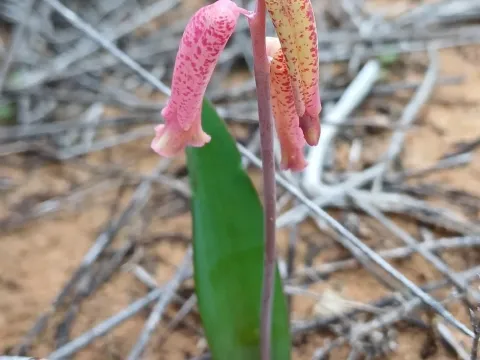
Lachenalia
Lachenalia
Lachenalia is a perennial bulbous plant belonging to the Asparagaceae family. Originating from South Africa, this crop is well-adapted to Mediterranean-like climates with distinct wet and dry seasons, which dictates its specific horticultural management requirements.
What the section contains
 Lachenalia barkeriana
Lachenalia barkeriana
Lachenalia barkeriana
 Lachenalia bulbifera
Lachenalia bulbifera
Lachenalia bulbifera
 Lachenalia carnosa
Lachenalia carnosa
Lachenalia carnosa
 Lachenalia contaminata
Lachenalia contaminata
Lachenalia contaminata
 Lachenalia ensifolia
Lachenalia ensifolia
Lachenalia ensifolia
 Lachenalia flava
Lachenalia flava
Lachenalia flava
 Lachenalia glauca
Lachenalia glauca
Lachenalia glauca
 Lachenalia hybrid
s
Lachenalia hybrid
Lachenalia hybrids
 Lachenalia liliiflora
Lachenalia liliiflora
Lachenalia liliiflora
 Lachenalia namaquensis
Lachenalia namaquensis
Lachenalia namaquensis
 Lachenalia orchioides
Lachenalia orchioides
Lachenalia orchioides
 Lachenalia pygmaea
Lachenalia pygmaea
Lachenalia pygmaea
 Lachenalia quadricolor
Lachenalia quadricolor
Lachenalia quadricolor
 Lachenalia splendida
Lachenalia splendida
Lachenalia splendida
 Lachenalia stayneri
Lachenalia stayneri
Lachenalia stayneri
 Lachenalia trichophylla
Lachenalia trichophylla
Lachenalia trichophylla
 Lachenalia viridiflora
Lachenalia viridiflora
Lachenalia viridiflora
 Lachenalia wrightii
Lachenalia wrightii
Lachenalia wrightii
Lachenalia
Botanically, Lachenalia features fleshy, often spotted foliage and dramatic spikes of tubular, bell-shaped flowers. In commercial production, it is highly valued for its winter and spring blooming cycle, making it an excellent candidate for greenhouse cultivation in cooler regions.
Success in growing Lachenalia depends heavily on light management. The plants require high levels of bright, indirect sunlight to thrive. In professional nursery conditions, shade cloth is often employed to protect the leaves from scorching while ensuring the plant receives adequate energy for flowering.
The substrate must prioritize drainage. A professional-grade mixture typically consists of coarse sand, peat moss, and perlite. This structure ensures that moisture is readily available to the root system without causing the anaerobic conditions that trigger rot.
Temperature control is equally critical. Ideally, the plants should be kept in a cool, ventilated environment where temperatures remain between 10°C and 18°C. This promotes strong flower development and prevents the foliage from becoming overly leggy or weak.
The most significant threats to Lachenalia are fungal pathogens, specifically those causing bulb and basal rot. These organisms flourish in poorly drained, over-saturated soil, necessitating strict moisture control and the use of well-structured growing media.
Pest pressure is primarily driven by sap-sucking insects, including aphids, thrips, and spider mites. These pests can cause significant economic damage by distorting foliage and transmitting viral diseases that can persist in the bulbs from one season to the next.
Effective management includes integrated pest management (IPM) strategies, such as biological controls or the precise application of horticultural oils and systemic insecticides. Early detection via visual inspection is essential to prevent rapid spread across greenhouse benches.
Hygiene practices are paramount in Lachenalia production. This includes cleaning all pots and tools, as well as sourcing certified disease-free bulbs. Any individual plant exhibiting yellowing, wilting, or necrotic spots should be isolated immediately to protect the remaining crop.
Post-harvest care involves a controlled drying phase where bulbs are kept in a cool, dark, and dry place. Proper ventilation during this dormant period prevents storage-related diseases and ensures high vigor for the subsequent planting cycle.