
Lachenalia contaminata
Lachenalia contaminata
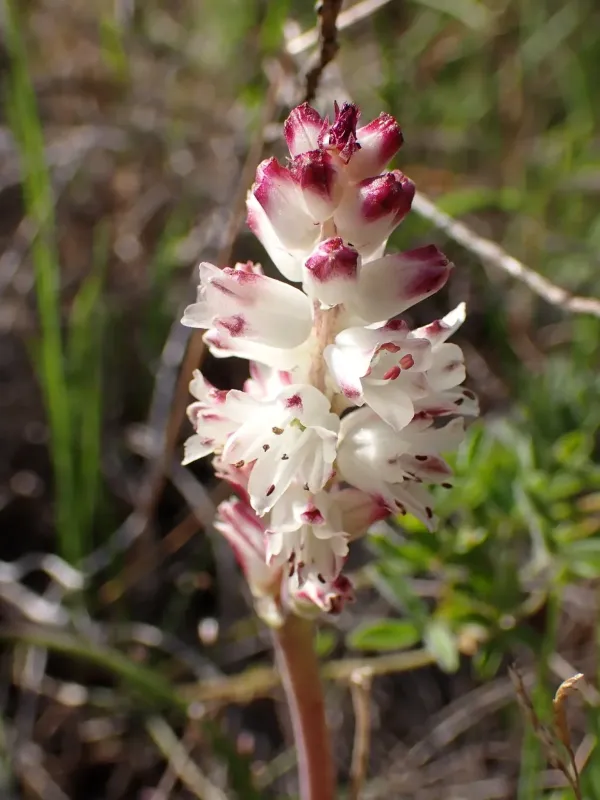
Description
Growing requirements
Lachenalia contaminata is a bulbous perennial plant belonging to the Asparagaceae family. Native to the Cape region of South Africa, it is widely recognized by horticulturists for its unique appearance and distinct flowering spikes.
The plant features slender, basal leaves and racemes of small, white flowers. The species epithet 'contaminata' refers to the characteristic purple or brown spots on the flower tips, which make the inflorescence highly decorative.
Cultivation requires a well-draining, sandy substrate to prevent waterlogging. As a plant adapted to Mediterranean-like conditions, it thrives in environments with bright, indirect sunlight and good air circulation.
Regarding climate, Lachenalia contaminata prefers mild temperatures. It is sensitive to frost and extreme heat, requiring a balanced environment during its active growth phase to ensure optimal development.
Moisture management is critical: the plant requires regular watering while actively growing, but it must be kept relatively dry during the dormant period to allow the bulbs to rest properly.
Main diseases and pests
The primary threat to Lachenalia contaminata is bulb rot caused by excess moisture or poor drainage. This fungal issue can destroy the root system quickly if the soil remains waterlogged for extended periods.
Common pests such as aphids and spider mites frequently attack the leaves and flower stalks. Integrated pest management using biological controls or targeted insecticides is recommended for effective protection.
Viral infections can manifest as mottled leaves or stunted flower growth. Since there is no cure for these viruses, infected plants must be removed and discarded to stop the spread to healthy bulbs.
Poor aeration during the dormant storage period can lead to mold development. Proper storage conditions, including low humidity and stable, cool temperatures, are essential for successful cultivation.
Overcrowding in pots can create conditions conducive to diseases. Maintaining sufficient spacing between bulbs during the planting process helps reduce competition and the risk of pathogen transmission.