
Lachenalia wrightii
Lachenalia wrightii
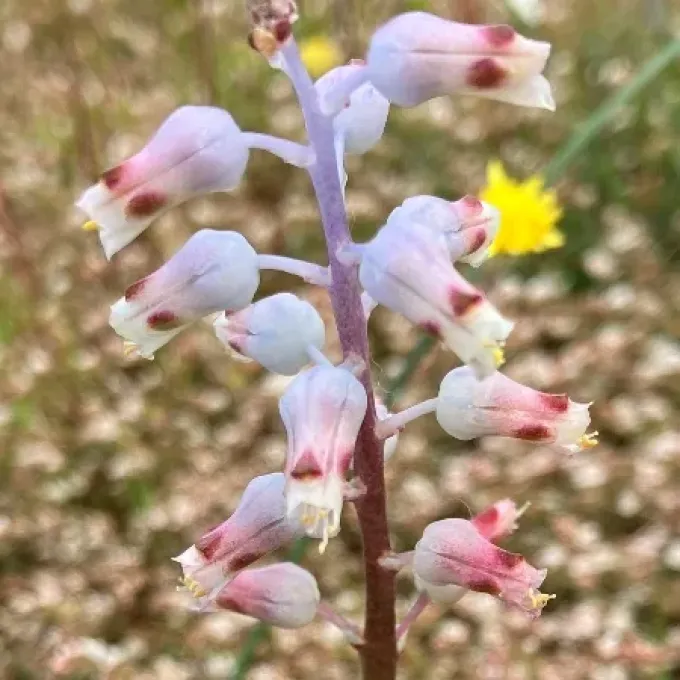
Description
Sowing dates
The planting of Lachenalia wrightii bulbs is typically performed in the autumn. This timing allows the plants to establish a robust root system before the onset of the active growing season during the cooler months.
Bulbs should be planted at a depth of 5 to 8 centimeters in well-draining soil. Providing adequate spacing, approximately 10–12 centimeters between each bulb, is essential to prevent overcrowding and ensure healthy growth.
When using pots, a sandy, nutrient-rich potting mix is recommended to facilitate drainage. Ensure that the container has sufficient drainage holes to prevent water accumulation at the base of the bulbs.
After planting, the soil should be moistened moderately. Maintaining a consistent temperature is crucial during the initial rooting phase to encourage healthy development without forcing premature leaf emergence.
For outdoor cultivation in regions with mild winters, ensure the site is protected from harsh winds and freezing temperatures. In colder climates, indoor culture or greenhouse cultivation is highly advisable.
Growing requirements
Lachenalia wrightii is a member of the Asparagaceae family, native to the Cape region of South Africa. As a bulbous geophyte, it is well-adapted to environments with cool, moist winters and dry, dormant summers.
The plant thrives in bright, filtered light. While it requires plenty of sunshine to produce vibrant flowers, direct scorching sun should be avoided, especially in the afternoon, to prevent foliage damage.
Soil requirements focus on excellent aeration and drainage. A mix comprising loamy soil and coarse sand provides the ideal structural integrity to support bulb health and prevent the onset of fungal diseases.
Temperature management is a key factor in the successful cultivation of this species. It prefers a temperature range of 10°C to 18°C. Protecting the plant from frost is essential, as the bulbs are not cold-hardy.
Watering practices must follow the biological cycle of the plant. During the active growing period, keep the substrate consistently moist, but allow it to dry out significantly during the summer dormancy phase.
Main diseases and pests
The primary threats to Lachenalia wrightii involve root and bulb rot caused by excessive moisture. Stagnant water in the soil promotes the growth of Pythium and other pathogens that compromise the plant's structure.
Aphids are the most common insect pests, particularly during the flowering stage. They aggregate on the flower stalks and young leaves, extracting sap and potentially transmitting viral diseases to the plant.
Spider mites can also be problematic in indoor environments where the air is dry and warm. Their presence often manifests as fine webbing and stippling on the leaves, leading to eventual plant decline.
Fungal leaf spot diseases may appear if there is poor air circulation and high humidity. Pruning away affected foliage and applying appropriate fungicides can help manage the spread of these pathogens.
To ensure plant health, it is recommended to practice good sanitation by removing dead foliage and ensuring that bulbs are stored in a dry, well-ventilated area during their summer dormancy.