
Lachenalia flava
Lachenalia flava
Description
Growing requirements
Lachenalia flava is a bulbous perennial plant belonging to the Asparagaceae family. Native to the Cape region of South Africa, it is a winter-growing bulb that thrives in temperate climates, making it a popular choice for indoor gardening and specialized greenhouse collections.
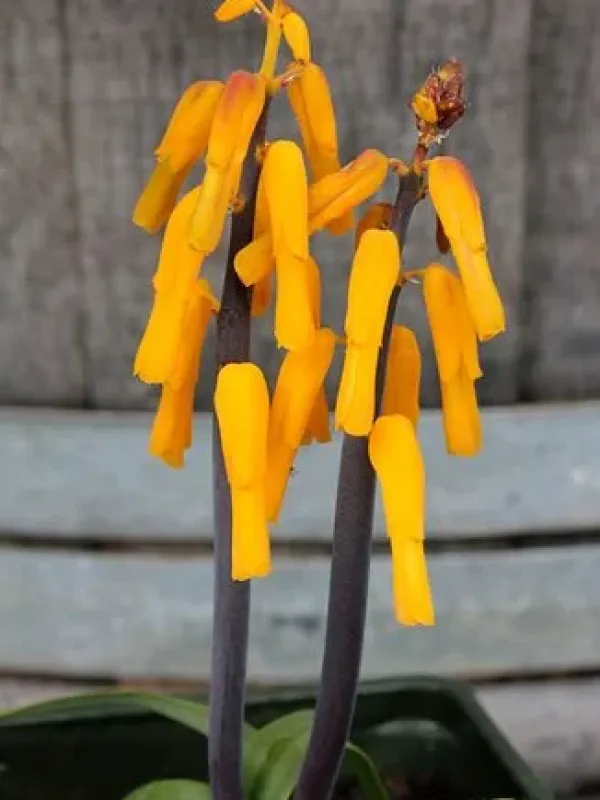
The plant features succulent, often spotted leaves and striking yellow tubular flowers that appear on erect racemes. Botanically, it belongs to the Hyacinthoid group and requires a distinct seasonal cycle to flower successfully, mimicking its natural habitat's conditions.
For optimal growth, Lachenalia flava requires bright, indirect light. Direct sunlight, especially during the peak of the day, should be filtered to prevent leaf scorching and to ensure the longevity of the blooms during the flowering stage.
Soil requirements involve a highly porous and well-draining potting medium. A mixture of loamy soil, compost, and coarse sand is essential to prevent water accumulation, as the bulbs are highly susceptible to basal rot and fungal pathogens if kept in soggy conditions.
Temperature management is critical: the plant performs best in a range of 15-20 degrees Celsius. Providing a cool, dry resting period after the foliage dies back is mandatory for the bulb to recharge and produce flowers in the following season.
Main diseases and pests
The primary threats to Lachenalia flava are soil-borne fungal diseases, specifically those affecting the bulb plate. Overwatering, particularly in poorly drained containers, creates the perfect environment for Pythium and Fusarium species to proliferate.
Pests such as aphids and spider mites are common in indoor cultivation. Aphids typically cluster on the flower stalks, causing stunted or distorted growth, while spider mites thrive in the dry air, leading to yellowing of the leaf tips.
To control pest populations, systemic insecticides or horticultural oils can be applied. However, maintaining proper humidity and ensuring good air circulation around the plants significantly reduces the likelihood of severe infestations.
Root-knot nematodes can also affect the health of the bulb, causing general decline. If an infestation is suspected, it is recommended to replace the growing medium entirely and sterilize the containers before replanting healthy bulbs.
Preventative measures include using clean, sterilized soil, practicing responsible irrigation, and ensuring that bulbs are thoroughly dried before being stored for the dormant period.