
Joshua tree
Yucca brevifolia
Description
Growing requirements
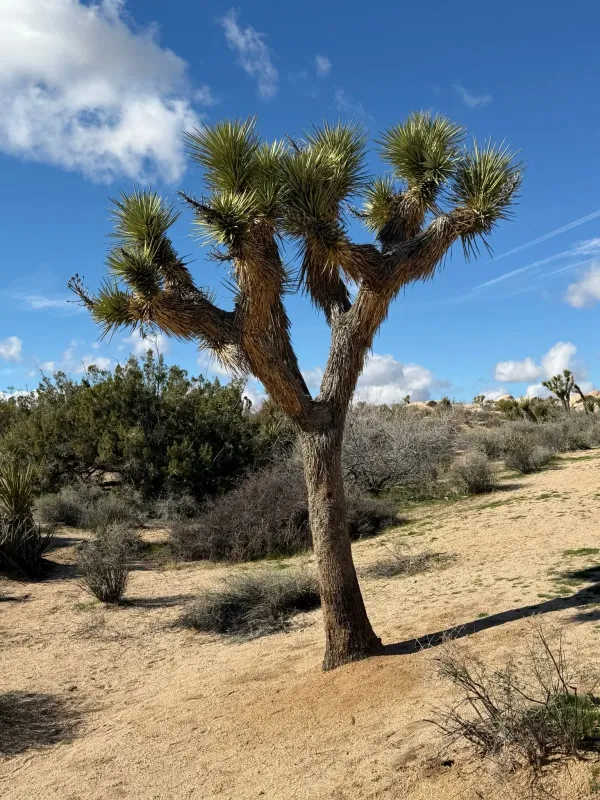
Joshua tree (Yucca brevifolia) is a prominent member of the Asparagaceae family. Known for its distinct silhouette, this perennial species is native to the arid desert regions of the southwestern United States, specifically the Mojave Desert.
Botanically, it is classified as an arborescent yucca. Its structure consists of a thick, fibrous trunk and sword-like leaves that are arranged in a rosette at the ends of branches. It functions as a classic xerophyte, thriving in environments with scarce water resources.
The cultivation of Yucca brevifolia requires well-draining, sandy or rocky substrates. It cannot tolerate waterlogging, which quickly leads to crown and root rot, making drainage the most critical factor in its agricultural or garden management.
Temperature requirements for this species are specific: it prefers intense solar radiation and high diurnal temperature ranges. While it exhibits tolerance to cold, it is sensitive to the combination of freezing temperatures and high humidity.
Propagation is typically achieved through seeds or stem cuttings. Seed germination is slow and requires precise control of moisture levels to prevent pre-emergence damping-off, which is a common failure point for inexperienced growers.
Main diseases and pests
The primary threats to Yucca brevifolia include fungal pathogens such as Phytophthora, which thrive in poorly drained soils and cause rapid root system decline.
Pests such as yucca weevils pose a significant threat to the plant's structural integrity, as larvae tunnel into the core of the trunk, weakening the tree over time.
Environmental stressors, particularly prolonged exposure to unseasonably wet conditions, can facilitate the colonization of opportunistic bacteria and fungi on the leaf surfaces.
The survival of the species is also intrinsically linked to the yucca moth, as the plant relies entirely on this insect for pollination, creating a fragile ecological balance.
Management of these threats involves constant environmental monitoring, strict irrigation protocols to keep the root zone dry, and immediate removal of any visibly infected plant material.