
Ivory grape hyacinth
Muscari eburneum
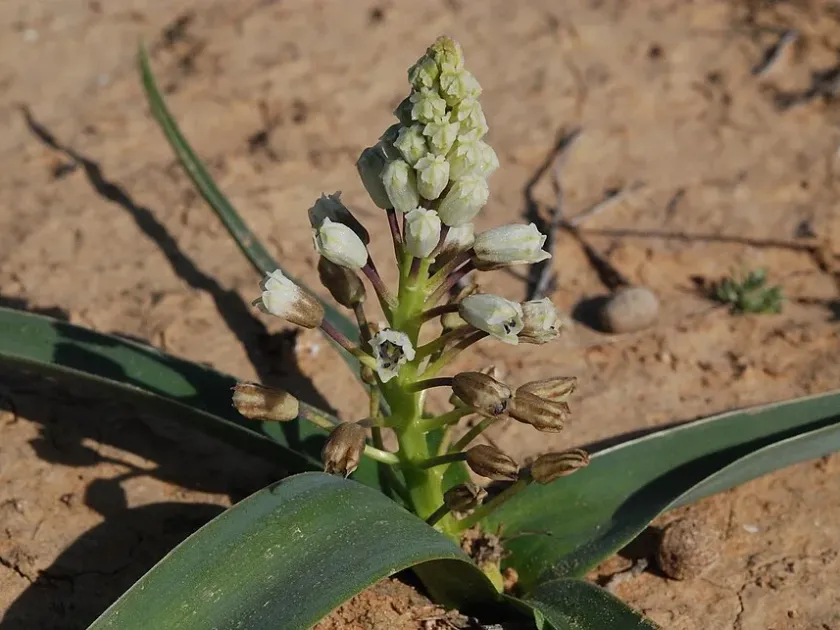
Description
Sowing dates
Planting is executed in early autumn, typically 6 to 8 weeks before the ground freezes. The bulbs should be spaced approximately 5–8 cm apart, ensuring that the soil is properly loosened to allow for rapid root expansion before the onset of extreme cold.
Growing requirements
Ivory grape hyacinth (Muscari eburneum) is a bulbous perennial belonging to the Asparagaceae family. It is distinct from the common blue species due to its unique ivory-colored flowers, which provide a sophisticated appearance in early spring gardens.
Originating from the rocky mountainous terrains of Turkey, this plant thrives in environments that mimic its natural habitat. Botanically, it is characterized by dense, short racemes of bell-shaped flowers and a rosette of basal leaves that appear shortly before the bloom cycle begins.
The cultural requirements are centered on soil quality and drainage. Muscari eburneum demands well-drained, porous soil to prevent water accumulation near the bulb base, which is the primary cause of physiological distress and rot during the dormant winter period.
Sunlight requirements are strictly high; the plant is a heliophyte, meaning it performs best in full exposure to direct sunlight. While it can tolerate partial shade for short periods, extended lack of light will result in weak, spindly stems and poor flowering performance.
Agrotechnical care includes monitoring moisture levels during the active growth phase and ensuring complete drying of the soil during the summer dormancy. Nitrogen-rich fertilizers should be applied sparingly, as over-fertilization can encourage leaf growth at the expense of flower density.
Main diseases and pests
Common biological threats include Sclerotinia bulborum, a fungal pathogen that targets the bulb tissues. Furthermore, aphids can act as vectors for viruses that cause leaf streaking, while rodents may consume the bulbs if they are not adequately protected during the planting phase.