

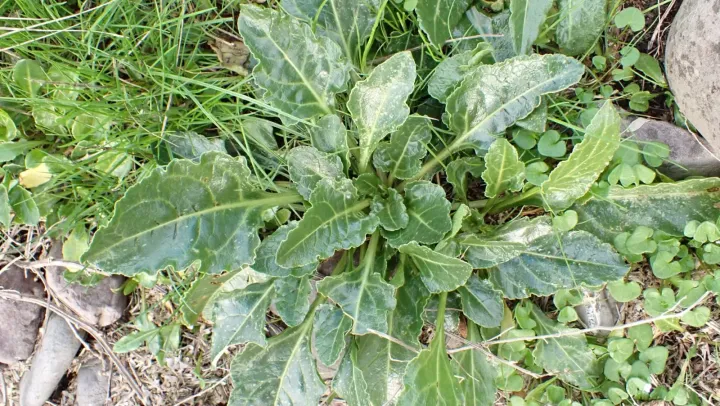
Description
Sowing dates
Fodder beet Beta vulgaris L., a member of the Amaranthaceae family, is sown when the soil temperature at the planting depth reaches 8–10 °C. In most regions, this typically occurs from late April to early May.
The sowing depth usually ranges from 3 to 4 cm depending on soil texture. Shallow planting ensures faster germination, while excessive depth can significantly delay emergence and weaken the young plants against weeds.
Proper soil-to-seed contact is essential for uniform germination. The target plant population for harvest is typically between 80,000 and 120,000 plants per hectare, depending on local conditions.
Field preparation involves deep autumn plowing followed by spring seedbed preparation, including harrowing to retain moisture and cultivating to the exact sowing depth.
Using precision drills with graded, coated seeds helps achieve optimal plant spacing and improves overall field performance during the early growth stages.
Growing requirements
Fodder beet is a moisture-loving and light-demanding crop that thrives in fertile soils. The best results are achieved in chernozems, loams, or sandy loams with a neutral pH between 6.5 and 7.5.
The crop has a high water demand, especially during the root enlargement phase. In regions with low precipitation, irrigation is often necessary to maximize tonnage and nutrient content.
Organic matter, such as well-rotted manure, is highly beneficial when applied during autumn soil preparation. Mineral fertilizers should be applied based on precise soil nutrient testing.
The ideal temperature range for active growth is 18–22 °C. While seedlings can tolerate minor frost, they are sensitive to drastic temperature shifts, which can stunt early development.
Good crop rotation is vital, with cereals or silage maize serving as excellent predecessors. It is recommended to avoid planting fodder beet on the same field more than once every 3–4 years.
Yield
Yields of fodder beet vary significantly based on variety selection, soil fertility, and water availability. Under favorable conditions, yields typically range from 60 to 100 tonnes per hectare.
Modern hybrids have high genetic potential, allowing for significant improvements in feed value. The roots are rich in water, vitamins, and minerals, making them an excellent succulent feed for livestock.
The primary use of fodder beet is as winter feed for cattle, as it helps improve milk production and animal health during the stall-feeding period.
The foliage (tops) of the plant is also a valuable resource and can be fed to animals fresh or ensiled with other forage crops, maximizing the total nutritional output per hectare.
Achieving maximum yield requires consistent monitoring of the crop canopy and ensuring that harvest is timed to coincide with the end of the full vegetative cycle.
Main diseases and pests
Fodder beet crops are susceptible to various pathogens. Common fungal diseases include Alternaria leaf spot, Verticillium wilt, and Rhizoctonia root rot, which can severely impact productivity.
Different types of rot, such as grey mold, Pythium root rot, Fusarium root rot, and Southern blight, can cause significant post-harvest and pre-harvest losses in root quality.
Major pests that frequently infest fodder beet fields include:
- Greenhouse whitefly
- Cabbage butterfly
- Weevils (e.g., Rhynchites)
- Gall midges
- Various pyralid moths and gold-tail moths
Integrated pest management, including seed treatment and timely insecticide applications based on economic damage thresholds, is essential for maintaining crop health.
Strict adherence to crop rotation cycles and effective weed control significantly reduces the survival of pathogens and pests within the field environment.
Harvesting
Harvesting should be completed before the first hard frosts, as frozen roots do not store well. Depending on the climate, the harvest window usually opens in late September and ends in mid-October.
Mechanized harvesting involves lifting the roots, removing soil, and trimming the tops. It is crucial to minimize physical damage to the root skin to prevent decay during storage.
If roots are damaged, they become susceptible to secondary infections and rot, which can spread quickly through a storage clamp or building.
Stored roots require a temperature of 1–3 °C and controlled humidity. Proper ventilation is key to maintaining root quality and preventing the accumulation of heat within the pile.
Regular inspections of stored fodder beet are necessary to identify any signs of decay, ensuring that the stock remains nutritious and safe for animal consumption throughout the winter.
In brief
47
Crop diseases
60
Crop pests
Content graph
Crop diseases · 47
Alternaria leaf spotAlternaria leaf spotAphanomyces root rotAphanomyces root rotBacterial leaf spotBacterial pocketBacterial soft rotBacterial vascular necrosis and rotBacterial wilt of beanBeet curly topBeet curly topBeet curly topBeet latent rosetteBeet Low Sugar Content SyndromeBeet mild yellowing virusBeet phoma leaf spotBeet PhysodermaBeet western yellowsBeet yellowsBeet yellowsBeet yellowsBeet yellows phytoplasmaBeet yellow veinCercospora leaf spotCharcoal rotCommon scabCrown gallCucumber mosaicDry rot of root cropsFalse root-knot nematodeFusarium root rotFusarium wiltGray moldLate blightLettuce infectious yellowsParatrichodorusPeronosporosisPhoma leaf spotPhymatotrichum root rotPlant RustPowdery mildewPythium root rotRhizoctonia root rotRoot-knot nematodeSouthern blightVerticillium wiltViolet root rot
Content graph
Crop pests · 60
Alfalfa seed chalcidAlfalfa weevilApple blossom weevilApple fruit weevilApple fruit weevilAustrian beetleBeet flea beetleBeet leaf minerBeet root weevilBeet webwormBeet weevilBrown-tail mothCereal leaf beetleChloropid fliesComplex of soil-borne and surface seedling pestsCrucifer flea beetleCrucifer shield bugsDiamondback mothDiamondback mothDock weevilEuropean apple sawflyEuropean cherry fruit flyEuropean corn borerEuropean grapevine mothFlax flea beetleFrit flyGall midgesGeometridaeGoat moths and Carpenter mothsGrape phylloxeraGreenhouse whiteflyGrey beet weevilGrey beet weevilGround beetle (Zabrus tenebrioides)Hemp flea beetleLarge whiteLeaf beetlesLeaf miner mothLeaf minersLima bean pod borerMelon flyOriental fruit mothPea leaf weevilPea mothPear fruit mothPea weevilPollen beetlePollen beetlePotato tuber mothPyralid mothsSand weevilSawfliesSeedling PestsSucking pests complexSunn pestTurnip sawflyTwo-spotted spider miteWeevilWestern corn rootwormYellow cereal fly
Content graph
Connections · Fodder beet
Most often together:
Marketplace
Products · 2348
All 2348
Herbicides, Desiccants 939
Fertilizers 484
Insecticides, Acaricides 361
Fungicides 352
Plant Growth Regulators 100
Table Beet 50
Sugar Beet 49
Biological Products 8
Feed Beet 3
Adjuvants 2

Gladiator, CS (metamitron, 700 g/l)
Unicity Enterprises L.P.
Herbicides
0
0
·
82
1 offer
18.36 €per 1 l
Buy

Nurel D
Доу АгроСайенсіс, Кінг’з-Лінн, Великобританія
Insecticides
0
0
·
82
7 offers
6.14 €per 1 l
Buy


RAIZA MIX
DESAARROLO AGRICOLA Y MINERO S.A., SPAIN
Fertilizers
0
0
·
78
2 offers
13.42 €per 1 kg
Buy


SELENIT, KE
ТОВ «Фабрика агрохімікатів», Черкаси, Україна
Herbicides
0
0
·
78
2 offers
7.4 €per 1 l
Buy


Nuprid 600, c.s. (imidacloprid, 600 g/l)
Нуфарм Австралія Лтд. , Австралія (місце виробництва: Чілі
Insecticides
0
0
·
76
1 offer
52.6 €per 1 l
Buy








Select 120 g/l
Аріста ЛайфСайенс С.А.С., Ногер, Франція
Herbicides
0
0
·
73
4 offers
7.79 €per 1 l
Buy

NORVEL, K.E.
Санрайз Кемікалз Ко. Лтд., Шанхай, Китай
Herbicides
0
0
·
73
3 offers
0.65 €per 1 l
Buy


Nays
ТОВ«БІЛОЦЕРКІВСЬКИЙ ЗАВОД ПРЕПАРАТИВНИХ ФОРМ», Україна
Fertilizers
0
0
·
72
9 offers
2.7 €per 1 kg
Buy


Nanomix
INTERREGIONAL SCIENTIFIC-PRODUCTION AGRIBUSINESS
Fertilizers
0
0
·
72
3 offers
1.88 €per 1 kg
Buy


EQUILIBRIUM
Компанія "Біоіберіка,S.A.U." (Bioiberica,S.A.U.), Іспанія
Fertilizers
0
0
·
71
1 offer
86.22 €per pack
Buy


FULTEK
Latina Agro Industria e Comercio de fertilizantes LTDA
Fertilizers
0
0
·
70
1 offer
24.47 €per pack
Buy


Pirinex 48 EC, (chlorpyrifos, 480 g/l)
Makhteshim Chemical Works Ltd.
Insecticides
0
0
·
70
3 offers
2.29 €per 1 l
Buy


