
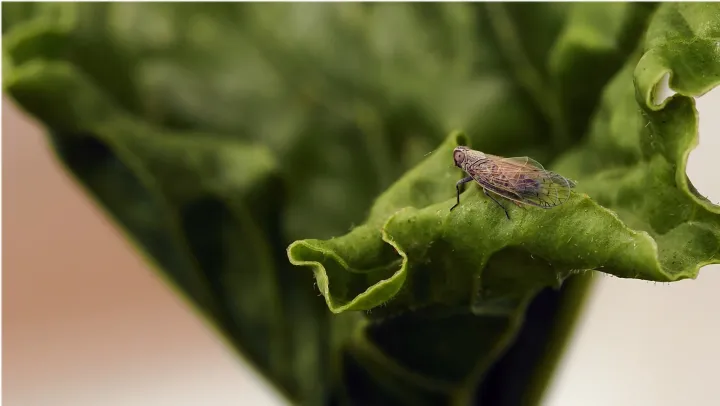
Description
Symptoms
The Low Sugar Content Syndrome is characterized primarily by chlorosis or reddish discoloration of the leaves during the active growing season.
Despite appearing healthy at first glance, the beet root shows a significant lag in the accumulation of sucrose and dry matter compared to non-infected plants.
When cutting the root, internal tissues often reveal discoloration of the vascular bundles, shifting to brownish or gray hues.
Infected plants are usually found in patches within the field, indicating the concentrated activity of insect vectors in those specific areas.
The root structure of affected plants often becomes watery, losing its firm texture, which is a clear indicator of physiological disruption.
Pathogen
The disease is primarily caused by the Beet Yellows Virus (BYV) or similar viral agents that systemically invade the phloem of the plant.
The Green Peach Aphid (Myzus persicae) acts as the main vector, transmitting the virus from infected host plants to healthy beet crops.
The pathogen resides in the phloem, disrupting the translocation of sugars and other photoassimilates from the leaves down to the root.
Phytoplasmas may also play a role in complex infections, significantly altering the metabolic pathways within the plant tissues.
The virus maintains a persistent presence in the local ecosystem, surviving in perennial weed reservoirs throughout the year.
Conditions for development
The rapid spread of the syndrome is highly correlated with warm and dry weather conditions, which favor the explosive reproduction of aphid populations.
Migration peaks during the leaf canopy closure phase provide the optimal window for the virus to be introduced into the crop.
The presence of weeds along field margins serves as a critical reservoir for the virus, ensuring a consistent infection source for the season.
Abiotic stresses, such as severe moisture deficit or improper mineral nutrition, weaken the plant defense mechanisms and facilitate infection.
Poor crop rotation practices can lead to the accumulation of viral reservoirs in the soil environment, increasing the pressure on future plantings.
Why it matters
The main economic impact is a drastic reduction in sucrose levels, which renders the beet crop unsuitable for efficient sugar extraction.
A significant decrease in total root mass leads to substantial yield losses, affecting the overall financial performance of the farm.
For fodder beet, the syndrome reduces the nutritional energy density, making it less effective for animal feed requirements.
Infected roots exhibit poor storage stability and are highly susceptible to secondary rotting organisms during the post-harvest period.
- Significant reduction in sugar recovery rates.
- Lower root tonnage per hectare.
- Increased susceptibility to storage rot.
- Deterioration of overall crop technological quality.
Protection
Management strategies rely heavily on monitoring and controlling aphid populations using appropriate systemic insecticides during migration periods.
Strict weed management, especially targeting host plants along field edges, is essential to eliminate the primary reservoirs of the virus.
Maintaining adequate spatial separation between beet fields and susceptible forage crops can help mitigate the risk of vector movement.
Breeding and utilizing tolerant or resistant beet varieties is one of the most effective long-term strategies for managing this syndrome.
Optimizing balanced nutrient programs, particularly potassium and micronutrients, can improve the plant's physiological resilience against viral stress.
Pathogens and affected parts
Affects crops · 1
Discussion
No discussions yet — be the first.