
Description
Symptoms
Initial symptoms on leaves appear as small, light-brown spots with dark margins, which eventually develop small black dots, the pycnidia.
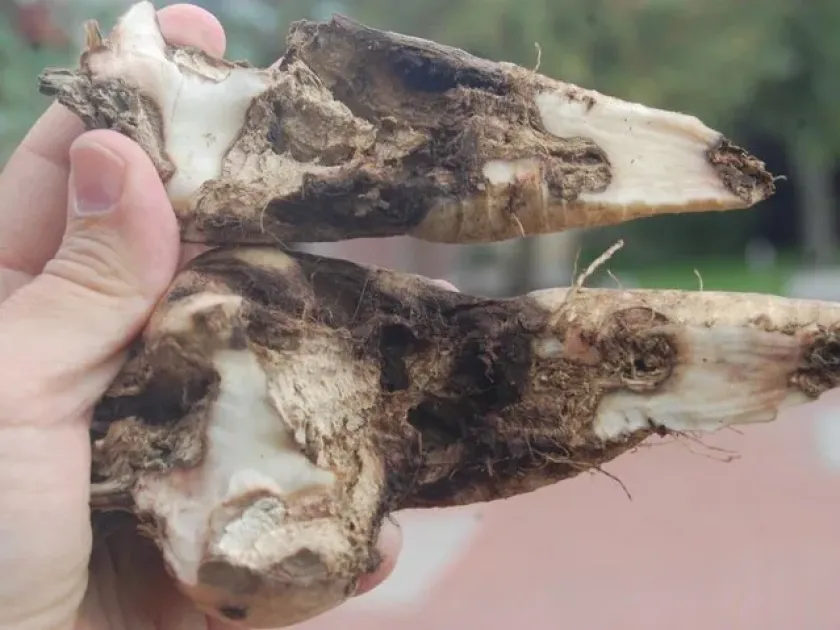
On the root surface, the disease appears as dry, sunken brown or black lesions that indicate progressive tissue decay beneath the skin.
When the root is cut, the affected tissue is found to be dry, dark, and crumbly, often forming cavities filled with mycelium or black fungal dots.
A distinct feature of this disease is the clear boundary between healthy and infected tissue, accompanied by the absence of a foul odor.
In stored crops, dry rot can spread through entire piles, leading to widespread dehydration and loss of root mass.
Pathogen
The disease is caused by the fungus Phoma betae, a well-known pathogen that frequently affects beet crops throughout their growing season.
The fungus survives in the soil on crop residues, in seeds, and remains active on root crops during long-term storage in warehouses or clamps.
The pathogen reproduces via pycnidia — specialized structures that release thousands of spores into the environment, spreading easily through water and air.
Infection often begins at the seedling stage, causing damping-off or "black leg," which significantly reduces plant density in the field.
The mycelium colonizes plant tissues, causing systemic damage that weakens the plant's physiological defense mechanisms and structural integrity.
Conditions for development
High humidity and moderate temperatures (15°C to 22°C) are the primary environmental drivers for the rapid development and spread of dry rot.
Poor crop rotation practices lead to the accumulation of fungal spores in the soil, significantly increasing the risk of infection in subsequent seasons.
Boron deficiency in soil is a major predisposing factor, causing structural weaknesses in roots and making them highly susceptible to fungal penetration.
Mechanical damage caused during harvest, handling, or transportation creates entry points for the pathogen, accelerating the infection process.
In storage, inadequate temperature control or condensation inside the storage facilities promotes spore germination and rapid rot expansion.
Why it matters
Dry rot leads to major yield losses in fodder beet, impacting both the total weight of the harvest and the nutritional quality of the roots.
Infected crops show decreased sugar content and impaired physiological properties, reducing their value as livestock feed.
The disease represents a significant economic burden due to the potential for massive losses during winter storage, requiring costly sorting and disposal.
Seed-borne infection reduces germination rates, which forces growers to invest more in re-seeding and management of thin plant stands.
The overall productivity of the agricultural cycle is reduced due to the pathogen's ability to persist in the field for several years.
Protection
The most critical control measure is the use of high-quality, fungicide-treated seeds to minimize initial infection pressure.
Adhering to a proper crop rotation schedule (at least 3-4 years between beet crops) is essential for breaking the pathogen's lifecycle in the soil.
Foliar application of boron-containing fertilizers strengthens plant tissue, improving natural resistance to Phoma and reducing the risk of splitting.
Harvesting techniques should focus on minimizing skin damage, and crops should be cleaned and dried properly before being placed in storage.
- Maintaining optimal storage temperatures (approx. 1-2°C).
- Effective removal of infected crop residues after harvest.
- Use of certified, resistant beet varieties.
- Application of systemic fungicides during the growing season.
Pathogens and affected parts
Affects crops · 1
Discussion
No discussions yet — be the first.