

Pest · Coleoptera (beetles) · affects Maize, Winter wheat, Winter rapeseed
Especially harmful
Western corn rootworm
Diabrotica virgifera virgifera
Description
How to identify
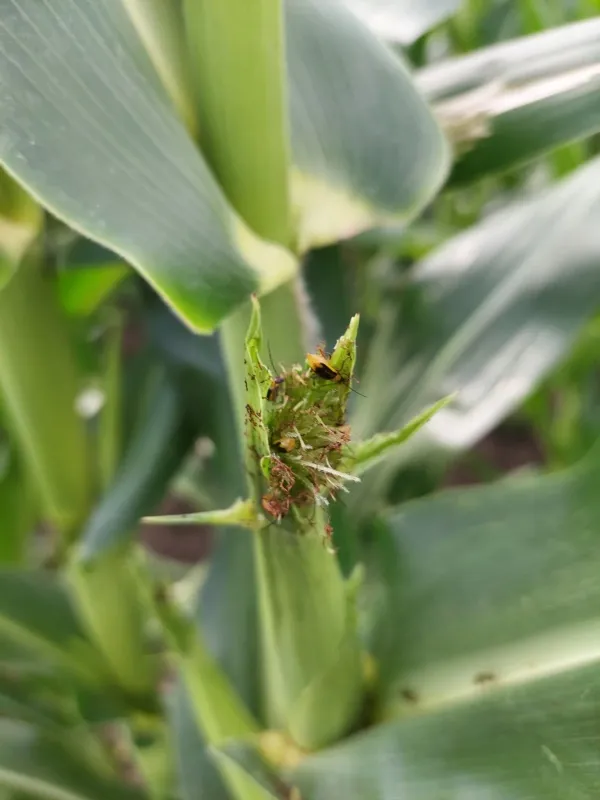
The Western corn rootworm is a beetle belonging to the order Coleoptera and the family Chrysomelidae. Adult beetles are approximately 4 to 7 mm long, characterized by a yellow-green body with distinct black stripes on their wing covers.
The larvae are slender, creamy-white in color, with a brownish head and a dark plate at the end of the abdomen. They typically reach a length of about 10–12 mm when fully grown.
The life cycle consists of the egg, three larval instars, the pupal stage, and the adult beetle. In temperate regions, this species completes only one generation per year.
Eggs overwinter in the soil at a depth of up to 20 cm, primarily in fields that were planted with corn in the previous season, ensuring immediate access to food upon hatching.
Adults are highly mobile and capable of flight, allowing them to migrate into adjacent fields, which complicates localized containment efforts.
What it damages
Corn is the primary host crop, as both larvae and adults feed on it. Larvae cause the most significant damage by feeding on the root system, which deprives the plant of water and nutrients.
Adult beetles feed on the silk, pollen, and developing kernels of the corn ear, which significantly reduces pollination efficiency and grain yield.
While corn is the preferred host, this pest is known to impact other crops as well, including forage beet, winter rapeseed, flax, tomato, potato, sorghum, and winter wheat.
Damage to non-corn crops usually occurs when adult beetles disperse in search of food or suitable soil for egg-laying after the primary corn host has reached maturity.
Root damage often results in plant lodging, where the base of the stem bends, creating a distinctive arching appearance often referred to as "goose-necking."
When it appears
Larval hatch occurs in late spring or early summer, depending on soil temperature and moisture conditions, typically coinciding with the seedling stage of corn.
Pupation occurs in the soil, usually beginning in late June or early July. This stage lasts approximately two weeks before the emergence of the adult beetles.
Adults are active from mid-summer through early autumn. During this time, they engage in feeding, mating, and dispersal to neighboring fields.
Egg-laying takes place in late summer and early autumn. Females actively search for moist soil in corn fields to ensure the survival of the next generation.
The life cycle is closely synchronized with the phenology of the corn crop, making the presence of the host essential for the continued persistence of the population.
Signs of infestation
The most prominent sign of infestation is lodging, where corn plants lean or fall over during wind events due to a severely compromised root system.
Visual inspection of the root system reveals pruned, short, or missing root structures, which indicates larval feeding activity on the secondary roots.
Reduced pollination is a key symptom caused by adult feeding on corn silks, preventing the development of full ears and resulting in poor grain fill.
Adult beetles may be observed feeding on the tassels or hiding within the ears, which are highly attractive during the flowering stage.
- Lodging of corn stems in a curved pattern.
- Pruned and damaged roots.
- Poorly filled ears due to silk clipping.
- Adult beetles visible on silks or tassels.
Control measures
Crop rotation is the most effective management strategy. Planting non-host crops like soybeans for one or two years breaks the life cycle of the rootworm.
Seed treatments with systemic insecticides are commonly used to provide protection for the root zone during the early stages of plant development.
Soil-applied insecticides at planting time serve as an effective barrier against larval feeding in high-pressure fields.
The use of pheromone or sticky traps allows for the monitoring of adult populations, helping to determine the need for foliar applications to prevent silk damage.
Strict adherence to quarantine protocols regarding the movement of soil and plant material is essential to prevent the spread of the beetle to unaffected regions.
In brief
8
Damages crops
Content graph
Damages crops · 8
Reference
Connections · Western corn rootworm
Most often together:
Marketplace
Products · 16


Biology
Taxonomy
- Latin name
- Diabrotica virgifera virgifera
- Order
- Coleoptera (beetles)
- Family
- Chrysomelidae
- EPPO code
- DIABVI
Community
Discussion
No discussions yet — be the first.