
Description
Symptoms
Visible symptoms often begin as foliage wilting during peak sunlight hours, which may initially seem reversible but later persists throughout the day.
When cutting into the affected roots, such as fodder beet, one can observe hollow spaces and a foul-smelling, brown or greyish slimy mass filling the center.
Vascular bundles often show distinct brownish-black discoloration, reflecting the localized necrosis caused by the bacterial colonization and toxin production.
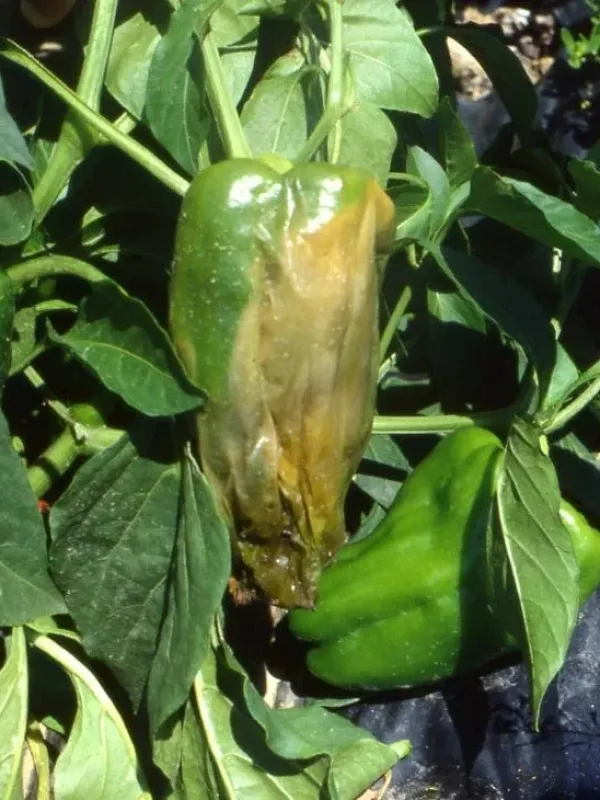
Soft rot symptoms become pronounced in the storage stage, where the structure of the root tissue collapses, turning into a watery, mushy consistency.
- Progressive foliage wilting
- Internal tissue softening
- Vascular bundle necrosis
- Foul odor from lesions
- Systemic plant collapse
Pathogen
Bacterial vascular necrosis and rot is caused by bacteria of the genus Pectobacterium. These are highly destructive pathogens known for their strong enzymatic activity.
The main mechanism of pathogenicity is the secretion of pectinolytic enzymes that degrade plant cell wall components, leading to tissue maceration and softening.
These bacteria survive in soil, crop residues, and infected plant material, making them persistent threats in agricultural environments across various global regions.
Transmission occurs through contaminated water, agricultural equipment, insects, and physical contact between healthy and infected plant parts.
The bacteria preferentially colonize the vascular tissues, effectively blocking the flow of nutrients and water, which causes systemic wilting and physiological stress in the host.
Conditions for development
High humidity and temperatures ranging from 20°C to 30°C provide the ideal environment for the rapid multiplication of Pectobacterium species.
Waterlogged soil conditions exacerbate the risk of infection, as they often lead to oxygen deficiency in the root zone, making plants more susceptible.
Mechanical damage to plant tissues, whether from cultivation tools or pest activity, acts as a primary entry point for bacteria into the plant system.
Inadequate airflow in storage facilities significantly increases the chances of secondary infections, causing rapid spread of rot from one root to another.
Over-fertilization with nitrogen can create excessively succulent plant tissue, which is structurally weaker and more easily penetrated by bacterial enzymes.
Why it matters
The economic impact of this disease is severe, as it causes massive losses in both field yield and post-harvest storage quality.
Root crops like fodder beet suffer significant weight loss and quality degradation, rendering the product unmarketable for human or animal consumption.
The rapid spread of the rot in storage can cause the loss of entire batches within a very short period, causing substantial financial harm to farmers.
Control is challenging because once the bacterial infection is established within the vascular system, it is impossible to eliminate with standard treatments.
Cumulative harm is observed when the infection persists in the soil, forcing long-term changes in crop rotation plans to minimize future risks.
Protection
Implementing a strict crop rotation strategy that avoids susceptible host plants for at least 3-4 years is the primary preventive measure against build-up.
Rigorous sanitation practices, including the removal and destruction of crop residues, are essential to reduce the inoculum levels in the field.
Integrated pest management (IPM) is critical, as controlling insects reduces the number of wounds through which bacteria can enter the plants.
Careful handling during harvest is necessary to avoid mechanical wounds; any damaged roots should be discarded rather than placed in storage.
Ensuring proper ventilation and maintaining cool temperatures during storage are vital steps to inhibit the metabolic activity of bacteria in harvested produce.
Pathogens and affected parts
Affects crops · 1
Discussion
No discussions yet — be the first.