
Bacterial soft rot
Pectobacterium carotovora
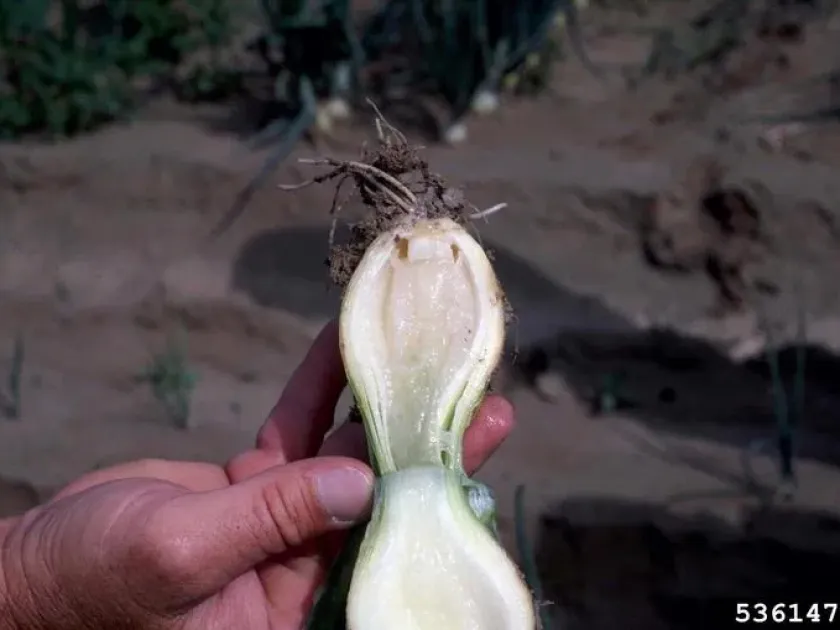
Description
Symptoms
The primary symptom of bacterial soft rot is the rapid softening of plant tissues, which turn into a shapeless, watery mass often accompanied by a foul odor.
Initial signs appear as small water-soaked spots on fruits, tubers, or stems that expand rapidly and become dark or discolored over time.
In root crops such as beets, turnips, or celery, the internal tissue is completely liquefied while the outer skin may remain temporarily intact.
Affected stems of plants like peppers may wilt suddenly as the bacteria degrade the vascular system, preventing water and nutrient transport.
Under high humidity conditions, a milky bacterial exudate may be visible on the surface of the lesions, containing millions of active bacterial cells.
Pathogen
The causal agent is the Gram-negative bacterium Pectobacterium carotovora (formerly known as Erwinia carotovora), a member of the Pectobacteriaceae family.
These bacteria produce powerful pectinolytic enzymes that degrade the middle lamella of plant cell walls, leading to tissue structural collapse.
The pathogen is highly motile due to multiple flagella, allowing it to migrate through soil moisture and surface water to find host tissues.
Pectobacterium carotovora persists in crop residues, infested soil, and on seed surfaces, acting as a facultative parasite that thrives upon contact with wounded plant parts.
The disease affects a wide range of hosts, including celery, fodder beet, Indian mustard, winter rapeseed, turnip, pepper, cattleya, and watermelon.
Conditions for development
Infection and development are most favorable under high humidity and warm temperatures, typically ranging between +20°C and +30°C.
In storage facilities, poor ventilation and condensation are the primary drivers of disease spread, often leading to rapid losses in stored produce.
Physical injuries caused by harvesting equipment, pests, or environmental factors like hail create necessary entry points for the bacteria.
Excessive irrigation or poor field drainage creating waterlogged conditions facilitates the spread of the pathogen and weakens plant resistance.
The bacteria thrive in environments with neutral to slightly alkaline pH levels, which often correlates with specific soil types and intensive cultivation practices.
Why it matters
Bacterial soft rot causes severe economic losses by rendering produce unmarketable and destroying vast quantities of stored vegetables in a very short period.
In the field, it can cause significant stand reduction and, in severe cases, may necessitate the replanting of large agricultural areas.
Contaminated produce is generally unfit for consumption or processing, as the breakdown products and associated bacteria pose significant quality issues.
In storage, the disease spreads rapidly from one infected unit to adjacent ones, creating "hot spots" that can compromise an entire warehouse.
The disease complicates post-harvest management, necessitating additional costs for sorting, disposal, and maintenance of specialized storage environments.
Protection
Effective management begins with strict crop rotation, ensuring that susceptible host plants are not grown in the same soil for at least three to four years.
Pest control is essential, as insects often act as vectors and cause the wounding required for bacterial entry into the plant tissue.
Post-harvest hygiene, including thorough drying of produce and sanitation of storage facilities, is critical to preventing the spread of the pathogen.
Selecting disease-free seeds and ensuring proper spacing between plants can help reduce the humidity around the base of the plants, discouraging infection.
Copper-based bactericides are sometimes used as a preventative measure, though primary control relies on robust sanitation, careful handling, and moisture management.
Pathogens and affected parts
Affects crops · 18
Discussion
No discussions yet — be the first.