

Description
Symptoms
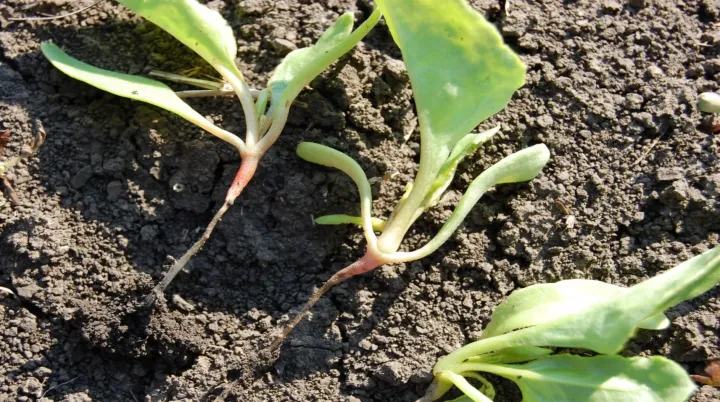
Initial symptoms are characterized by water-soaked, translucent tissues on the hypocotyl. This quickly progresses to dark, necrotic lesions that appear brown or black.
A classic sign is the thinning of the root, often described as "wire-root." The diseased roots lose their integrity and become soft, often leading to the collapse of the seedling.
Above-ground symptoms include yellowing (chlorosis) of the cotyledons and leaves, followed by wilting and death, especially during hot, dry periods when the damaged roots cannot supply enough water.
The disease typically appears in patches within the field. In severe cases, these patches expand, resulting in large areas of missing plants or total stand loss.
In highly infested soils, examination of the damaged root tissue may reveal the presence of fine, fungal-like hyphae and reproductive structures under magnification.
Pathogen
The causative agent of the disease is the soil-borne oomycete Aphanomyces cochlioides. This pathogen is highly specialized and thrives in aquatic environments, making it particularly aggressive under wet conditions.
The fungus persists in the soil as oospores, which are thick-walled resting structures. These oospores are extremely resilient and can survive for many years in the absence of a host plant.
When soil moisture levels are high, oospores germinate and produce motile zoospores. These zoospores swim through the water film in the soil toward the roots of young seedlings, guided by chemotaxis.
Once they reach the root surface, the zoospores encyst and penetrate the root tissue. The pathogen rapidly colonizes the root cortex, causing tissue decay and death of the seedling.
The pathogen affects various beet types, including sugar beet, fodder beet, and red beet, posing a significant risk wherever these crops are grown intensively.
Conditions for development
The development of Aphanomyces root rot is strictly dependent on soil moisture. Saturated or waterlogged soils provide the necessary medium for zoospores to move and infect host tissues.
Warm temperatures are conducive to infection, with the optimal range being between 20°C and 28°C. This makes spring conditions critical for the development of the disease.
Soils with poor structure, such as heavy clays that are prone to crusting and compaction, are highly susceptible to the disease because they stay wet for longer periods.
Soil pH plays a significant role; the disease is generally more severe in acidic soils. Maintaining a neutral pH can help suppress the activity of the pathogen.
Frequent cropping of beets in the same field leads to an increase in the inoculum load of oospores, making the soil increasingly "sick" and difficult to manage without intervention.
Why it matters
This pathogen is primarily a seedling disease, but it can cause devastating losses by destroying the stand early in the season. Stand loss often necessitates expensive replanting.
If the seedlings survive, their root development is significantly stunted. These plants remain weak throughout the season and are unable to reach their full yield potential.
The disease reduces the vigor of the crop, making it more vulnerable to other stresses such as competition from weeds, drought, or secondary infection by other soil-borne fungi.
Uniformity of the stand is lost, which makes mechanical maintenance (such as weeding and harvesting) more complicated and less efficient.
Economic impact includes both direct yield losses and the costs associated with corrective agricultural practices, such as intensive tillage or re-sowing of affected plots.
Protection
Crop rotation is the most effective cultural practice. A rotation interval of at least 4 to 5 years without beet crops is recommended to reduce the oospore population in the soil.
Improving soil drainage and physical condition is essential. Installing drainage systems or avoiding excessive irrigation helps mitigate the risk of infection by reducing soil moisture.
Liming acidic soils to reach a neutral pH level creates an environment that is less favorable for Aphanomyces and can suppress disease progression significantly.
Proper seedbed preparation that facilitates quick emergence and growth is critical. Healthy, fast-growing seedlings are less susceptible to infection compared to those stressed by soil crusts.
Seed treatment with systemic fungicides provides an early window of protection. Using high-quality treated seed is a standard and necessary component of modern beet production.
In brief
1
Affects crops
Biology
Pathogens and affected parts
Pathogens
Affected plant parts
rootseed
Content graph
Affects crops · 1
Reference
Connections · Aphanomyces root rot
Most often together:
Marketplace
Products · 6




Community
Discussion
No discussions yet — be the first.