
Sugar beet
Beta vulgaris L. subsp. vulgaris
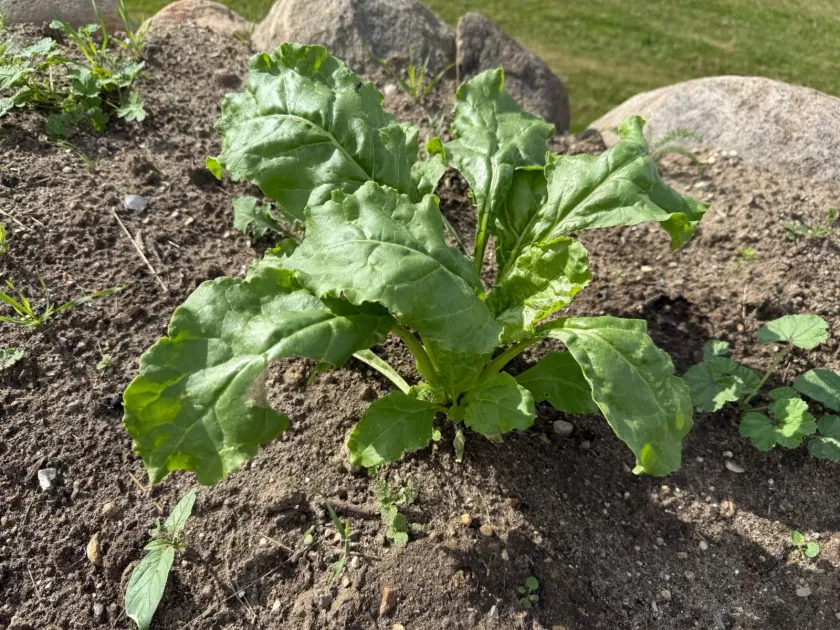
Description
Sowing dates
Sugar beet, belonging to the Amaranthaceae family, is typically sown when soil temperatures reach 8–10 degrees Celsius. In most temperate regions, the optimal window for sowing occurs during April.
The seeds are placed at a depth of 3–4 cm to ensure optimal moisture contact and sufficient energy for germination. Precise spacing is critical to avoid competition between seedlings for light and nutrients.
Standard seeding density aims for approximately 80,000 to 120,000 plants per hectare. Modern high-precision seed drills are used to achieve uniform plant distribution, which eliminates the need for manual thinning.
Successful establishment relies on consistent soil moisture. In areas with dry springs, irrigation or field rolling is practiced to encourage capillary water movement toward the seedbed.
Crop rotation is fundamental to sugar beet cultivation. Ideally, it should follow cereals in a rotation cycle to reduce the risk of soil-borne pathogens and nutrient depletion.
Growing requirements
Sugar beet thrives in deep, fertile soils with high organic matter content. Soils with a pH between 6.5 and 7.5 are ideal, as they provide the best conditions for root expansion and mineral uptake.
This crop is strictly light-loving and does not tolerate any shading. Maximum exposure to sunlight is essential throughout the entire growing season to reach high sugar concentrations in the roots.
Moisture availability is the primary factor limiting growth during the mid-summer stage. While the crop requires regular rainfall, waterlogging must be avoided as it leads to root decay and yield loss.
The ideal climate for sugar beet involves warm days and cool nights, which promotes the accumulation of sucrose. Excessive heat can stress the plants and reduce the overall quality of the harvest.
Effective agrotechnical practices include deep plowing in the autumn and preparing a fine, firm seedbed in the spring. Fertilization is optimized based on precise soil analysis to ensure the balance of N-P-K.
Yield
In modern industrial farming, sugar beet yields range from 50 to 90 tonnes per hectare. Success is largely determined by climate, soil quality, and the precision of fertilizer application.
Sugar content is the most important quality metric, usually targeted at 16–20 percent. The concentration of sugar is highly dependent on late-summer solar radiation and the absence of late-season disease.
The primary use for sugar beet is the production of white refined sugar. The fibrous pulp byproduct remains an essential high-energy feed source for the dairy and beef cattle industry.
To maximize yields, agronomists emphasize the importance of micronutrients like boron, which prevents heart rot and ensures the structural integrity of the developing root.
Strategic management of crop density and input applications ensures that each plant has enough space and nutrients to reach maximum potential, resulting in higher efficiency at the processing plant.
Main diseases and pests
Common diseases affecting sugar beet include Cercospora leaf spot, powdery mildew, and various root pathogens like Rhizoctonia. Systematic fungicide applications are necessary to protect the leaf canopy.
Major pests include the sugar beet nematode, wireworms, and aphids. Integrated Pest Management (IPM) strategies, including seed treatments and crop rotation, are essential for mitigation.
Weed control is vital during the early establishment phase, as sugar beet is slow to grow initially. Herbicides are used in selective applications to keep the fields free from competing vegetation.
Monitoring pest populations through pheromone traps allows for timely intervention. This helps prevent large-scale outbreaks and minimizes the need for excessive chemical use throughout the season.
Maintaining sanitary field borders and controlling volunteer plants of the same family are critical to preventing the spread of viruses often transmitted by insect vectors.
Harvesting
Harvesting is a highly mechanized process performed in late autumn. Large self-propelled harvesters are used to lift the roots from the soil while effectively removing the foliage.
The timing of the harvest is critical; it must be completed before deep winter frost damages the roots, but after the maximum sugar accumulation stage is achieved in early autumn.
Efficient logistics are required to transport the harvested roots to sugar factories. Once pulled, the beets begin to lose sugar through respiration, so prompt processing is essential for profitability.
Conditions at harvest influence the quality of the raw material. Avoiding high soil moisture prevents unnecessary soil-to-root adhesion, which simplifies processing and reduces costs at the factory.
Minimal mechanical damage during the lifting process is necessary to ensure the shelf life of the beets if they are stored in clamp piles prior to their final arrival at the sugar extraction site.