Stomp 330
БАСФ Агро БВ, Швейцарія, на заводі , Франція,Італія (Сієна)
Herbicides
7
3
·
10.9K
28 offers
10.65 €per 1 l
Buy
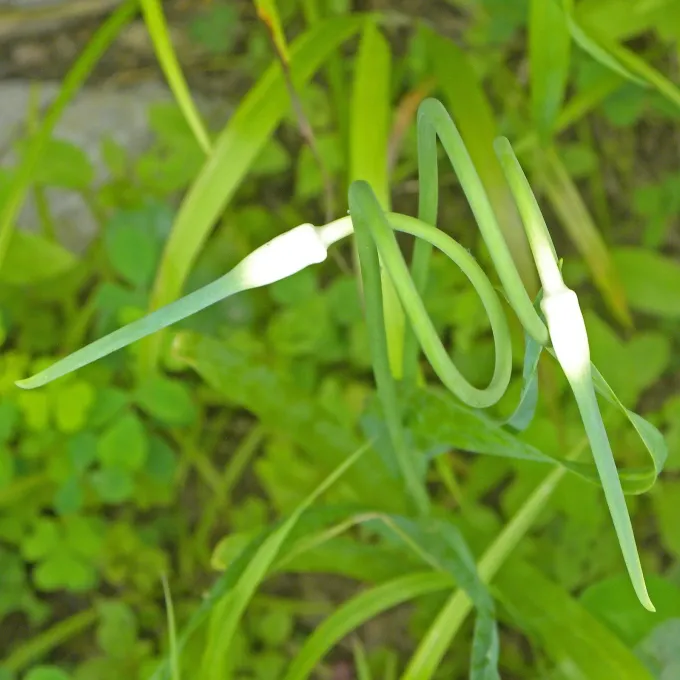
Garlic (Allium sativum L.) is classified into two main types: winter and spring varieties. Winter garlic is planted in autumn, about 3–4 weeks before the first hard frost, allowing the roots to establish without causing premature sprout growth.
Spring garlic is planted in early spring as soon as the soil warms up to 3–5 degrees Celsius. Delayed spring planting often leads to reduced yields, as the bulb formation stage requires cooler temperatures to initiate properly.
The planting density depends on the variety: for winter garlic, the spacing is typically 20–25 cm between rows and 8–10 cm between cloves. The planting depth varies from 7–10 cm in autumn to 3–5 cm in spring.
High-quality planting material is essential for a successful crop. Only disease-free, calibrated, and treated cloves should be used to minimize the risk of soil-borne pathogens and ensure uniform emergence.
Crop rotation is vital for garlic health. It is highly recommended to avoid planting garlic after other alliums or root crops for at least 4–5 years to prevent the buildup of specific soil pathogens and nematodes.
Garlic is a sun-loving crop that requires open, well-lit locations to develop fully. Insufficient sunlight results in small, underdeveloped bulbs and lower concentrations of essential oils and sulfur compounds.
The crop thrives in fertile, well-drained loamy or sandy soils with a neutral pH (6.5–7.5). Heavy, clay-rich soils that retain excess moisture can lead to root system decay and poor bulb development.
Adequate soil moisture is critical during the leaf growth and early bulb formation phases. However, excessive moisture during the final stages of maturity can lead to bulb rot and significantly reduce storage life.
While garlic is cold-hardy, winter varieties benefit from snow cover or mulching in regions with harsh, snowless winters to protect against soil freezing and rapid temperature fluctuations.
Nutrient management focuses on nitrogen during early development, followed by potassium during the bulb-filling stage. Excessive late-season nitrogen should be avoided as it delays maturity and affects bulb quality.
The average yield of garlic under intensive cultivation ranges from 10 to 20 metric tons per hectare, depending on the variety, soil conditions, and the effectiveness of the agronomic practices applied.
Yield potential is largely determined by plant population density. Modern agricultural techniques involve the use of mechanized planters to ensure optimal spacing, which increases both the size and uniformity of the bulbs.
Using certified, virus-free planting stock can increase total marketable yield by 30–40 percent compared to using standard commercial bulbs that may carry latent systemic infections.
Timely fertilization is a major factor in determining bulb weight. Potassium, in particular, must be available in sufficient quantities during the peak growth phase of the cloves to maximize bulb size and density.
Effective weed control during the early stages of growth is essential, as garlic lacks a wide leaf canopy and is easily outcompeted by weeds, which can reduce the final harvest if not managed properly.
Garlic is susceptible to various fungal diseases, including Alternaria blight, anthracnose, and Helminthosporium leaf spot. These pathogens can significantly affect both foliage health and overall bulb quality.
Soil-borne diseases such as Rhizoctonia, white rot, ash rot, and Pythium root rot pose a constant threat to the root system. Proper management of these pathogens is essential for long-term production success.
Gray mold (Botrytis) is a significant problem during storage, especially if bulbs are not properly dried and cured. Proper post-harvest handling is critical to preventing the spread of these storage-related infections.
Key pests include the stem nematode, onion fly, and thrips. Integrated pest management strategies, including crop rotation and chemical treatment of planting material, are the most effective ways to minimize losses.
Harvesting is typically performed when the lower leaves yellow and the stem begins to lodge. Harvesting too late can cause the bulb coverings to split, reducing the bulb's shelf life and market value.
Mechanized lifting tools are used for large-scale operations to ensure minimal mechanical damage. Bulbs must be handled gently, as bruises are entry points for secondary bacterial and fungal decay.
After lifting, garlic should be cured in a shaded, well-ventilated area for several days. This allows the nutrients to move from the leaves into the bulb and helps the outer skins to dry and tighten.
Once cured, the roots are trimmed, and the tops are cut back to 3–5 cm. This prepares the garlic for long-term storage and helps prevent pathogens from entering the bulb through the neck.
Storage should take place in a cool, dry environment with temperatures between 1–3 degrees Celsius. Maintaining these conditions helps keep the garlic dormant and preserves its quality until the following season.