
Description
Symptoms
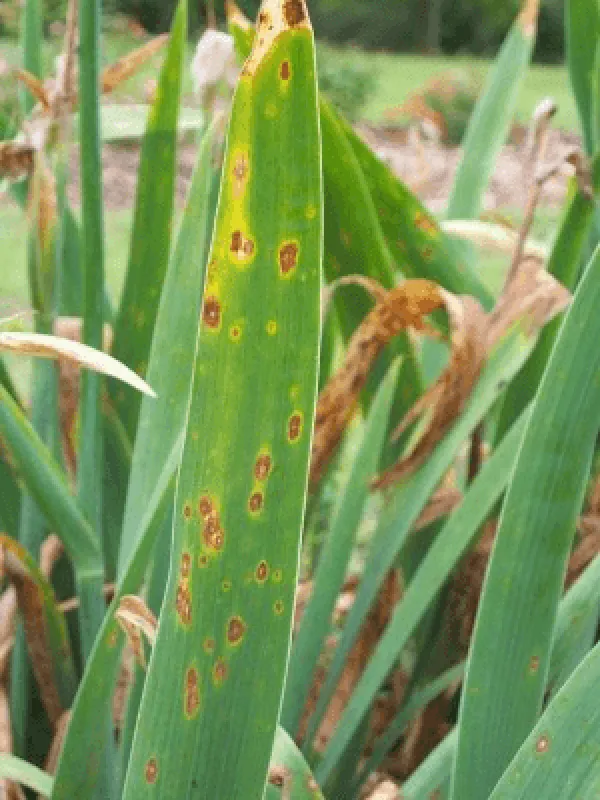
Initial symptoms present as small, circular to oval yellow-green spots on the leaves. Over time, these spots expand, often becoming elongated and brown as the tissue begins to die.
A distinct feature is the development of a dark gray or black velvety layer in the center of the spots, which consists of the fungus's conidiophores and conidia during humid conditions.
The margins of the lesions often retain a yellow, chlorotic halo, giving the foliage a speckled or scorched appearance that severely reduces the aesthetic value of ornamental irises.
In cases of heavy infestation, the individual lesions coalesce, causing entire leaves to yellow, wither, and die back prematurely starting from the tips and progressing downwards.
In crops like onions and garlic, the disease mimics these symptoms, causing premature drooping of the leaves and a general loss of vigor, which limits the plant's ability to produce quality bulbs.
Pathogen
The causal agent of this disease is the fungus Cladosporium iridis, frequently referred to in its teleomorph state as Mycosphaerella macrospora. It is a highly specialized pathogen affecting various species within the Iridaceae family.
The pathogen survives the winter months primarily as mycelium and sclerotia within diseased plant debris, soil, and on the surfaces of dormant bulbs or rhizomes. As temperatures rise in spring, it produces spores that initiate new infections.
Dissemination of the fungus occurs through the movement of conidia, which are easily transported by splashing rain, overhead irrigation water, and strong winds across the field or garden beds.
Once a conidium lands on a susceptible host leaf, it germinates under high humidity. The germ tube penetrates the plant cuticle and begins to colonize the interior tissues, eventually causing characteristic spotting.
Throughout the growing season, multiple cycles of sporulation can occur, allowing the fungus to build up significant inoculum levels if management practices are neglected during the initial stages of infection.
Conditions for development
Cool to moderate temperatures combined with prolonged periods of leaf wetness are the primary environmental drivers for the rapid development of iris leaf spot outbreaks.
The fungus thrives in environments where humidity levels are high (above 70%) and where water films persist on the foliage for several hours after rainfall or irrigation events.
Poor garden sanitation and dense plantings that restrict airflow promote microclimates highly favorable to spore germination and host colonization by the pathogen.
Plants subjected to environmental stress, such as nutrient deficiencies or poor soil drainage, exhibit higher susceptibility to infection compared to well-maintained, vigorous specimens.
Outbreaks are most severe during wet, overcast spring and early summer seasons, which provide the exact environmental parameters needed for the disease to spread rapidly.
Why it matters
The primary impact of the disease is the severe reduction of photosynthetic leaf area, which limits the plant's capacity to produce carbohydrates necessary for growth and storage.
In irises, this leads to weak rhizome formation, poor flower production in subsequent years, and an overall decrease in the plant's ability to survive harsh winter conditions.
For culinary bulb crops like onions and garlic, the infection prevents the formation of full-sized, healthy bulbs, leading to significant yield losses and lower harvest weights.
Severely infected plant material lacks the structural integrity and energy reserves required for dormancy, often leading to rot or desiccation during storage before the next planting season.
Chronic infestations over several years can deplete the vitality of a planting, resulting in the eventual decline and death of the entire bed if left unchecked by the grower.
Protection
Cultural control is the most effective long-term strategy. This includes strict sanitation, such as removing and destroying all infected foliage and plant debris at the end of the season.
Crop rotation should be implemented, ensuring that sensitive species like irises, onions, or garlic are not replanted in the same location for at least three to four years.
Preventative fungicide applications using copper-based products or systemic triazoles are useful in high-risk areas or when weather forecasts predict prolonged wet conditions.
- Choose disease-resistant varieties when possible.
- Ensure adequate spacing between plants to maximize airflow.
- Avoid overhead irrigation to minimize leaf wetness duration.
Always inspect new plant material carefully before introducing it to the garden, as infected rhizomes or bulbs are the primary means of introducing the pathogen to a new site.
Pathogens and affected parts
Affects crops · 2
Discussion
No discussions yet — be the first.