
Description
Symptoms
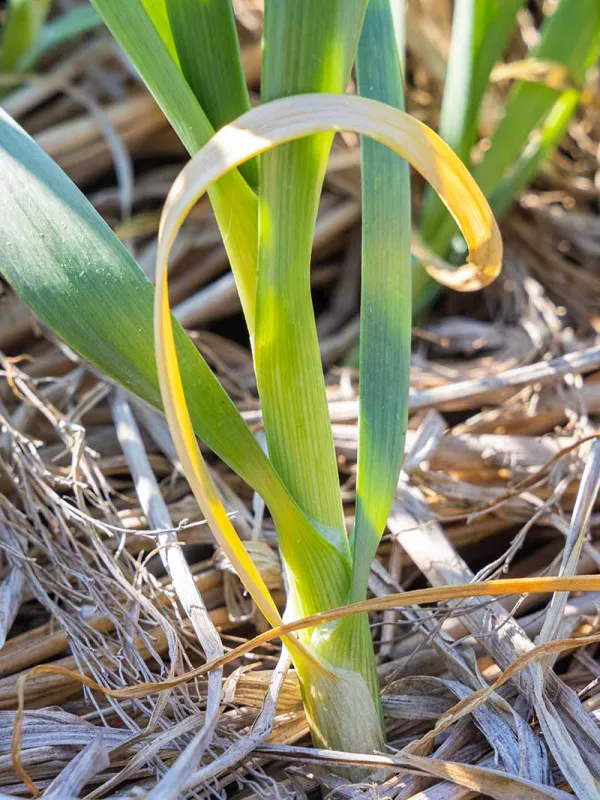
Initial symptoms are often visible as light green or yellow stripes, streaks, or mosaic patterns on the leaves. As the disease progresses, these patterns may coalesce, leading to generalized chlorosis.
Infected plants typically exhibit significant stunting and reduced vigor. Leaves may twist, deform, or exhibit premature senescence, starting from the tips and moving downwards.
Flower stalks of garlic often show mottled spots or irregular streaks, and the development of bulbils is frequently impaired, resulting in smaller and less viable reproductive material.
Under severe pressure, the root system fails to develop properly, leaving the plants highly vulnerable to moisture stress and subsequent infection by soil-borne fungal pathogens.
- Mottled or striped yellow leaves.
- Stunted growth and reduced plant height.
- Twisting and curling of foliage.
- Lower bulb quality and yield reduction.
Pathogen
Garlic mosaic is primarily caused by the Garlic yellow streak virus (GYSV), a potyvirus that specifically targets members of the Allium genus, including garlic and onions.
The virus consists of filamentous particles that spread systemically throughout the vascular tissue, disrupting essential physiological processes such as photosynthesis and nutrient transport.
Infected cloves and sets serve as the primary reservoir for the virus. Since the virus is systemic, it persists within the plant tissue from one growing season to the next, causing progressive decline.
Vectors play a crucial role in the spread of the disease. Thrips species, particularly onion thrips, acquire the virus while feeding on infected plants and transmit it to healthy ones within minutes.
Mechanical transmission is also a significant factor. The virus can spread via gardening tools, knives, or during harvesting processes if the sap of infected plants comes into contact with healthy tissues.
Conditions for development
Disease outbreaks are closely linked to the population dynamics of insect vectors. Warm, dry weather conditions significantly favor the rapid multiplication of thrips, leading to widespread viral outbreaks.
Continuous monoculture of Allium species is a major risk factor. Growing garlic in the same soil year after year allows the virus and its vectors to establish a permanent presence in the area.
The use of infected "home-saved" seed cloves is the most common way for the virus to be introduced into new plantings, ensuring the disease persists throughout the farm.
High-density planting configurations promote the movement of insect vectors between plants, facilitating the rapid transmission of the virus across the entire field.
Environmental stress, such as improper irrigation or nutrient deficiencies, compromises the plant's natural defense mechanisms, making it more susceptible to successful viral infection.
Why it matters
Garlic mosaic causes severe economic losses by significantly reducing marketable yields, often by 30% to 50% depending on the infection rate and the variety’s susceptibility.
Bulbs from infected plants are typically smaller, looser in structure, and have poor storage qualities, leading to high rates of rotting during the post-harvest storage period.
The cumulative effect of the virus is the gradual degradation of garlic varieties. Over time, the stock loses its productivity, making it essential to replace seed sources.
Since there are no chemical cures for viral infections, once a crop is heavily infected, it cannot be recovered, representing a total loss of investment in the current cycle.
Beyond yield loss, the virus weakens the entire plant, making it easier for opportunistic pathogens to colonize the bulb during the bulb maturation and curing phases.
Protection
The cornerstone of management is the use of high-quality, virus-free certified seed cloves, which are often produced via meristem culture to ensure they are clean.
Implementing a strict crop rotation cycle of at least 4–5 years between Allium crops is essential to disrupt the life cycle of insect vectors and reduce soil-borne viral reservoirs.
Aggressive vector control is vital. Implementing a regular insecticidal spray program targeting thrips can drastically reduce the incidence of primary and secondary viral transmission.
Rogueing, or the physical removal and destruction of symptomatic plants early in the season, is a highly effective cultural practice to reduce the viral inoculum pressure.
Rigorous sanitation of tools is necessary. Disinfecting blades and shears between plants with a 10% bleach solution or alcohol prevents mechanical spread during pruning or harvesting.
Pathogens and affected parts
Affects crops · 2
Discussion
No discussions yet — be the first.