
Description
Symptoms
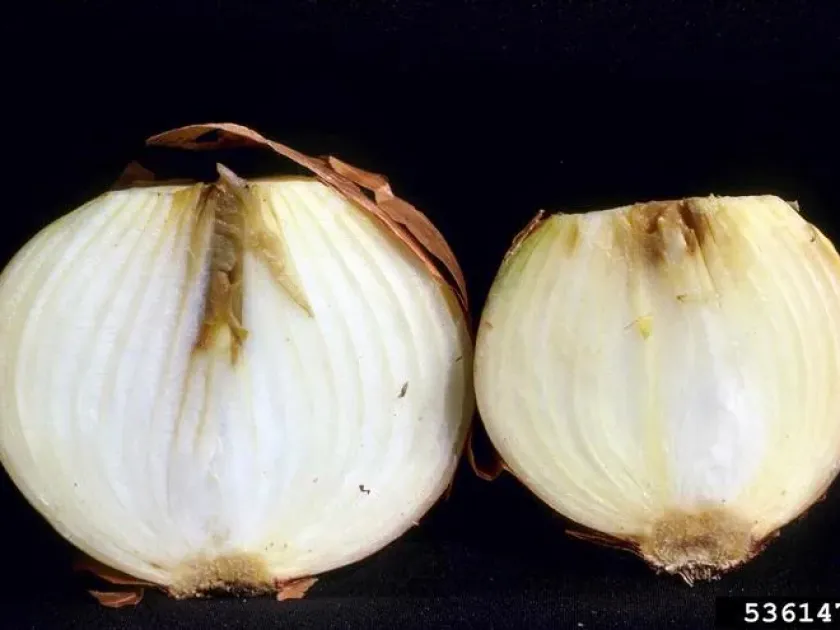
Initial signs of infection often go unnoticed during external inspection of the bulbs. The main symptom appears when cut: internal scales become watery and turn yellowish or brown.
As the pathological process develops, the affected tissues soften and begin to emit an unpleasant, specific foul odor. It is characteristic that healthy-looking scales may alternate with affected ones, which complicates early diagnosis.
In high humidity conditions, a slimy exudate may appear at the site of decay. In cases of severe infection, the basal plate of the bulb softens, roots die off, and the bulb easily detaches from the stem.
- Yellowing and gradual softening of the inner layers of the bulb.
- Unpleasant, sharp rot odor when cutting the fruit.
- Loss of tissue integrity, turning into a slimy mass.
- Rapid spread of rot from the base to the neck during storage.
At the final stages of the disease, the bulb loses all density, becomes wrinkled, and is unfit for use. During storage in bins, the infection quickly spreads to neighboring healthy bulbs, creating centers of decay.
Pathogen
The causative agent of this disease is the bacterium Pseudomonas aeruginosa, which belongs to phytopathogenic microorganisms capable of infecting bulbous crops. It is a Gram-negative rod-shaped bacterium that exhibits pathogenic properties when plant immunity is weakened.
The disease belongs to the group of vegetable bacterioses and is characterized by a latent progression in the initial stages. The infection most often enters the bulb through the basal plate, mechanical tissue damage, or the attachment points of the leaves to the neck.
The bacteria possess high enzymatic activity capable of breaking down pectic substances in plant cell walls. As a result of enzymatic action, the bulb tissues lose their structure and turn into a mushy, soft mass.
The pathogen persists in the soil and on plant debris, and it can also be transmitted via infected planting material. The bacterium's ability to survive in various environmental conditions makes it difficult to eradicate if agricultural practices are neglected.
The main crops susceptible to infection are onions and garlic. The disease often manifests during post-harvest storage, leading to massive losses of commercial produce in warehouses.
Conditions for development
High humidity of the air and soil during the pre-harvest period promotes the development of bacterial rot. Excessive irrigation at the end of the growing season creates ideal conditions for bacteria to colonize onion tissues.
Temperature is an important factor in spread. The optimal temperature range for the active reproduction of Pseudomonas aeruginosa is between +20 to +30 degrees Celsius.
Improper drying after harvesting significantly increases risks. Inadequate ventilation in storage facilities and high humidity levels provoke the rapid development of the infectious process inside the bulbs.
Mechanical damage to bulbs during harvesting, transportation, or by pests (such as the onion maggot) creates entry points for bacteria to penetrate the fleshy scales.
Balanced plant nutrition plays a role in resistance to the pathogen. Excessive nitrogen fertilization, which leads to delayed maturation and loose tissues, makes the crop more susceptible to bacteriosis.
Why it matters
The main harmfulness lies in the spoilage of products during storage, leading to significant economic losses for producers. The infection can destroy a large portion of the commercial crop within a few months.
Affected bulbs lose their consumer qualities: taste, nutritional value, and shelf life. Such produce is strictly prohibited for processing or sale.
The disease poses a threat to the seed stock, as using infected bulbs for planting leads to weak plant growth and the spread of the pathogen in the field.
The spread of bacteriosis often occurs secretly, making it impossible to select high-quality material without thorough sorting. This increases logistical and labor costs for crop processing.
In case of mass infection in the field, plant death occurs, which directly reduces total crop yields. The infection is extremely persistent, so an infected field requires a long crop rotation period.
Protection
The basis of protection is strict adherence to agricultural practices. It is important to avoid waterlogging the soil during the bulb maturation phase and ensure timely harvesting.
It is necessary to thoroughly dry onions and garlic after harvest, creating conditions for the neck to "close." Maintaining the correct temperature and humidity regime in vegetable stores is the main factor in preventing decay.
Control of pests that damage bulb tissues significantly reduces the risk of infection. Using quality, healthy planting material and adhering to crop rotation (returning to the same plot no sooner than after 3-4 years) are mandatory.
The use of fungicides and bactericides during the growing season in the presence of favorable conditions for bacteriosis can help contain the spread of the primary infection.
Disinfection of storage facilities before stocking the crop is an important preventive measure. Using modern ventilation methods allows maintaining a microclimate that is unfavorable for bacterial activity.
Pathogens and affected parts
Affects crops · 2
Discussion
No discussions yet — be the first.