

Description
Symptoms
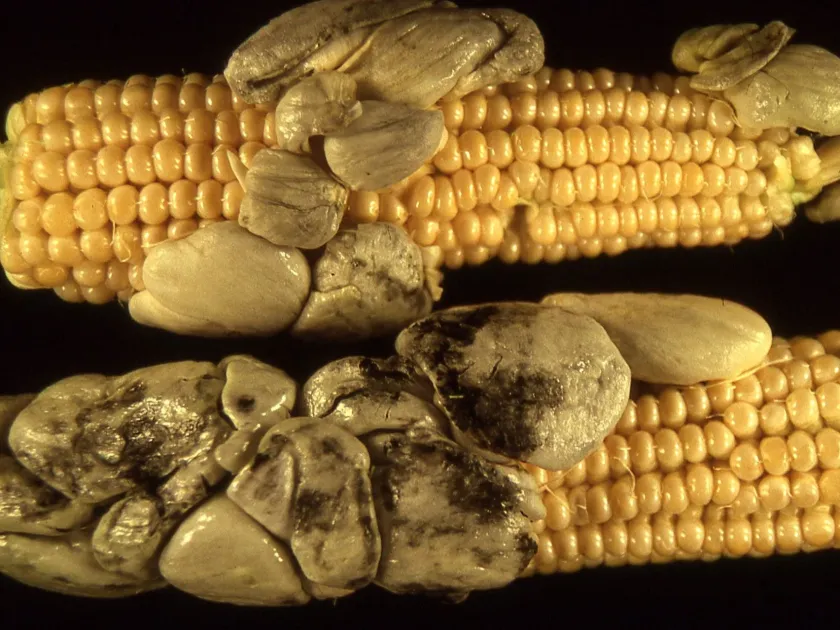
The most distinctive symptom of common smut is the formation of galls — tumor-like growths that can appear on any above-ground part of the corn plant.
These galls are most commonly found on the ears, tassels, leaves, stalks, and sometimes even on the aerial roots of the plant.
At first, the galls are covered with a white or silvery membrane that eventually thins and ruptures, exposing a dark, powdery mass of spores.
The fungus replaces the plant tissue with these dark teliospores, causing significant deformation of the affected ears and stalks.
In young plants, systemic infection can lead to stunted growth and the appearance of chlorotic spots or streaks on the leaves before galls develop.
Pathogen
The pathogen responsible for this disease is the basidiomycete fungus Ustilago maydis, which exclusively infects maize (corn) and teosinte.
The fungus overwinters as teliospores in the soil and on crop debris, remaining viable for several years under various environmental conditions.
During the growing season, these spores germinate to produce basidiospores that are disseminated by wind or splashing rain onto the host plants.
Infection occurs primarily through young, actively dividing plant tissues or via physical wounds on the plant surface.
Once inside, the fungus secretes phytohormones that induce abnormal cell division and enlargement, resulting in the characteristic smut galls.
Conditions for development
Common smut development is highly favored by moderate temperatures ranging from 20°C to 30°C and alternating periods of moisture.
While moisture is required for spore germination, periods of drought followed by wet weather often increase the severity of the disease.
Mechanical injury caused by hail, agricultural equipment, or insect feeding provides easy entry points for the fungal spores to colonize the plant.
High nitrogen levels can promote succulent plant growth, which makes the tissues more susceptible to infection by the pathogen.
Poor soil aeration and the lack of crop rotation contribute to the buildup of inoculum, increasing the likelihood of outbreaks in subsequent years.
Why it matters
The disease causes direct yield reduction as the fungus drains nutrients from the plant to fuel its own growth and spore production.
Ears affected by smut are often rendered completely unproductive, leading to significant economic losses for commercial grain or silage producers.
Lodging and stalk breakage are more common in heavily infected plants, which complicates harvesting and increases field losses.
Quality of the harvested grain or silage is severely impacted, which may limit marketability and utility for livestock feed.
While Ustilago maydis is not toxic, a heavy infestation in silage can reduce its nutritional value and overall quality for animal consumption.
Protection
The most effective strategy is the use of resistant corn hybrids, which offer the best protection against common smut infection.
Maintaining a balanced crop rotation cycle helps reduce the population of teliospores in the soil, limiting the disease pressure.
Good agricultural practices, such as proper fertilization and weed control, help maintain plant vigor and reduce vulnerability to the fungus.
It is important to minimize mechanical damage to the crop during cultivation and pest management activities to prevent entry points for the pathogen.
- Applying fungicides as a seed treatment to protect seedlings.
- Sanitation by destroying or burying infected crop residues.
- Monitoring fields during the early silking stage when the plant is most susceptible.
Reference
Connections · Common smut of corn
Most often together:
Marketplace
Products · 2401


Community
Discussion
No discussions yet — be the first.