
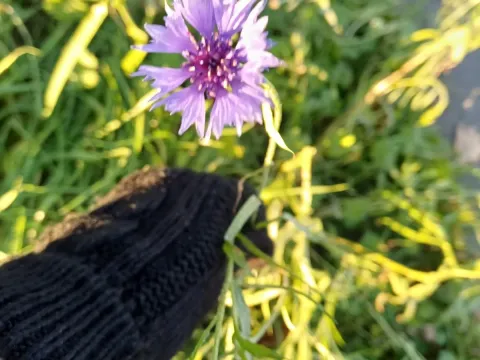
Cornflower
Centaurea L.
Cornflower (Centaurea cyanus) is a member of the Asteraceae family. In agricultural practice, it is primarily grown as an annual herb, cultivated either as a winter or spring crop depending on the intended use, whether for herbal raw materials or as a melliferous plant for honey production.
What the section contains
 Basket flower
Centaurea americana Nutt.
Basket flower
Centaurea americana Nutt.
 Blessed thistle
Centaurea benedicta (L.) L.
Blessed thistle
Centaurea benedicta (L.) L.
 Centaurea dealbata
 Willd.
Centaurea dealbata
Centaurea dealbata Willd.
 Centaurea virgata
 Lam.
Centaurea virgata
Centaurea virgata Lam.
 Cornflower
Centaurea cyanus L.
Cornflower
Centaurea cyanus L.
 Diffuse knapweed
Centaurea diffusa Lam.
Diffuse knapweed
Centaurea diffusa Lam.
 Dubrovnik knapweed
Centaurea ragusina L.
Dubrovnik knapweed
Centaurea ragusina L.
 Dusty Miller
Centaurea cineraria L.
Dusty Miller
Centaurea cineraria L.
 Greater knapweed
Centaurea scabiosa L.
Greater knapweed
Centaurea scabiosa L.
 Iberian knapweed
Centaurea iberica Trevir. ex Spreng.
Iberian knapweed
Centaurea iberica Trevir. ex Spreng.
 Imperial Centaury
Centaurea imperialis Hausskn. ex Bornm.
Imperial Centaury
Centaurea imperialis Hausskn. ex Bornm.
 Maltese star-thistle
Centaurea melitensis L.
Maltese star-thistle
Centaurea melitensis L.
 Mountain cornflower
Centaurea montana L.
Mountain cornflower
Centaurea montana L.
 Pale knapweed
Centaurea pallescens Delile
Pale knapweed
Centaurea pallescens Delile
 Red star-thistle
Centaurea calcitrapa L.
Red star-thistle
Centaurea calcitrapa L.
 Spotted knapweed
Centaurea maculosa Lam.
Spotted knapweed
Centaurea maculosa Lam.
 Spotted knapweed
Centaurea stoebe L.
Spotted knapweed
Centaurea stoebe L.
 Squarrose knapweed
Centaurea squarrosa Willd., non Roth
Squarrose knapweed
Centaurea squarrosa Willd., non Roth
 Velvet Centaurea
Centaurea gymnocarpa Moris & De Not.
Velvet Centaurea
Centaurea gymnocarpa Moris & De Not.
 Yellow knapweed
Centaurea macrocephala Muss. Puschk. ex Willd.
Yellow knapweed
Centaurea macrocephala Muss. Puschk. ex Willd.
 Yellow star-thistle
Centaurea solstitialis L.
Yellow star-thistle
Centaurea solstitialis L.
Cornflower
The sowing schedule for winter cornflower typically falls between late August and September, allowing for root establishment before the winter dormancy. Spring crops are seeded as soon as the soil is workable, ensuring sufficient moisture for germination and rapid early development.
Standard seeding rates range from 8 to 12 kilograms per hectare, with row spacing maintained at 30–45 centimeters. This spacing is optimal for mechanical weeding and ensures adequate airflow throughout the canopy, which is crucial for preventing humidity-related diseases.
Seed depth is kept shallow, between 1.5 and 2 centimeters, to facilitate uniform emergence. Because the seeds are small, soil compaction post-seeding is highly recommended to improve capillary moisture transfer to the seeds, ensuring higher germination energy.
Proper timing of sowing allows the cornflower to establish itself before the peak weed growth period, giving it a competitive advantage in the field. Effective crop rotation is also a recommended strategy to minimize soil-borne pathogens in commercial plantings.
Cornflower is a light-demanding plant, performing best in open, sunny fields. Shading can negatively impact the growth and result in lower concentrations of active compounds within the flowers, which is a critical factor for the pharmaceutical industry.
The crop thrives in fertile, well-drained loamy or sandy loam soils. It is sensitive to waterlogging and acidic soil conditions, necessitating proper land drainage and, if required, soil pH correction to reach a neutral or slightly alkaline balance.
The plant demonstrates significant cold tolerance, making it suitable for cultivation in various temperate climatic zones. Established plants can withstand late spring frosts, which is an advantageous trait for early-season spring sowing in northern regions.
Maintenance involves frequent inter-row cultivation to eliminate crusting and suppress weed growth. Managing weeds is essential, particularly during the early vegetative phase, as they compete directly with cornflower for nutrients, water, and sunlight.
Cornflower responds well to phosphorus and potassium fertilizers, which help develop stronger stems and promote vigorous flowering. Nutrient management should be integrated into the soil preparation phase to ensure a steady supply of nutrients throughout the growth cycle.
The yield of floral raw material (dried petals) typically ranges from 150 to 300 kilograms per hectare under well-managed conditions. Harvesting is focused on the marginal florets, which are collected during full bloom to ensure the highest quality of the final product.
As a honey plant, cornflower provides excellent nectar flow, with yield potential often estimated at 30–50 kilograms of honey per hectare. Cornflower honey is highly regarded for its delicate aroma, pale color, and mild, pleasant flavor profile.
When grown specifically for seed production, yields can reach 500–800 kilograms per hectare. Early and careful harvesting is necessary to prevent significant yield losses due to seed shattering, which occurs naturally when the flower heads become overripe.
Limiting factors for yield are primarily weed competition and disease pressure. By maintaining a clean field and utilizing optimal agronomic inputs, growers can stabilize production levels throughout the growing season.
Modern breeding efforts are continuously improving traits such as blossom size, color intensity, and synchrony in maturation. These advancements contribute to higher economic viability for agricultural producers specializing in this crop.
The main threats to cornflower crops are fungal diseases, including rust and powdery mildew, which thrive in high-humidity conditions. Preventive measures such as maintaining proper planting density and adhering to strict crop rotation are vital for effective control.
Insect pests, particularly aphids and weevils, pose significant risks by damaging flower buds and young foliage. Integrated Pest Management (IPM) strategies, involving regular field monitoring and the use of targeted biopesticides, are recommended to control these populations.
Soil-borne pests like wireworms can cause damage to the root system. Pre-planting seed treatment and deep autumn plowing are effective cultural practices to reduce the overwintering population of these pests and protect early-stage crops.
Viral infections, often transmitted by sap-sucking insects, must be managed by controlling the vector populations. Maintaining a clean surrounding field and controlling host weeds help mitigate the risk of virus outbreaks in the cornflower stand.
Safety during the flowering stage is paramount. Pesticide applications must be strictly avoided during the pollination period to prevent the loss of beneficial bees and other pollinators that ensure high yield and seed quality.
Harvesting for floral purposes requires dry, sunny weather, which is essential for preserving the blue color of the petals. Any moisture on the harvested material can cause it to darken and degrade, leading to a significant loss in market value.
The drying process must be fast and performed at temperatures between 40 and 50 degrees Celsius. Proper ventilation is required during drying to ensure the preservation of the plant's bioactive compounds and its vibrant aesthetic appeal.
When harvesting seeds mechanically, combine harvesters must be calibrated for low drum speeds to avoid damaging the seeds. After harvesting, seeds should undergo thorough cleaning and drying to meet the moisture content standards for storage.
The dried product must be stored in airtight containers, away from direct light and humidity. Proper packaging protects the quality of the cornflower petals, allowing them to retain their medicinal and chemical properties for up to two years.
In large-scale operations, harvesting should be performed in stages, as flowers do not open simultaneously. This selective approach ensures that only the highest quality raw material is collected, meeting the strict standards of the buyer.