
Dusty Miller
Centaurea cineraria L.
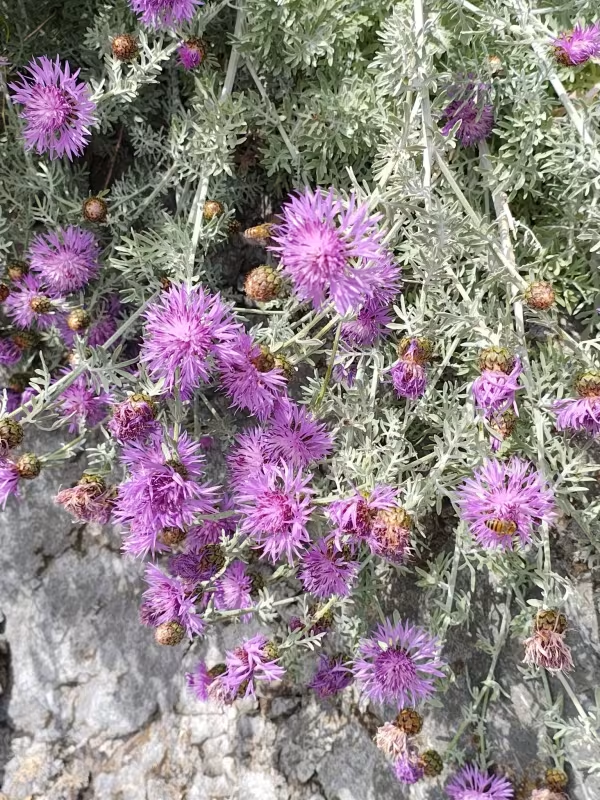
Description
Sowing dates
The sowing of Dusty Miller (Centaurea cineraria) is typically performed using the seedling method to ensure uniform establishment. Seeds should be sown in containers 8 to 10 weeks before the expected last frost date in the spring.
For optimal germination, seeds require a stable environment with temperatures between 18 and 20 degrees Celsius. The germination medium must be well-drained and kept consistently moist, but not waterlogged, to encourage successful seedling development.
Seedlings should be pricked out into individual pots once they develop their first set of true leaves. This step is vital to prevent root crowding and to promote a strong, healthy root system capable of supporting the plant after transplanting.
Hardening off the seedlings is an essential process that involves gradually exposing the young plants to outdoor conditions over a period of two weeks before final planting.
Transplanting into the permanent site should occur only after the danger of frost has passed. Spacing is crucial, as the plants need adequate airflow to remain healthy and vibrant throughout the growing season.
Growing requirements
Dusty Miller, a member of the Asteraceae family, is prized for its velvety, silvery foliage. It thrives in full sun exposure, which is necessary to maintain the plant's characteristic color and compact growth habit.
This species prefers well-draining, sandy, or rocky soil types. It is highly intolerant of heavy, water-retaining clay soils, which often lead to crown rot and poor development of the foliage.
Regarding soil pH, the plant performs best in neutral to slightly alkaline conditions. It does not require high levels of nutrients; in fact, overly rich soil can lead to leggy, weak plants that are less resistant to environmental stresses.
Watering requirements are relatively low once the plant is established. It is known for its excellent drought tolerance, and it is best to let the soil dry out slightly between irrigation sessions to keep the plant in peak condition.
Maintenance tasks include periodic light pruning to encourage bushiness and removal of any flowering stems if the primary goal is to maintain foliage quality, as flowering can sometimes exhaust the plant.
Main diseases and pests
The primary threats to Dusty Miller are moisture-related diseases, particularly fungal pathogens that affect the roots and foliage. Overwatering or poor drainage significantly increases the risk of root rot and stem decay.
Powdery mildew is a common concern during humid or rainy weather. It appears as a white, dusty layer on the leaves, which can reduce photosynthesis and eventually lead to leaf drop if not managed correctly.
Pest issues frequently involve aphids and spider mites. These small insects tend to congregate on the undersides of leaves or along stems, causing stunted growth and yellowing of the foliage over time.
Effective management strategies include ensuring proper spacing to improve air circulation, which significantly lowers the risk of fungal outbreaks. Clean gardening practices, such as removing debris, are also essential.
If chemical interventions are necessary, apply insecticides or fungicides specifically labeled for these pests or diseases. Always follow label instructions to avoid damaging the silver coating of the leaves, which is sensitive to certain additives.