
Iberian knapweed
Centaurea iberica Trevir. ex Spreng.
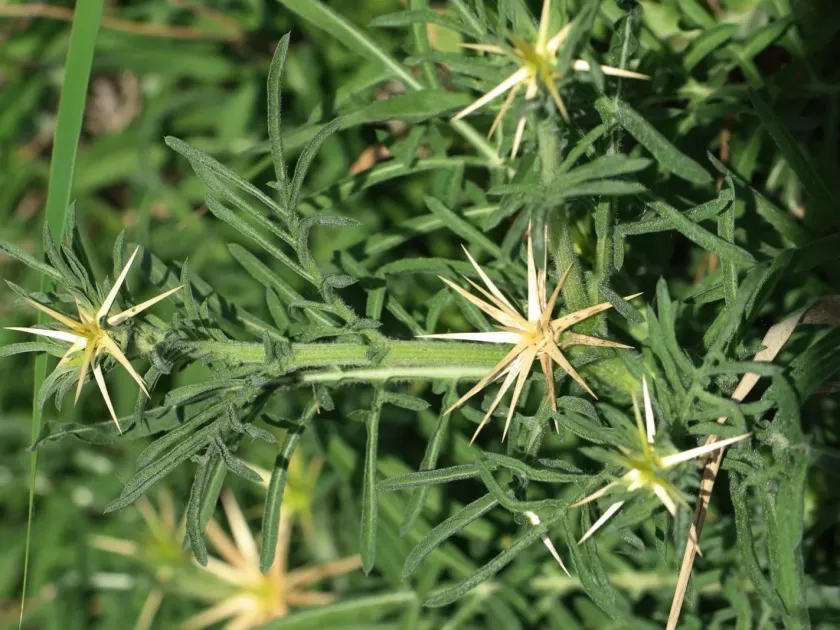
Description
Sowing dates
Iberian knapweed is an annual or biennial plant that propagates through seeds. Its lifecycle is highly synchronized with the growing seasons of various cereal crops, making it a persistent weed in agricultural landscapes throughout its natural range.
Seed germination is strongly influenced by soil temperature, with optimal emergence occurring in spring. The plant's ability to produce a vast amount of seeds per individual ensures its dominance in disturbed soils where competition from other vegetation is low.
In farming operations, preventing the seed bank from replenishing is the primary objective. This involves timely cultivation and the use of herbicide programs tailored to the early growth stages of the plant before it develops a deep taproot.
Crop rotation serves as a critical tool in managing Iberian knapweed. Alternating winter cereals with row crops allows for mechanical weed control measures, such as inter-row cultivation, which are highly effective against this species.
Effective management requires consistent monitoring starting early in the season. Addressing the plant during the seedling stage significantly reduces the cost and effort required to eliminate it during the later, more robust vegetative phases.
Growing requirements
Belonging to the Asteraceae family, Iberian knapweed thrives in open, sun-exposed environments. It is remarkably adapted to arid and semi-arid conditions, thanks to its deep taproot system that facilitates efficient water uptake from deep soil profiles.
The plant shows a broad tolerance to various soil types, including sandy, loamy, and clay-based substrates. While it does not require high levels of soil fertility, it often colonizes nutrient-rich agricultural soils where it competes aggressively with crops.
Climatic adaptability is one of the key strengths of this species. It handles high-temperature stress well and can survive in regions with significant moisture deficits, making it a common sight in steppe and dry grassland ecosystems.
Agronomic management must account for its high resilience. Standard practices like tillage and the application of post-emergence herbicides are commonly used. Because the plant can regenerate if the root system is not fully destroyed, deep plowing remains a preferred method.
It prefers neutral to slightly alkaline soil conditions but can survive in a variety of pH levels. Understanding these environmental preferences helps agronomists predict the likelihood of invasion on specific fields and plan accordingly.
Main diseases and pests
Iberian knapweed is susceptible to several fungal diseases, including powdery mildew and rusts, which can proliferate under humid conditions. While these diseases affect the weed, they can also act as a source of inoculum for neighboring crops.
Insect pests such as aphids and specific weevils are commonly found feeding on the foliage and reproductive structures of the plant. These insects can reduce the vigor of the weed, although they rarely provide complete control on their own.
The role of the plant as an alternate host for pests and viruses is a major concern for farmers. Certain plant pathogens can survive on knapweed during the off-season, later moving to wheat or barley crops, causing significant yield losses.
Managing the plant as a reservoir for infection is an essential part of integrated pest management (IPM). Reducing the density of the weed in and around the field edge is critical for maintaining overall crop health.
Future control strategies might involve biological agents that specifically target the reproductive organs of the Iberian knapweed, thereby reducing its invasive potential in sensitive ecological zones and intensive agricultural systems.