
Blessed thistle
Centaurea benedicta (L.) L.
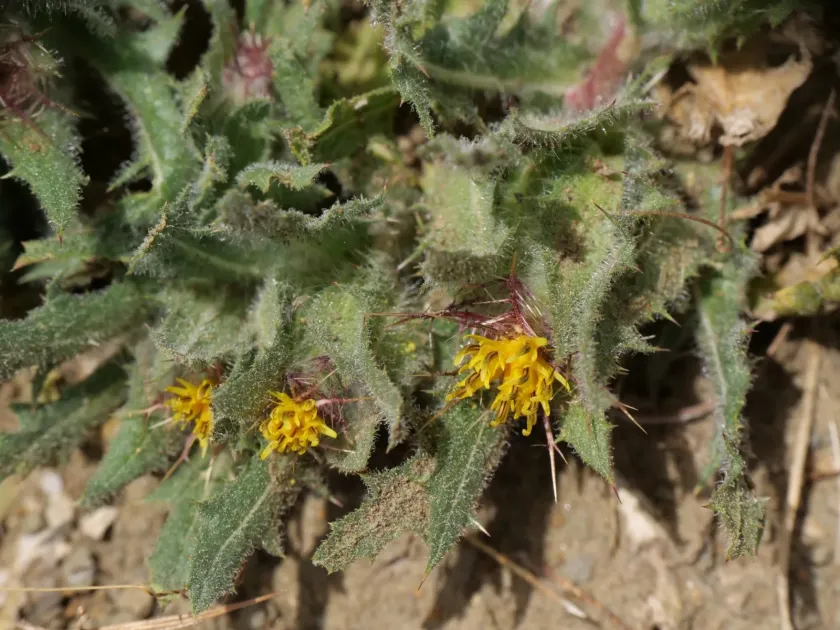
Description
Sowing dates
Blessed thistle (Centaurea benedicta, formerly known as Cnicus benedictus) is a member of the Asteraceae family. It is a hardy annual herb often cultivated for its medicinal properties.
The sowing process begins in early spring as soon as the soil is workable and has reached a temperature of at least +8...10°C, ensuring a strong start for the seedlings.
Proper spacing is crucial for this plant; rows should be set at least 45–60 cm apart to allow for sufficient air circulation and to facilitate mechanical weeding.
Seeds should be planted at a shallow depth of 2–3 cm, as deep sowing can inhibit germination and reduce the overall density of the crop stands.
Creating a fine, well-prepared seedbed with adequate moisture is vital to ensure uniform germination and to help the plants establish themselves before the onset of summer heat.
Growing requirements
Blessed thistle thrives in Mediterranean-type climates and requires full sunlight exposure to reach its full potential and maximize the synthesis of active compounds.
The ideal soil for this crop is well-drained, fertile, and light, with a pH ranging between 6.5 and 7.5, which promotes healthy root development.
Water management is essential; while the plant is somewhat drought-tolerant, it requires consistent moisture during the budding phase to achieve optimal yield.
Stagnant water must be avoided at all costs, as the plant is highly susceptible to root rot if grown in heavy, waterlogged clay soils.
Crop rotation is recommended to maintain soil health, preferably following cereal grains to prevent the build-up of specific soil-borne pathogens and pests.
Yield
The agricultural value of Blessed thistle lies in the aerial parts of the plant, which are harvested specifically during the flowering stage for processing.
Yields vary depending on the environment and crop management; however, a well-maintained field can produce between 1.5 to 2.0 tonnes per hectare of raw material.
The plant is prized for its bitterness, primarily due to the substance cnicin, which is used in the pharmaceutical and beverage industries for digestive aids.
Effective management includes timely intervention during the growth cycle to ensure that the biomass produced meets the strict quality standards of the industry.
Post-harvest processing, including efficient drying, is the final critical step in maintaining the high quality of the active components in the plant tissue.
Main diseases and pests
Aphids are among the most common pests, frequently colonizing the tender parts of the plant and sucking nutrients, which leads to stunted growth.
Powdery mildew is a prevalent fungal disease that can impact crops, especially during periods of high humidity and poor ventilation within the fields.
Root rot, often caused by overwatering or poor soil drainage, remains a significant threat that requires careful monitoring and field adjustment.
Leaf-eating caterpillars can also cause substantial damage to the foliage, necessitating regular scouting and, if needed, sustainable pest control interventions.
Integrated pest management, combined with proper agricultural practices, is the most effective way to minimize crop loss and ensure a profitable harvest.
Harvesting
Harvesting is performed during the peak of the flowering period, as this is when the concentration of medicinal compounds is highest in the aerial organs.
Mechanical harvesting is generally used, and it is crucial to collect the material during dry weather to prevent degradation and mold during subsequent storage.
The collected biomass should be moved to the drying facility immediately to avoid the temperature spikes caused by fermentation in piles of fresh plant material.
Drying is conducted in shaded, well-ventilated areas or in temperature-controlled drying chambers to preserve the integrity of the active ingredients.
Once dried to the required moisture level, the material is cleaned of impurities and packaged to protect it from humidity until it reaches the end-user.