
Pale knapweed
Centaurea pallescens Delile
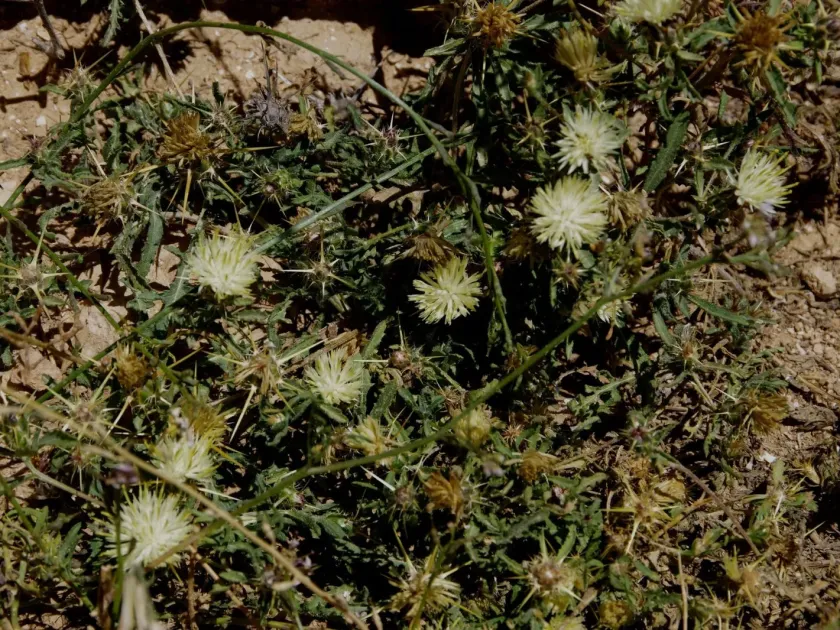
Description
Growing requirements
Pale knapweed (Centaurea pallescens) is a species of flowering plant within the Asteraceae family, well-known for its exceptional adaptation to arid environments.
The plant originates from the dry regions of North Africa and the Middle East, thriving in rocky, sandy, and desert-like terrains where water availability is extremely low.
It requires sandy or rocky soil types that provide excellent drainage, as the species cannot tolerate waterlogged conditions which may lead to root failure.
Botanically, it features a deep taproot system designed to extract moisture from deep soil layers, and its foliage is covered with fine hairs to minimize evaporation.
Economically, it serves primarily as an essential honey-producing plant, providing a vital source of nectar for pollinators in regions where floral resources are sparse.
Main diseases and pests
The species possesses high natural resilience to common plant diseases, largely due to the harsh environmental conditions of its habitat which inhibit fungal growth.
Root rot remains the primary threat, usually associated with improper soil drainage or uncharacteristically heavy seasonal rains that the plant is not evolved to handle.
Minor damage from specialized insects and small larvae can occur, affecting the development of the flower buds and potentially reducing seed yield in some years.
Environmental threats such as desertification or overgrazing in natural habitats pose a significantly greater risk than typical agricultural pests or diseases.
Agricultural management for this plant is limited to ensuring site suitability, as it is largely a wild-growing species that does not require intensive inputs.