
Centaurea virgata
Centaurea virgata Lam.
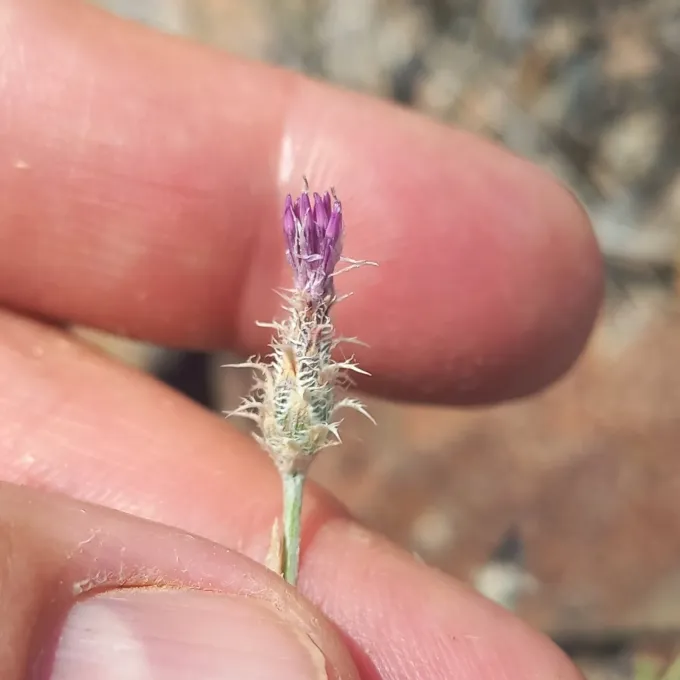
Description
Growing requirements
Centaurea virgata Lam., commonly known as a type of knapweed, belongs to the Asteraceae family. It is a perennial herbaceous plant known for its remarkable ability to thrive in arid and semi-arid environments.
The plant features a deep taproot system, which provides excellent stability and water uptake from deep soil horizons. Its foliage is often finely divided, and the stems are typically stiff and branched, reflecting its adaptation to windy and dry habitats.
The plant requires high levels of sunlight to reach its maximum productivity. It performs best in well-drained, sandy, or stony soils where air exchange within the root zone is optimal, preventing common water-related stresses.
Native to parts of Western and Central Asia, the species demonstrates a high tolerance for temperature extremes. This makes it an interesting candidate for regions where conventional crops suffer from seasonal moisture deficits.
Management practices for this crop involve minimal soil disturbance. By maintaining the soil structure, the plant can sustain its growth cycle even in nutrient-poor environments, showcasing its potential as a low-input agricultural resource.
Main diseases and pests
Common diseases affecting Centaurea virgata include powdery mildew, which can significantly reduce photosynthetic activity during periods of high humidity and poor field ventilation.
Insect pests such as root-boring beetles and aphids are potential threats that can impact both vegetative development and seed production, particularly in dense stands of the crop.
Rust fungi are another concern in specific climatic conditions. These pathogens can weaken the stems, leading to reduced yield and poor overall plant health during the flowering stage.
Soil-borne pathogens may cause damping-off in seedling populations if the soil moisture levels are managed incorrectly during the early stages of establishment.
Integrated pest management (IPM) strategies, including biological control and precise irrigation management, are recommended to maintain high production quality while minimizing the need for synthetic chemical applications.